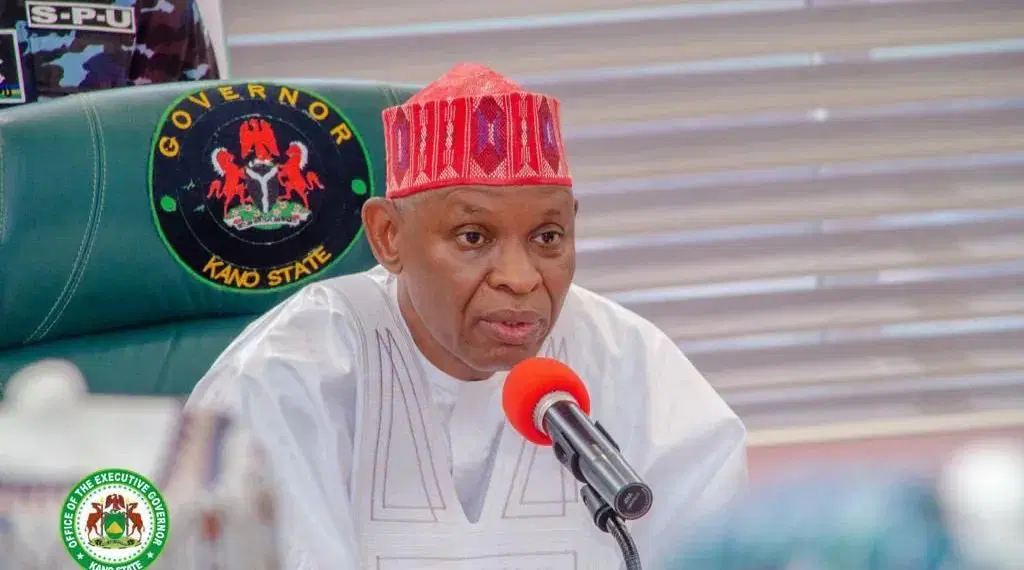
Governor Abba Yusuf of Kano State has been dealt another political blow after eight members of the House of Representatives elected on the platform of the New Nigeria People’s Party (NNPP) officially defected to the All Progressives Congress (APC) at the National Assembly in Abuja.
The mass defection, which was confirmed in a statement by the governor’s spokesperson, Sanusi Dawakin-Tofa, adds a fresh layer of tension to the ongoing political crisis rocking the NNPP, especially in Kano where the party has struggled to maintain internal unity in recent months.
According to the statement, the lawmakers blamed the lingering internal crisis within the NNPP for their decision to leave the party. Their move is being seen by many political observers as another major sign that the cracks within the party are getting deeper and more difficult to manage.
The lawmakers who dumped the NNPP for the APC are Tijjani Abdulkadir Jobe, Garba Ibrahim Diso, Hassan Shehu Hussain, Idris Dankawu, Muhammad Chiroma Nalaraba, Rabiu Yusuf, Dr. Ghali Mustapha Tijjani, and Muhammad Bello Shehu.
Their defection ceremony was not a quiet one. It attracted some heavyweight political figures, including former APC National Chairman, Abdullahi Umar Ganduje, and Deputy Senate President, Barau Jibrin. Their presence has only fueled speculation that the APC is strategically tightening its grip on Kano ahead of future political battles.
For Governor Abba Kabir Yusuf, this is not just about numbers. It is also about perception. Losing eight federal lawmakers from the ruling party in the state sends a strong message, especially in a place like Kano where political loyalty and party strength often shape the wider power equation.
Still, the governor tried to downplay the development. According to Dawakin-Tofa, Yusuf described the defections as part of the democratic process, insisting that political realignments are not unusual in a vibrant democracy.
That may be politically correct, but the truth is this is not the kind of headline any sitting governor wants to wake up to.
Governor Yusuf also used the moment to reaffirm his commitment to governance, saying his administration remains focused on delivering the dividends of democracy to the people of Kano State regardless of political differences. He stressed the need for unity and cooperation among elected officials, adding that the overall development of the state should remain the top priority.
Even with that calm public response, the bigger political implication cannot be ignored.
This latest wave of defections will likely strengthen the APC’s confidence in Kano, especially as the opposition party continues to position itself for future electoral contests. It also raises fresh concerns about the stability of the NNPP structure in the state, considering Kano remains one of its most symbolic political strongholds.
For many Nigerians watching from the outside, this is another reminder that in Nigerian politics, party loyalty often shifts quickly once internal battles begin to grow. And once those cracks open, defections usually follow fast.
In the coming weeks, the real question will be whether this is an isolated political shake-up or the beginning of a bigger collapse within Kano’s NNPP camp.
If more lawmakers or key loyalists begin to jump ship, then this may be remembered as the moment the tide truly started turning.