This content has been archived. It may no longer be relevant
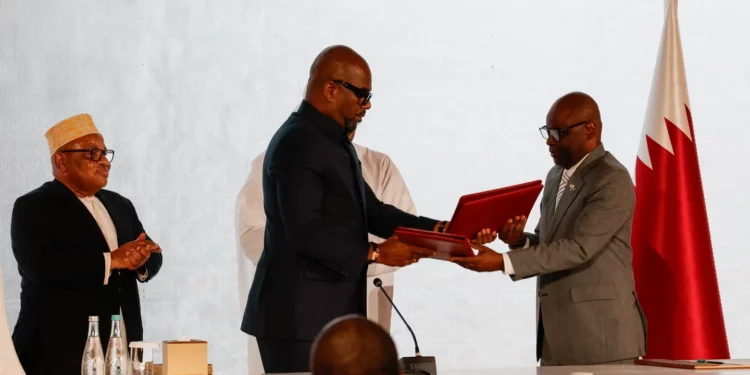
the Democratic Republic of Congo (DRC) and the M23 rebel movement have signed a framework agreement aimed at ending more than two years of intense fighting in the country’s mineral-rich eastern provinces. The deal, reached in Doha on November 15, comes after months of mediation led by Qatar, with support from the United States and the African Union.
Officials from both sides attended the ceremony in Qatar’s capital, marking the most significant diplomatic opening since the conflict sharply escalated in early 2022. Qatar’s chief negotiator, Mohammed Al-Khulaifi, described the agreement as “historic,” while stressing that the focus will now shift to ensuring the accord can take hold on the ground.
Conflict Shaped by Regional Tensions
The M23 insurgency has drastically altered security dynamics in North Kivu and South Kivu provinces. Backed by neighboring Rwanda, according to the DRC government and repeated UN assessments, the group seized vast territories, including key provincial capitals.
In January, M23 fighters captured Goma, the largest city in eastern DRC, leaving thousands dead. Their advance continued into February with the capture of Bukavu. The offensive triggered a severe humanitarian crisis, displacing hundreds of thousands and creating one of the world’s largest emergencies. Aid agencies warn that many communities remain trapped between shifting frontlines.
Months of Incremental Negotiation
Saturday’s agreement follows a series of diplomatic milestones dating back to April, when Qatar convened direct talks between the DRC government and M23 representatives. Early discussions focused on preconditions, prisoner issues, and confidence-building measures rather than core political grievances.
In October, the parties agreed on monitoring arrangements for a future ceasefire. More recently, the United States hosted talks between the DRC and Rwanda, producing a bilateral understanding in June. The Doha framework builds on these earlier efforts, providing a structured path forward.
A Framework, Not a Final Settlement
Officials emphasised that the agreement is a framework, not a final peace settlement. While details remain undisclosed, it reportedly outlines commitments on de-escalation, humanitarian access, and structured political dialogue. Mediators will work to deploy joint monitoring teams and verify compliance on both sides.
Analysts caution that turning these political commitments into military restraint will be challenging, given the presence of multiple armed groups, regional militaries, and ongoing territorial disputes. Progress is expected to be uneven.
A Fragile but Critical Opening
Previous attempts at peace have faltered due to local grievances, regional rivalries, and mistrust between Kinshasa and Kigali. Nonetheless, the Doha agreement is seen as a potential turning point, particularly with the sustained involvement of Qatar, the US, and the AU.
The DRC government insists that peace must involve M23 withdrawal from occupied areas, accountability for human rights abuses, and an end to what it calls Rwanda’s destabilising activities. M23 leaders cite political exclusion and insecurity affecting Congolese Tutsi communities as the root of their rebellion. The framework provides a platform for addressing these deeper issues through future technical and political meetings.
Regional Eyes on the DRC
The Great Lakes region has experienced repeated cycles of conflict driven by competition for land, minerals, and political influence. The latest M23 resurgence, beginning in late 2021, revived fears of broader regional escalation.
For now, the Doha agreement offers a measure of diplomatic momentum. Its success will depend on the behaviour of armed units on the ground, the commitment of regional governments, and the ability of mediators to maintain pressure and provide guarantees.
As Al-Khulaifi stated at the signing: “We have taken an important step. But the work to secure peace is far from over.”