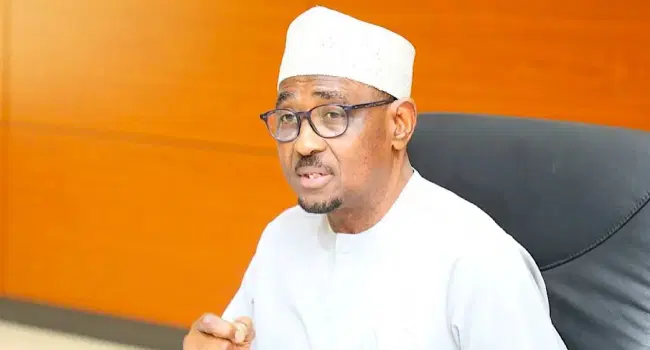
Nigeria’s oil and gas industry was thrown into uncertainty yesterday following the resignation of two key regulators: Engr. Gbenga Komolafe, Chief Executive of the Nigerian Upstream Petroleum Regulatory Commission (NUPRC), and Engr. Farouk Ahmed, head of the Nigerian Midstream and Downstream Petroleum Regulatory Authority (NMDPRA).
The two agencies play critical roles in overseeing compliance with petroleum laws across Nigeria’s upstream, midstream, and downstream sectors. Both Komolafe and Ahmed were appointed in September 2021 by former President Muhammadu Buhari after the Petroleum Industry Act (PIA) came into force.
Until their resignations, the duo reported directly to President Bola Tinubu, who currently doubles as Minister of Petroleum Resources. Their sudden exit has sparked intense speculation across the industry.
Tensions around Ahmed’s leadership at the NMDPRA had escalated in recent weeks following allegations by Africa’s richest man, Aliko Dangote. The industrialist accused the regulator of economic sabotage, claiming its continued issuance of petroleum import licences was undermining local refining, particularly the Dangote Refinery.
Dangote further alleged that the NMDPRA was working in the interest of foreign traders and oil importers, a claim the agency has not officially responded to. He also made personal allegations against Ahmed, accusing him of living beyond his means and questioning how his children’s education in Switzerland was funded.
The controversy deepened when Dangote, through his lawyer, submitted a petition to the Independent Corrupt Practices and Other Related Offences Commission (ICPC), calling for Ahmed’s investigation and prosecution.
In response, Ahmed dismissed the allegations, explaining that his children’s education was supported through scholarships, family contributions, and long-term personal savings. He maintained that his finances were transparent and consistent with his years of public service, adding that he had regularly declared his assets to the Code of Conduct Bureau.
Amid the controversy, Ahmed paid a brief visit to the Presidential Villa on Wednesday evening. Although he entered the president’s office, no official details were released about the meeting or its outcome.
Following the resignations, President Tinubu has moved quickly to fill the leadership vacuum. He has asked the Senate to confirm Oritsemeyiwa Eyesan as the new CEO of NUPRC and Engr. Saidu Mohammed as CEO of NMDPRA.
According to the presidency, both nominees are seasoned professionals with decades of experience in Nigeria’s oil and gas sector. Eyesan previously served as Executive Vice President, Upstream at NNPC, while Mohammed has held top roles across gas, refining, and pipeline development, including leadership positions at Kaduna Refinery and the Nigerian Gas Company.
Industry analysts believe the resignations may have eased tensions between Dangote and the NMDPRA, but the larger debate remains unresolved. Senior Advocate Olisa Agbakoba described the dispute as one that goes beyond commercial rivalry, touching on Nigeria’s economic sovereignty and long-standing dependence on imported petroleum products despite massive local investment.
Similarly, Professor Wumi Iledare of petroleum economics argued that prioritising local refining would not create a monopoly, insisting that competition can still thrive within an indigenous-led downstream sector.
As Nigeria navigates this transition, many see the leadership changes as a defining moment that could reshape the future of petroleum regulation, local refining, and economic development in the country.