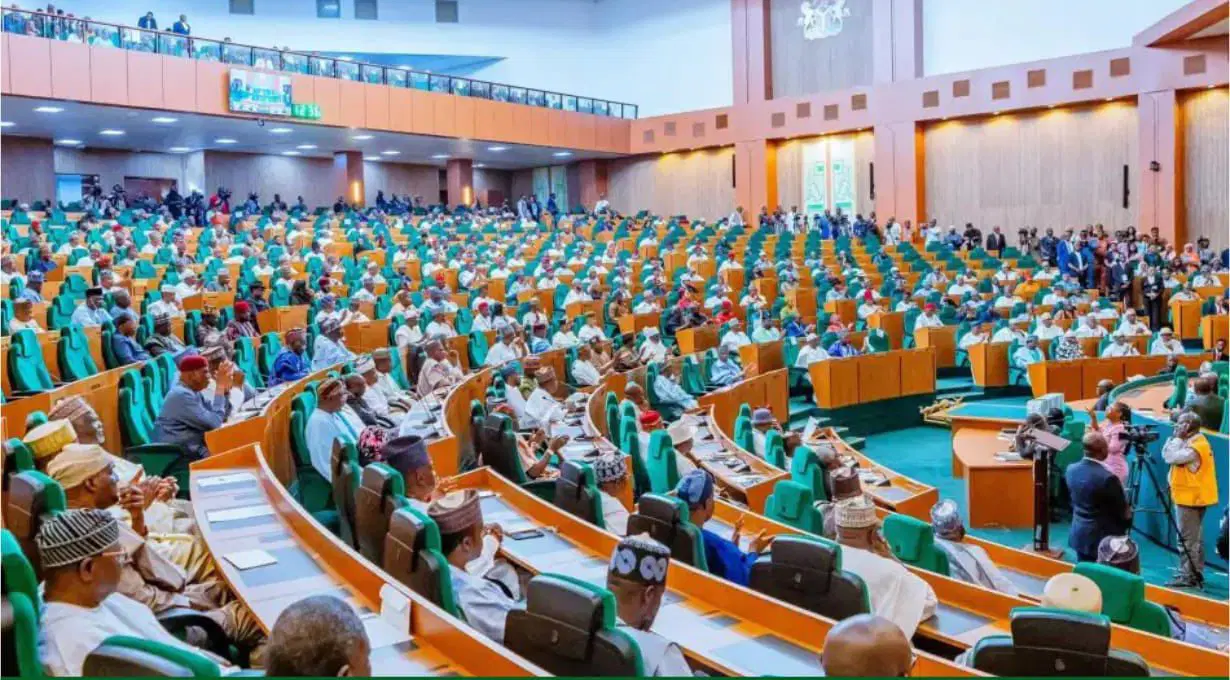
The House of Representatives on Wednesday took a major step toward reforming Nigeria’s electoral system, as lawmakers approved and amended key sections of the Electoral Act Amendment Bill aimed at strengthening the Independent National Electoral Commission (INEC) and closing loopholes exposed by recent elections.
During plenary, the bill was considered clause by clause, with members adopting several provisions designed to improve transparency, tighten procedures, and reduce the flood of post-election disputes that often trail polls across the country.
Clauses 3, 5, and 6 were approved to update preliminary provisions and interpretations under the Act, ensuring that key definitions reflect current electoral realities. Lawmakers also adopted Clauses 10 and 12, reinforcing INEC’s authority over the organisation, supervision, and management of elections, including logistics and the deployment of electoral personnel.
The House further approved Clauses 18 and 22 on voter registration and the compilation, maintenance, and display of the voters’ register. These amendments are aimed at curbing manipulation and expanding inclusion so that more eligible Nigerians can participate in elections without hindrance.
Significant changes were made to Clauses 23 and 29, which deal with political party nominations and the submission of candidates’ lists to INEC. The revisions seek to clarify timelines, enforce compliance, and strengthen INEC’s oversight of political parties, especially during the nomination process.
Clauses 31, 32, and 34—covering party primaries, publication of candidates’ details, and qualifications for elective offices—were also approved, in a move lawmakers say will help tackle pre-election irregularities.
Further approvals were given to Clauses 47, 50, and 54 on voting procedures, voter accreditation, and the use of technology, reaffirming the legal backing for INEC’s deployment of electronic systems during elections.
Clause 60, as amended, addresses the declaration of results, while Clause 62 strengthens provisions on the collation, transmission, and custody of results, a key area that has sparked disputes in past elections. Clauses 64 and 65 were also adopted to impose stiffer penalties for electoral offences, including vote-buying and other forms of malpractice.
Lawmakers equally approved Clauses 71 and 73 on election petitions and timelines for resolving disputes, while Clause 74 was amended to further streamline post-election legal processes.
However, consideration of Section 51 was deferred. The Deputy Speaker, who presided over the session, ruled that the provision was not included in the committee’s report and could not be taken in line with House rules.
With the committee’s report adopted as a working document, the House is set to continue deliberations on outstanding provisions, as lawmakers push toward a more credible, transparent, and dispute-free electoral process.