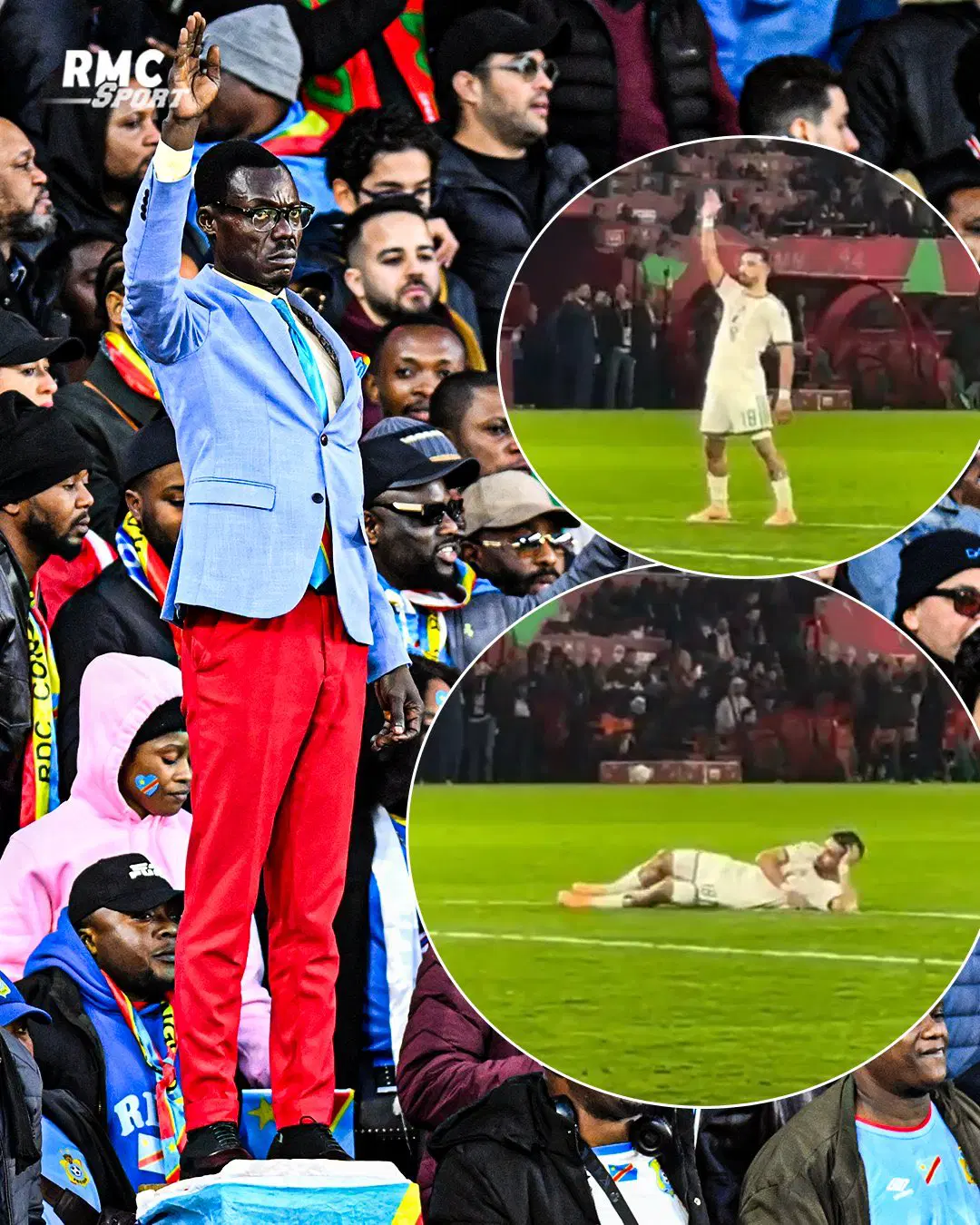
Algeria forward Mohamed Amoura has issued a public apology after facing heavy criticism on social media over his goal celebration during Algeria’s dramatic late win against the Democratic Republic of Congo.
The controversy started after Amoura appeared to mimic the silent, motionless protest famously associated with Congolese fan and activist Vea Lumumba. Many online users interpreted the gesture as mockery, accusing the player of showing disrespect not just to Lumumba, but also to Congo and Africa’s broader history of resistance and independence struggles.
As backlash grew, the gesture quickly became a talking point beyond football, with critics arguing that certain symbols carry deep historical and political meaning and should be treated with care on the pitch.
Reacting to the outrage, Amoura apologised directly to the Congolese people. He explained that he was unaware of the symbolism behind the gesture and insisted there was no intention to offend or provoke anyone. According to him, the celebration was meant as light-hearted banter in the heat of a tense match.
“The match against Congo was a big game, very intense, with a lot of tension and emotion on the pitch,” Amoura said in a social media statement. He stressed that he did not know what the symbol represented at the time and expressed regret that his actions were misunderstood.
Amoura also went on to praise the Congolese team, saying he respects DR Congo and wishes them success in their upcoming World Cup qualification play-offs scheduled for March. He added that his focus remains on football and on representing Algeria with pride.
Meanwhile, the Algerian Football Federation (FAF) has reportedly moved to calm the situation. The federation is said to have extended an official invitation to Vea Lumumba, whose real name is Michel Nkuka Mboladinga, as part of efforts to ease tensions. Reports indicate that a VVIP delegation has been sent to Casablanca to formally receive him.
The incident has once again sparked wider conversations about player celebrations, cultural sensitivity, and how football often intersects with deeper social and historical issues beyond the game itself.