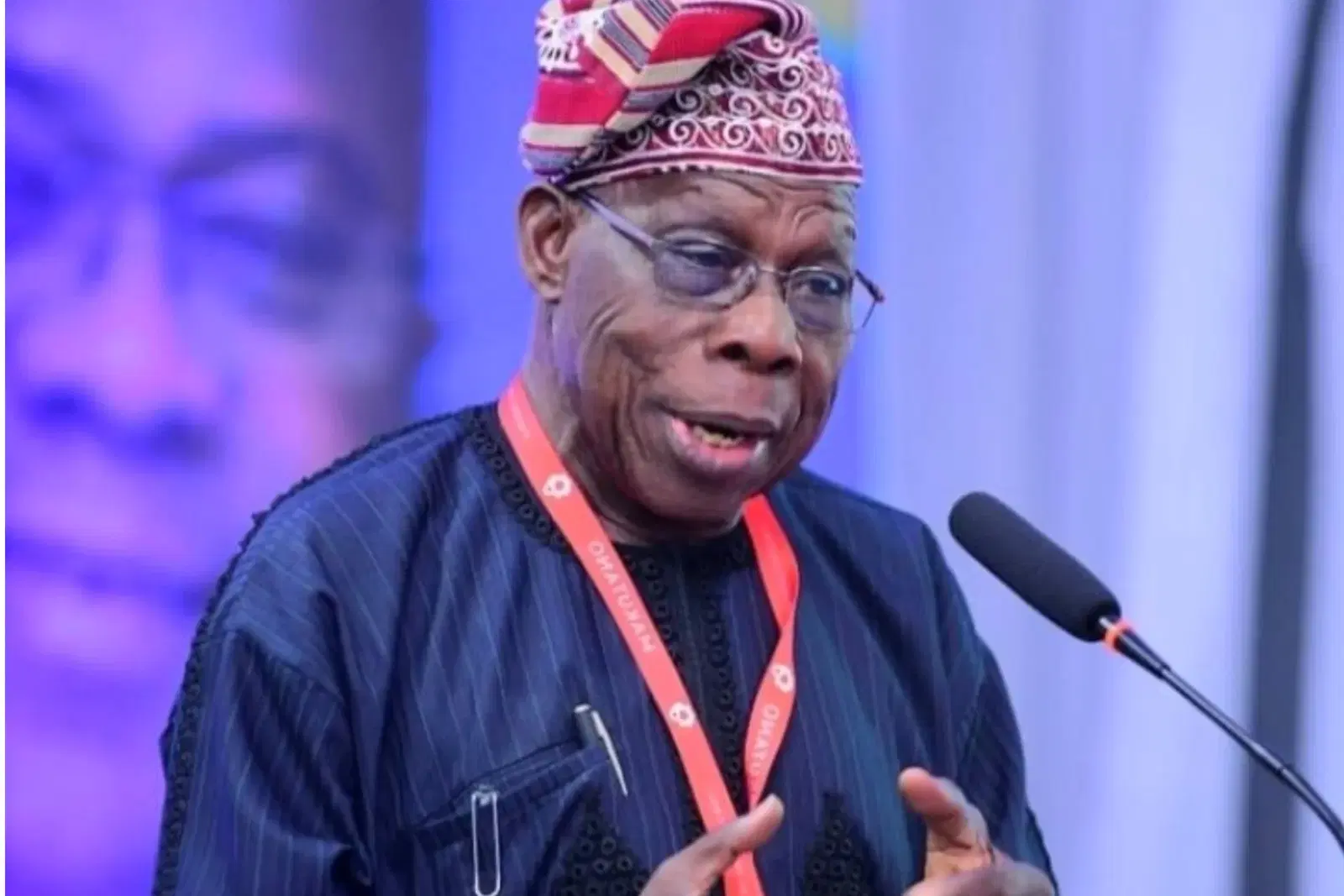
Former President Olusegun Obasanjo has revealed that labour reforms carried out during his time as military head of state were aimed at rescuing Nigeria’s labour movement from foreign influence at the height of the Cold War, warning that such external funding posed serious threats to the country’s sovereignty and independence.
Obasanjo made the disclosure on Wednesday while speaking at the 85th birthday celebration and public presentation of the memoir of former Nigeria Labour Congress (NLC) president, Hassan Sunmonu. The book is titled Memoirs of an African Trade Union Icon: Organise, Don’t Agonise.
According to Obasanjo, Nigeria’s labour movement at the time was dominated by two rival organisations that, although Nigerian in name, were allegedly funded and influenced by foreign intelligence agencies. He claimed one group was backed by the Soviet Union’s KGB, while the other received support from the United States’ CIA.
He said this discovery pushed him to initiate sweeping reforms to create a labour union that would be fully Nigerian—organised, controlled and funded from within the country. Obasanjo explained that the reforms, led by Justice Adebiyi, eventually led to the restructuring of trade unions and the establishment of the NLC.
The former president noted that the NLC leadership emerged through elections conducted without government interference, with Hassan Sunmonu becoming the first elected president. According to him, this restored credibility to organised labour and helped bring relative industrial peace.
Obasanjo also shared a personal anecdote about his relationship with Sunmonu, revealing that he once advised the labour leader to publicly criticise him after their private meetings, so he could maintain the trust and confidence of workers. He added that the introduction of a compulsory check-off system permanently cut off foreign funding from Nigeria’s labour movement.
He praised Sunmonu for elevating Nigerian labour beyond national borders and described him as the most influential labour leader after the late Pa Michael Imoudu.
Also speaking at the event, former Edo State governor and ex-NLC president, Senator Adams Oshiomhole, reaffirmed his lifelong commitment to the labour movement. He urged labour leaders to organise rather than agonise, stressing that progress would only come through struggle and accurate engagement with facts. “I will be with labour till the end of my life,” he declared.
Current NLC President, Comrade Joe Ajaero, used the occasion to strongly criticise Nigeria’s new tax laws, rising public debt and what he described as the systematic exclusion of labour from major policy decisions. He argued that the tax reforms place additional burdens on workers and the poor, even taxing the national minimum wage.
Ajaero accused the government of deliberately sidelining labour from the Presidential Committee on Tax, saying workers were excluded because they were “meant to be on the menu.” He warned that policies crafted without labour’s input were deepening poverty, eroding trust and weakening democracy.
Drawing from the philosophy of Sunmonu’s memoir, Ajaero said the government had chosen to “enrage rather than engage,” pointing to decisions on fuel pricing, taxation, wages and social services taken without meaningful consultation.
He also raised concerns about Nigeria’s growing debt profile, questioning how borrowed funds were being used, and warned that ruling by force while bypassing key stakeholders could threaten national stability. Ajaero demanded the immediate constitution of the PENCOM board and called for clarity and restraint in the implementation of the new tax laws.
Human rights lawyer, Chief Femi Falana, SAN, also advised the NLC leadership to emulate Sunmonu’s principled style of engagement, noting that over 60 percent of Nigerians are currently classified as multidimensionally poor.
While honouring Sunmonu as a symbol of courage and integrity, speakers agreed that the event had gone beyond celebration, becoming a moment of reflection on the state of Nigerian workers and the urgent need for inclusive governance.