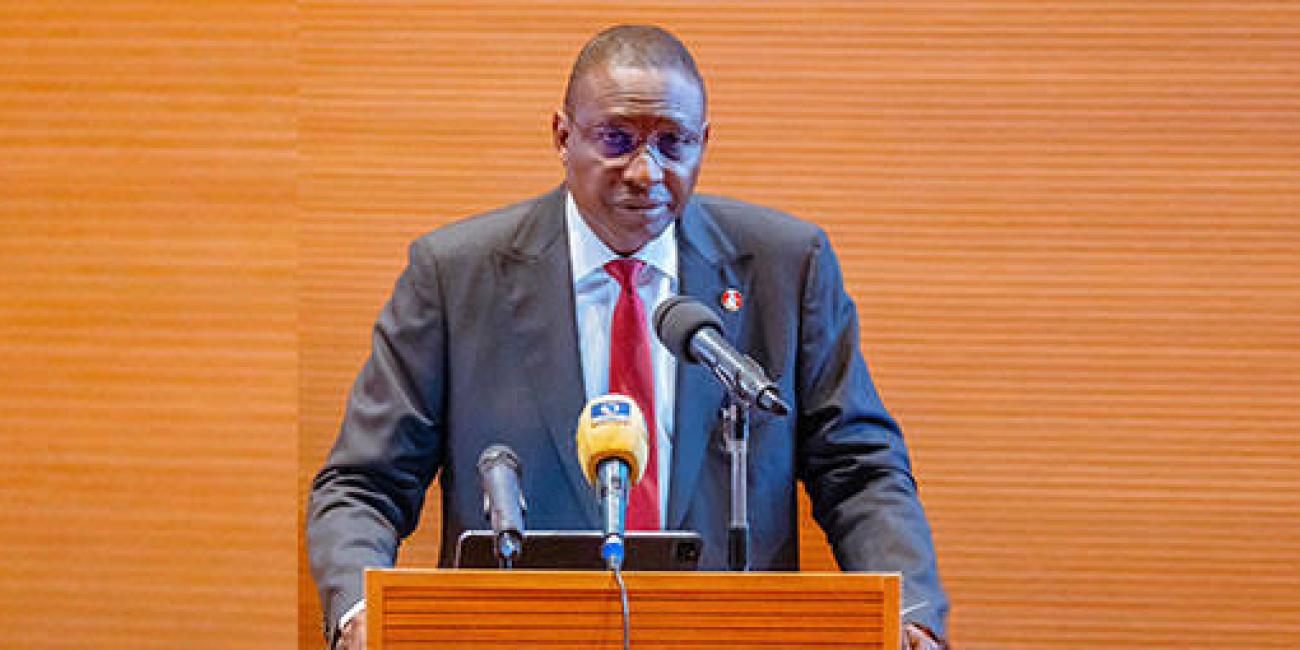
The Chairman of the Economic and Financial Crimes Commission (EFCC), Ola Olukoyede, has accused former Kogi State governor, Yahaya Bello, of diverting state funds to pay his child’s school fees while he was still in office. According to the EFCC boss, the payment was allegedly made in advance in anticipation of Bello’s exit from government.
Olukoyede made the allegation during an appearance on Sunday Politics, a programme aired by Channels Television, where he offered fresh insight into the ongoing prosecution of the former governor. He also used the platform to defend the EFCC’s handling of the case amid public criticism and questions about delays.
According to him, Bello allegedly moved money directly from the Kogi State Government’s account to a bureau de change and used the funds to pay $720,000 as advance school fees for his child. Olukoyede described the move as a clear abuse of public office and a troubling misuse of state resources.
“A sitting governor, because he knows he is going, moved money directly from government to bureau de change, used it to pay the child’s school fee in advance, $720,000 in anticipation that he was going to leave the Government House,” the EFCC chairman said.
He added that the alleged action was even more disturbing considering the economic condition of the state at the time. Olukoyede questioned how such a transaction could be ignored in a state grappling with poverty and limited resources, insisting that the commission could not look the other way.
The EFCC chairman also revisited his widely publicised statement from April 2024, when he vowed to resign if Bello was not prosecuted. At the time, the case had generated intense controversy and political debate across the country.
Responding to critics who argue that the case has dragged on for too long, Olukoyede insisted that the EFCC has done its job and that the matter is now before the courts. He stressed that prosecution does not automatically translate to conviction, as that responsibility rests with the judiciary.
“I have three cases against Yahaya Bello. Am I the judge who will determine conviction? I have done my work. I have fulfilled my mandate,” he said, urging Nigerians to understand the limits of the EFCC’s role.
Bello is currently facing multiple charges before different courts. One of the cases involves a 16-count charge bordering on alleged property fraud valued at N110 billion, while another centres on a 19-count charge of alleged fraud and money laundering involving N80.2 billion.
The former governor was also declared wanted by the EFCC in April 2024 over alleged financial crimes estimated at about N80 billion, a development that sparked nationwide attention and debate.
Reaffirming the commission’s stance, Olukoyede said the alleged $720,000 school fees payment was uncovered during investigations into Bello’s financial activities while in office. He maintained that the EFCC would pursue the case to its logical conclusion, regardless of the political weight or influence of those involved.
The prosecution of the former Kogi State governor remains ongoing, with the EFCC insisting it has filed the necessary charges and assembled substantial evidence, while the courts are expected to ultimately determine the outcome.