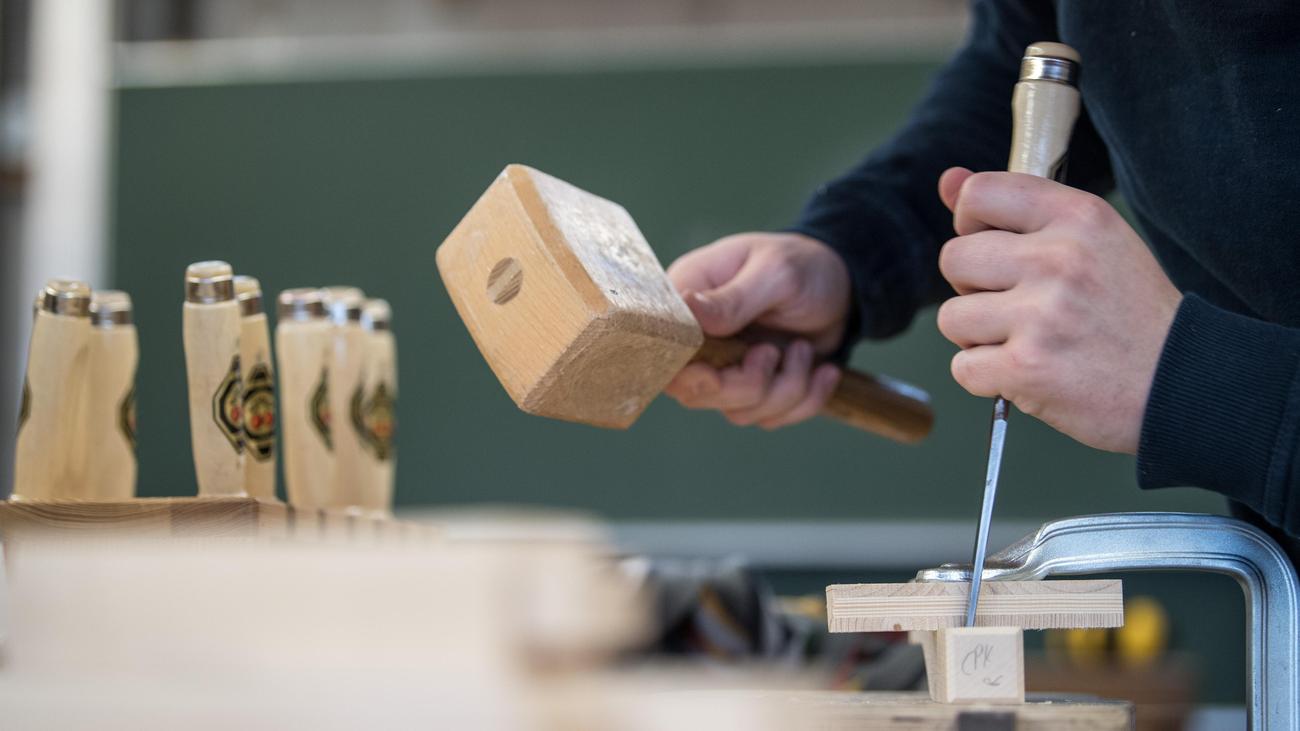
Germany’s craft businesses are missing an estimated 200,000 Skilled workers. At the end of December we were at the Federal Employment Agency 119,565 vacancies in the craft sector were reported, as the Central Association of German Crafts (ZDH) announced upon request. Since many companies do not report vacancies to the employment agency, the ZDH estimates the actual need for skilled workers to be 200,000 additional employees slightly less than last year.
The annual craft fair opens in Munich today. Big topic is next to that Shortage of skilled workers the economic crisis, which is not leaving its mark on the trades: For this year, the ZDH only expects weak sales growth of one percent for the industry. Unlike many large industrial companies, however, craft businesses are not cutting jobs on a large scale.
According to estimates by the central association, employment could fall by 60,000 employees this year – but the main reason is that many craftsmen are reaching retirement age. Operational tasks also play a role, among other things because company bosses are retiring.
According to ZDH, small businesses with up to four employees are particularly under pressure. A growing number of owners are giving up because they cannot find successors – or the burdens on the company due to bureaucracy, taxes, social security contributions and energy prices are making it increasingly difficult to achieve profitability.
Many training positions remain unfilled
Recruiting young talent remains one of the biggest topics at the craft fair. The weak economy has reduced the shortage of apprentices somewhat. In 2025, 16,213 apprenticeship positions in the skilled trades remained unfilled across Germany, almost 2,900 fewer than in the previous year. However, one in nine training places still remained vacant. These figures also only include the apprenticeships reported to the Federal Agency.
“Too many young people, and not least their parents, still do not have a clear view of the diverse and excellent career prospects that exist in the craft sector,” says Bavarian Craft President Franz Xaver Peteranderl. “The still widespread madness about academics obscures the view of reality.”
ZDH President Jörg Dittrich confirms that the black-red federal government has provided important impulses in economic policy. But like other sectors of the economy, craftsmen expect and demand more and faster reforms, especially relief in terms of bureaucracy, taxes, energy prices and social security contributions.
Merz is expected on Friday
Many companies had pinned their hopes on the change in government last year, but these have now given way to disappointment across all sectors. Dittrich’s message to the coalition: “Politicians must now be measured by whether they have the courage to implement fundamental structural reforms and then implement them decisively.”
Chancellor Friedrich Merz (CDU) is expected to attend the annual top-level meeting in Munich on Friday. In addition to the host trade, the employers’ association, the Federal Association of German Industry and the Association of Chambers of Industry and Commerce also take part.