By Erasmus Ikhide
NIGERIA is no longer a country at war with terror; it is a country where the state has effectively signed a deed of surrender through negligence, luxury, and physical absence.
As the embers glow in Pulka and the military mourns the brutal loss of yet another high-ranking commander, the chilling reality has set in: the Nigerian people are alone, and the “Renewed Hope” promised in Abuja has become a “Renewed Horror” on the frontlines.
The Coordinated Collapse
On the night of April 8-9, 2026, the security architecture of Borno State did not just crack; it shattered. In a terrifying display of operational synchronization, ISWAP and JAS fighters launched simultaneous assaults on Pulka and Benisheikh.
At Pulka, the last sanctuary for 12,000 survivors of the March 3 Ngoshe massacre, troops were reportedly forced into a desperate retreat after running out of ammunition.
Let that sink in: in the heart of a theater of war, our soldiers—the “thin green line”—were left to face a high-intensity assault with empty magazines. The subsequent destruction of heavy machinery belonging to Decency Road Construction was not just an attack on equipment; it was the systematic dismantling of the region’s future.
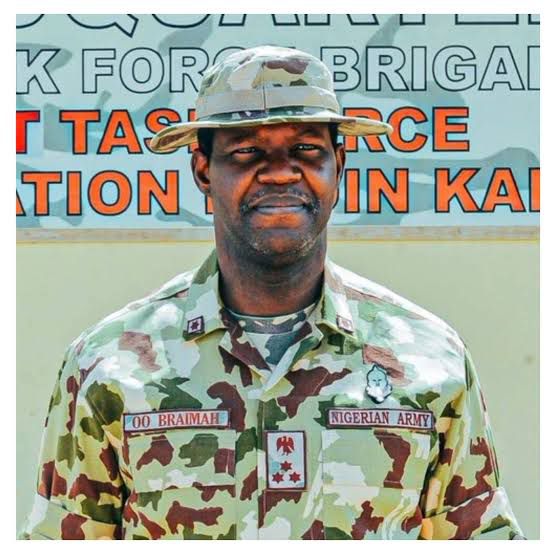
At Benisheikh, the tragedy took on a more personal, senior face. The death of Brigadier General O.O. Braimah, a commander who died defending his base, marks the second loss of a Brigadier General in five months. When men of this rank are falling in base assaults rather than ambushes, it signals that the military’s fortress strategy is a myth.
The “Airport-Only” Commander-in-Chief
While Brigadier Generals die in the dust of Borno and IDP camps are leveled, where is the Commander-in-Chief? The contrast is as stark as it is shameful. In 2015, Goodluck Jonathan stood in the theater of war in Maiduguri, flak-jacketed and present.
In 2026, President Bola Ahmed Tinubu is becoming a “Tarmac President.” His recent visit to Plateau State following the Palm Sunday massacre was a masterclass in disconnection.
Citing “logistical constraints” and “lack of airport lighting,” the President refused to even enter Jos city, meeting grieving families in an airport departure lounge before jetting back to the safety of the Villa.
If the President cannot find the courage to drive 40 minutes into Jos, how can he expect a young soldier to hold a perimeter in Pulka with no bullets?
The Price of Complicity
The irony is suffocating. Senator Ali Ndume, currently in a political dogfight with the presidency, now watches as the very constituency he represents is incinerated.
Rumors swirl that the heavy machinery burned in these attacks—bulldozers and mining equipment—belonged to the Senator’s own interests. In Nigeria, coincidence is a rare currency; if the political class is finally feeling the heat in their own pockets, perhaps now the rhetoric will shift.
But for the common man in Pulka, there is no mining equipment to mourn—only the loss of homes, lives, and the last shred of faith in a government that remains illegitimate, illegal, and complicit.
A Call for Truth
The administration cannot continue to fight a war with press releases issued from Lagos and Abuja. You cannot defeat ISWAP with N300,000,000 wristwatches or “Restoring Hope” rice bags.
If the President truly wishes to walk the talk, he must leave the airport lounges and the foreign summits. He must stand where the smoke is rising. Until then, every drop of blood spilled in Pulka is a testament to a leadership that has mastered the art of the choreographed spectacle while the nation it purports to lead burns to the ground.
Erasmus Ikhide contributed this piece via: ikhideluckyerasmus@gmail.com