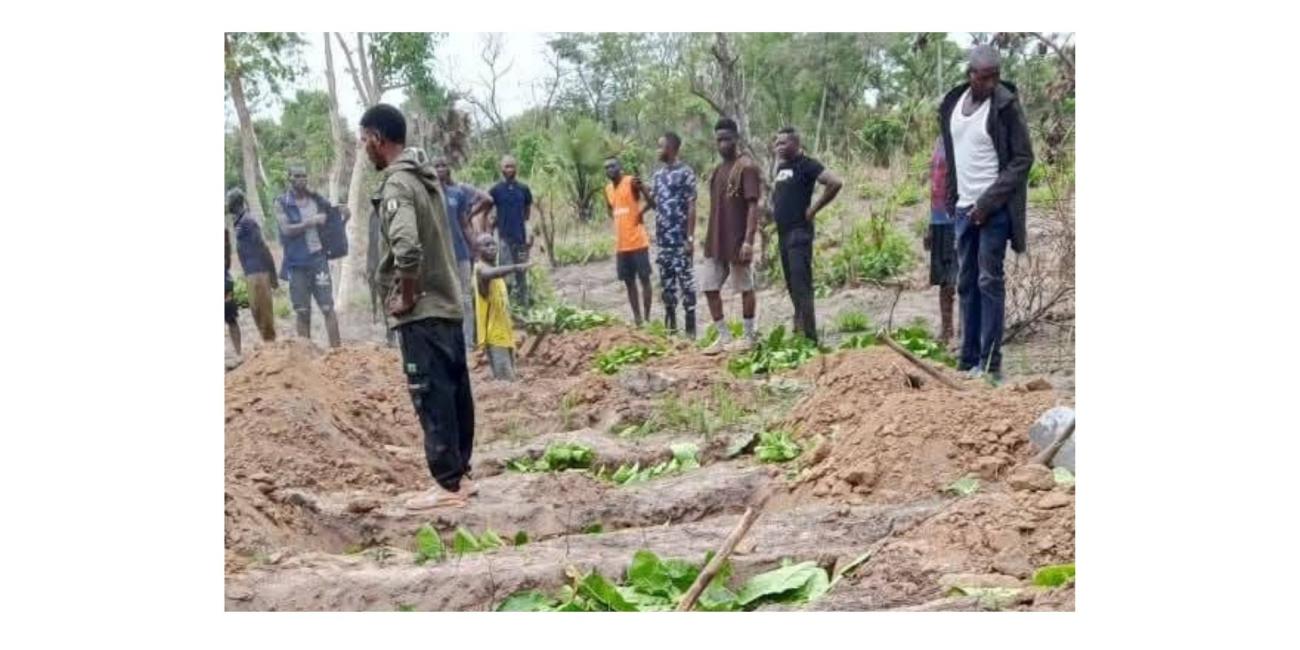
The quiet farming community of Edikwu Ankpali in Benue State has been thrown into deep mourning following a brutal attack that claimed the lives of at least nine residents—men described not just as victims, but as the backbone of their families.
According to local accounts, the attack occurred on Sunday night, leaving behind grief, fear, and a painful sense of abandonment. Community members insist these were not just casualties in a headline, but fathers, providers, and leaders whose absence will echo for generations.
“This isn’t farming but burial,” one resident lamented, capturing the emotional devastation that now defines daily life in the area. The victims, many of whom were primary breadwinners, were reportedly killed in circumstances that have left families shattered and entire households destabilised.
Among those killed was 31-year-old Elaigwu Pelu, a father of four who had already endured the hardship of losing his parents early in life. Also lost was 62-year-old Oigene Ogah, a patriarch responsible for a large household of 15 children, and 78-year-old Adah Aboje, remembered for raising 35 children across generations.
Others include Peter Omafu, 59, a father of 13 known for his strong presence in his family, and John Peter Musa, 33, who leaves behind two young children. Ogagwu John, 31, and Eluma Ogbeni, 30—both fathers of young families—were also among the victims, alongside John Elegbo, 39, a father of five, and Gideon Monday, 29, described as the only son and hope of his parents.
Residents say the impact goes far beyond the immediate tragedy. Entire families now face an uncertain future, stripped of their providers and stability overnight. “The world needs to understand that these are not just numbers,” a community source stressed. “These are lives that mattered deeply.”
The violence adds to an already troubling pattern in the region. Just days earlier, another attack reportedly killed about 11 people in Mbatsaida community, deepening fears of a sustained wave of insecurity across parts of Benue.
When reporters visited the affected areas, the reality was stark—homes abandoned, farmlands left untended, and communities emptied in haste. Survivors have fled to nearby settlements like Agena, where they now struggle to rebuild their lives under uncertain conditions.
Speaking on the situation, the village head, Chief Gbakaa Lorpine, traced the roots of the crisis back to 2014, alleging that repeated warnings to authorities have gone unaddressed. He described a cycle of violence tied to longstanding disputes over grazing, one that has steadily escalated over the years.
Recounting the most recent attack, he explained that it came without warning. Armed assailants reportedly entered through the marketplace in the early evening and opened fire indiscriminately. Eleven people were killed in that incident alone, with several others injured.
The chief himself narrowly escaped, fleeing into the bush with nothing but the clothes on him. His account reflects a broader reality—communities living in constant fear, uncertain of when the next attack might come.
As the death toll rises and displacement worsens, residents are calling for urgent intervention, warning that without decisive action, the cycle of violence will continue to claim more lives and destroy more communities.