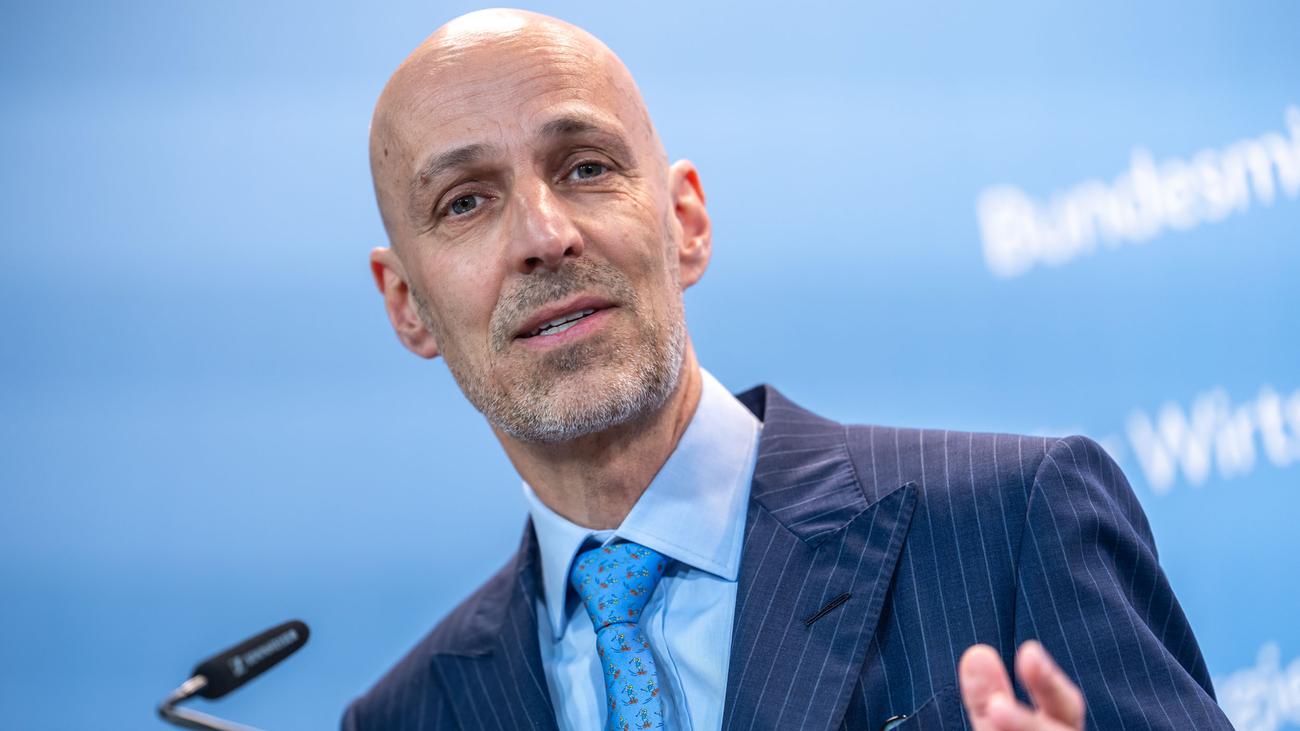
The BDI industry association is canceling its growth forecast this year. Instead of the slight improvement previously envisaged, stagnation is to be expected at best, said BDI President Peter Leibinger at the start of the Hannover Messe. »Industrial production in Germany has fallen every year since 2022. We no longer expect a recovery in 2026,” said Leibinger.
The association bases its expectations on a weak start to the year and new risks as a result the US-Israeli war against Iran. The resulting rise in energy prices and problems with supply chains actually increase the risk of a further decline in production. If the disruptions in shipping traffic are caused by the Blockade of the Strait of Hormuz If this continues, production could shrink for the fifth year in a row.
Accordingly, capacities are currently only 78 percent utilized. Compared to other countries, the stagnation already seems like a decline, warned Leibinger: “In relative terms, we are falling further behind, because other economies are growing.” However, geopolitical developments such as the Iran War are not the cause of the crisis in German industry, but would only exacerbate it: “The cause lies with us.”
Industry association criticizes previous promises of relief
Leibinger warned of structural problems that have been weighing on German industry for years. These included high location costs, taxes and bureaucracy. Germany is “no longer competitive as a location” and must “act now.” The BDI President called on the federal government to present a reform package that would relieve the burden on industry by summer at the latest. »What has been announced so far is disappointing, discouraged and misses the point. It is essentially a reaction to the Iran war, not a reform concept for greater competitiveness.
The federal government recently announced a two-month fuel discount and wants to support companies in establishing a voluntary one Relief bonus of 1,000 euros pay out to their employees. There is criticism of both measures: Employers see the possibility of a tax-free premium as a burden because they would still have to pay the premium themselves and the federal government is simply waiving the taxes on it.
“The whole thing will fizzle out,” said Leibinger on Saturday on ZDF.today-journal. “The vast majority of companies are under so much economic stress that they cannot pay any premiums.” He described the federal government’s measures as “piecemeal.” The BDI President further demanded: “We need a government that has the courage to tie its political fate to the success of reforms – and indeed to their success an overall reform concept.”
BDI calls for lower wage costs and rapid tax cuts
The federal government recently announced a larger reform concept, but this refers to on the health sector. The BDI had already done so at the beginning of April Similar measures are required in the labor and social areas. Managing Director Tanja Gönner called on the federal government to reduce labor costs, increase the retirement age and allow more flexibility in the labor market.
She also called for corporate tax to be reduced this year. The promised reduction is currently expected to take effect much later: The Union and SPD had agreed in the coalition agreementto gradually reduce corporation tax from the current 15 percent to ten percent from 2028 – according to previous plans, by one percentage point per year until 2032.