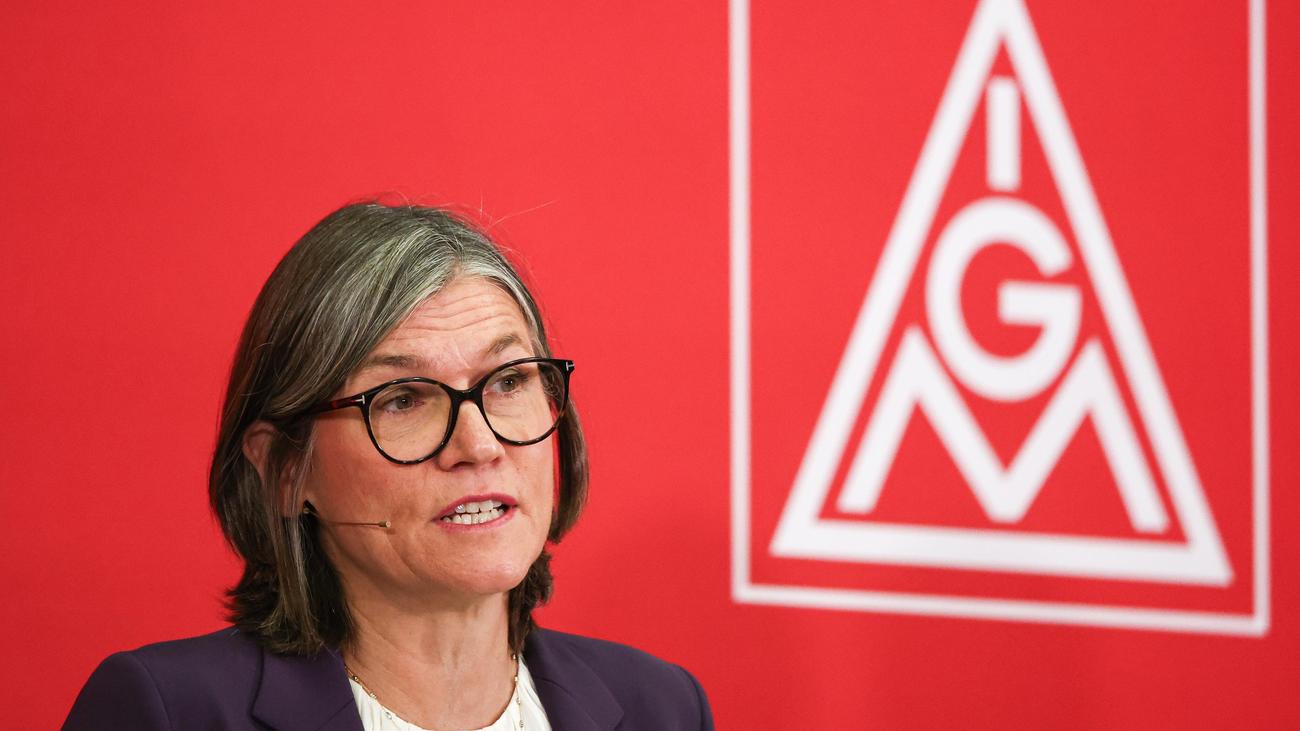
The head of Germany’s largest trade union IG Metall, Christiane Benner, has become Chancellor Friedrich Merz (CDU) for his Statements on pension policy criticized and threatened the government with strikes. »If the government… statutory pension “Cut it short, then the hut will burn,” said Benner South German newspaper. “There are no-gos to which we would respond with protests.”
Merz said at an event on Monday that the law was legal pension could only be basic insurance in the future. Benner called this irresponsible. The unions are open to structural reforms, but will not accept cuts that make employees poorer. She also announced massive resistance if the government introduced so-called waiting days, during which employees who reported sick initially received no wages.
At the same time, Benner welcomed the federal government’s reduction in mineral oil tax as a result of the Iran War. She viewed the proposal for a tax-free bonus of 1,000 euros for employees as generally positive as a relief, but criticized the lack of coordination with the social partners. In contrast to a similar regulation in 2022, the government acted unilaterally this time. Benner primarily called for permanent wage increases and referred to the collective bargaining round coming up in the fall for the approximately four million employees in the metal and electrical industries. The union is ready to strike and has a well-filled strike fund, she said.
Criticism from the German Federation of Trade Unions
Other unions also feel that the government is not taking enough notice of the reform processes. “We are currently experiencing, both in the pension commission and in the finance commission, health and other areas, that the social partners, i.e. both the employers and us, are not included at all,” complained the chairwoman of the German Trade Union Confederation, Yasmin Fahimiopposite that Mirror. “We’ll be brought in for an hour so we can comment a little bit,” said the DGB leader.
Fahimi warned that this approach harms both the quality and acceptance of reforms. “I can’t just make social policy out of the scientific bubble,” said Fahimi. We need to talk about “a lot of changes” and take “joint initiatives.” »We have to pacify social debates. And that requires greater social consensus.«