By Erasmus Ikhide
NIGERIA is not drifting toward a state of emergency; it has already arrived. From the charred remains of Woro in Kwara State to the killing fields of the Middle Belt and the digital shadows of the National Assembly, the Federal Republic of Nigeria is being systematically dismantled.
At the center of this wreckage sits President Bola Ahmed Tinubu—a leader whose gaze is fixed firmly on the 2027 horizon while the ground beneath his feet is soaked in the blood of his compatriots.
The “Renewed Hope” mantra has curdled into a blueprint for a funeral. As we approach mid-2026, the question is no longer whether Nigeria will survive the APC’s mismanagement, but whether the international community, specifically the United States, will act before the 6th largest nation on earth becomes its greatest security liability.
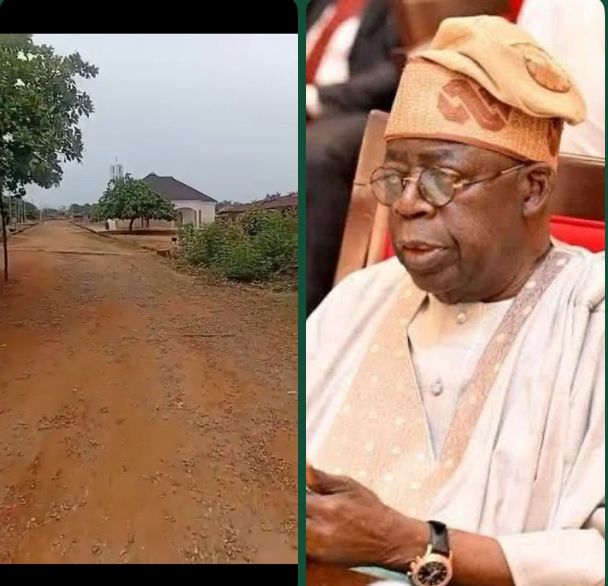
The Kwara Massacre: A Postcard from the Abyss
In early February 2026, the village of Woro in Kwara State became a haunting monument to this administration’s indifference. At least 162 Nigerians were slaughtered in a single night—bound, executed, and burned—by the Lakurawa group, an ISWAP-affiliated faction that is no longer “fringe” but a governing force in rural Nigeria.
While these communities were being “deserted” as a survival mechanism, the presidency’s response was a familiar carousel of reactive rhetoric. Tinubu announced “Operation Savanna Shield,” yet the killings persist. In Ifelodun LGA alone, over 2,000 residents have fled into the bush. For these Nigerians, the “Caliphate” is not a political theory; it is the reality of their empty homes.
The 2027 Heist: A Legislative Trojan Horse
While the country bleeds, the APC machinery is obsessively focused on the mechanics of power retention. The Electoral Act 2026 is the smoking gun. Civil society groups like FixPolitics have rightly flagged the removal of mandatory electronic transmission of results as a “deliberate confusion” designed to facilitate a manual heist in 2027.
By making result transmission “discretionary” and shortening the litigation window to a 6-month “justice-by-stopwatch” trap, the Tinubu administration has essentially legalized electoral fraud.
They are building a labyrinth of loopholes to ensure that even if the people vote, the system—appointed and controlled by the presidency—will decide the winner. It is a “Rigging License” sied in the dark, with an official gazette that remains hidden from the public.
The Case for Global Intervention
The Biden-Trump transition era in Washington must recognize that Nigeria is the “epicenter of global terror,” as AFRICOM’s Gen. Michael Langley warned. A “sharia-exporting giant” is not a threat to Nigeria alone; it is a threat to the world.
The United States must move beyond the polite diplomatic tap-dance. It is time for targeted sanctions on officials complicit in the hollowing out of the 2026 Electoral Act. Most importantly, military assistance must be tied to the protection of rural communities, not just the fortification of the capital’s “Green Zone.”
Without mixing words, direct support for the millions of IDPs who have been abandoned by a “clan-based” presidency that prioritizes political loyalty over human life.
Bola Ahmed Tinubu’s presidency is increasingly defined by a bizarre paradox: a ruthless efficiency in legislative capture and a total impotence in civilian protection. Human lives are more precious than the hollow ambition of a man who would rule over a graveyard.
If the U.S. and the global community do not intervene now to dismantle these legal landmines and secure the Nigerian heartland, they will soon be dealing with the fallout of a total collapse. Nigeria is at the crossroads. One path leads to a techno-sovereign, innovative ally; the other leads to a coronation ceremony for a heist, held amidst the ruins of a republic.
Nigeria’s democracy is on life support, and the 2026 Act might just be the hand that pulls the plug.
Watch video below;
Erasmus Ikhide contributed this piece via: ikhideluckyerasmus@gmail.com