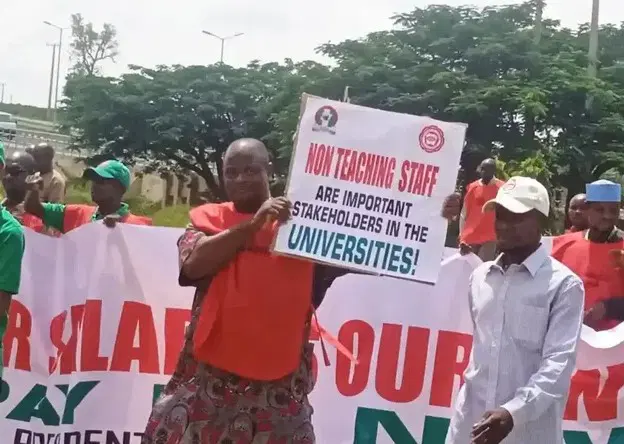
Nigeria’s public universities remain at a standstill as talks between the Federal Government and striking non-academic staff ended without agreement, deepening uncertainty for students and families across the country.
Members of the Senior Staff Association of Nigerian Universities (SSANU) and the Non-Academic Staff Union of Educational and Associated Institutions (NASU) have continued their indefinite strike, bringing key operations in universities to a halt.
From hostels to clinics, administrative offices to support services, campuses have gone unusually quiet. What would normally be buzzing academic environments are now largely inactive, leaving students stranded and academic schedules disrupted.
The strike, which began on April 30, followed the expiration of a one-month ultimatum issued by the unions. At the heart of the dispute is the renegotiation of a long-standing agreement with the government, as well as disagreements over salary adjustments and welfare conditions.
While the Federal Government had proposed a 30 percent salary increase, the unions rejected it, insisting on a 40 percent adjustment and accusing authorities of bypassing proper negotiation channels.
Despite efforts to find common ground, both sides walked away from the latest meeting without resolution. Government representatives reportedly appealed for the strike to be suspended while discussions continue, but union leaders declined, stating they must first consult their members.
Across campuses, the impact is already being felt.
At the University of Maiduguri, examinations have been postponed, while at the University of Jos, workers took to the streets in protest, voicing frustration over what they described as unequal treatment and delayed negotiations.
Union leaders say the strike is total and widely observed, emphasizing that their demands are centered on fairness, equity, and respect for agreements.
For many Nigerians, the situation is becoming all too familiar—a cycle of strikes disrupting education and leaving students caught in the middle.
With another round of talks scheduled, there is still hope for resolution. But until a breakthrough is reached, thousands of students remain in limbo, uncertain of when normal academic life will resume.