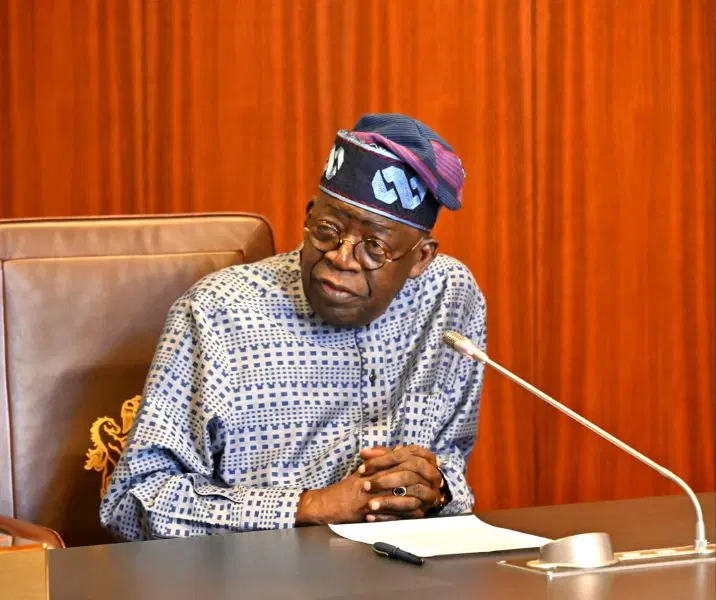
Fresh cracks are beginning to show within Nigeria’s ruling party as tensions rise ahead of the 2027 elections, with several APC aspirants openly rejecting attempts by governors and party leaders to impose consensus candidates across different states.
As the party commenced its primaries starting with the House of Representatives elections, internal disagreements over candidate selection have thrown the APC into one of its most turbulent political moments in recent years.
While governors under the party have united behind President Bola Ahmed Tinubu for a second-term presidential ticket through consensus, many governorship and legislative aspirants are pushing back strongly against similar arrangements in their states.
The growing resistance reportedly forced the party’s National Working Committee to soften its initial consensus strategy and release materials for direct primaries in several states.
APC National Chairman, Nentawe Yilwatda, warned aspirants against actions capable of disrupting the process, threatening suspension for anyone involved in violence, anti-party activities or attempts to undermine the primaries.
According to him, only one candidate can emerge in any contest, urging party members to accept outcomes peacefully in the interest of democracy and party unity.
Despite the warning, fierce battles are already emerging across the country.
In Ogun State, former governor Gbenga Daniel is reportedly preparing for a showdown with Governor Dapo Abiodun over the Ogun East senatorial ticket, while other aspirants are resisting moves to endorse Senator Olamilekan Adeola as consensus governorship candidate.
In Rivers State, APC chieftain Tonye Patrick Cole dismissed claims of any consensus arrangement, insisting that only direct primaries would determine candidates.
“There is no consensus in Rivers State,” he declared, stressing that all aspirants must face party members directly at the polls.
In Nasarawa, former Inspector-General of Police Muhammed Adamu accused political forces within the state of attempting to manipulate the process in favour of Senator Ahmed Wadada, allegedly backed by Governor Abdullahi Sule.
Supporters of Adamu described the alleged arrangement as “political manipulation in its crudest form,” warning against attempts to hijack the will of party members.
Former Communications Minister Isa Pantami also rejected reports of a consensus arrangement in Gombe State, insisting that direct primaries remain the only fair path.
In Kebbi State, governorship hopeful Dr. Kabiru Sani Giant openly criticised the idea of consensus, arguing that party members should be allowed to freely choose candidates through voting rather than elite negotiations.
Meanwhile, APC governors continue to publicly stand behind Tinubu’s second-term ambition.
Chairman of the Progressive Governors’ Forum and Imo State Governor Hope Uzodimma said the 31 APC governors had agreed to support Tinubu’s return bid through consensus.
According to him, the governors are united in backing the President and committed to promoting the administration’s policies ahead of the 2027 election.
However, Senate Majority Leader Michael Opeyemi Bamidele clarified that under Nigeria’s Electoral Act, no aspirant can legally be forced into a consensus arrangement against their will.
He explained that even a single objection from an aspirant is enough to trigger direct primaries.
Across Kaduna, Zamfara, Ondo, Bauchi and other states, party members and aspirants have continued protesting against alleged imposition plots, warning that forcing candidates on members could trigger serious internal crises and weaken the party before the general election.
With the APC presidential primary scheduled for May 23, political observers believe the coming weeks could define not just the party’s internal stability, but also the shape of the 2027 presidential race itself.