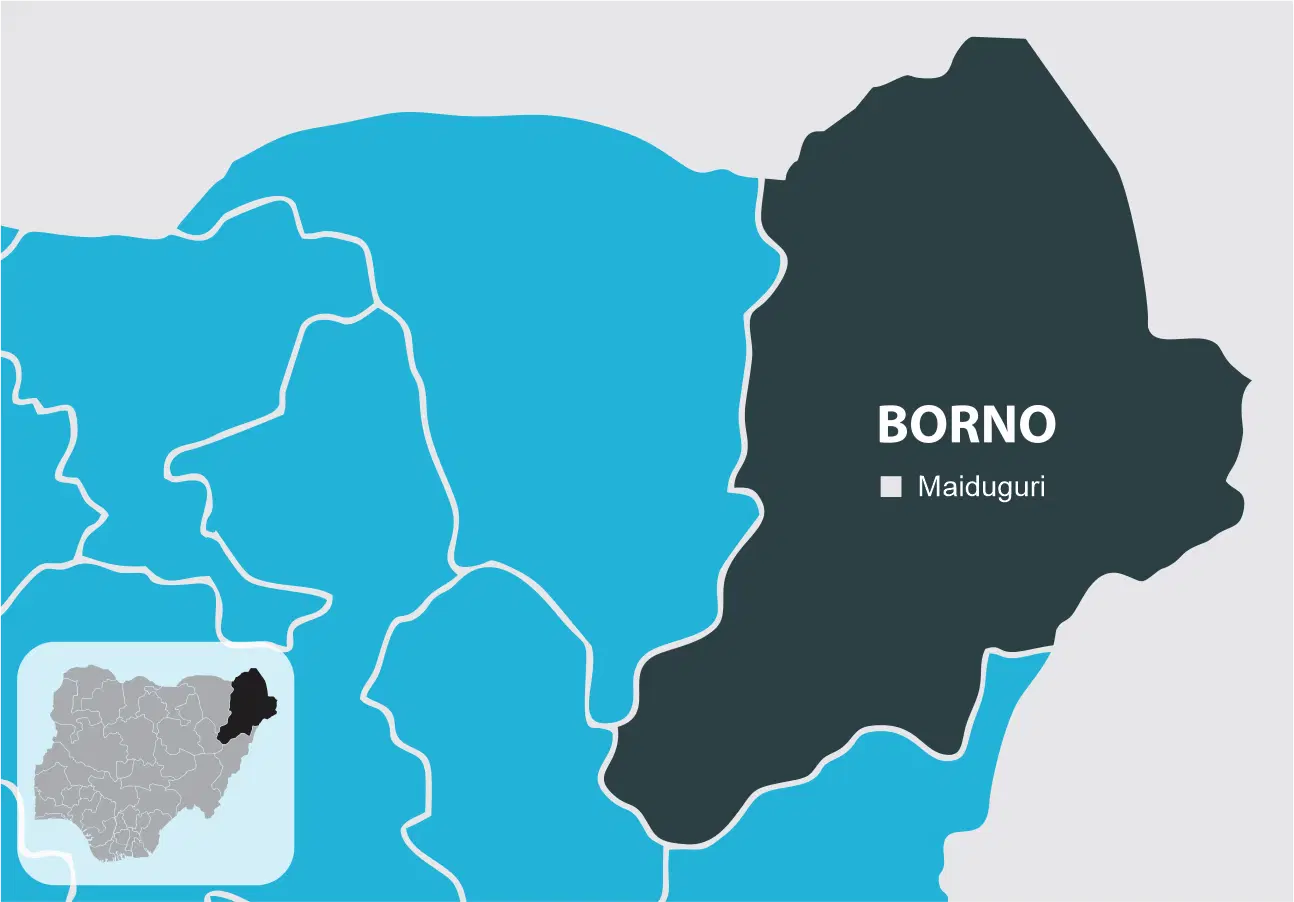
Nigeria’s security challenges intensified over the weekend following the reported abduction of 42 schoolchildren in Borno State, even as the military, in coordination with United States forces, announced the killing of senior ISIS commander Abu-Bilal al-Minuki in a joint counterterrorism operation around the Lake Chad region.
The abduction reportedly occurred at Primary and Junior Government Day Secondary School (GDSS), Mussa, in Askira-Uba Local Government Area, where Boko Haram and ISWAP militants stormed the community during early morning hours. Senator Ali Ndume confirmed that 42 children were taken, including pupils and secondary school students, alongside others kidnapped from nearby homes.
According to reports, 4 students were taken from the secondary section, 28 pupils from the primary school, and an additional 10 children abducted from residential areas, deepening fear and grief across the community.
The attack has been described by local leaders as devastating, with renewed concerns over the vulnerability of schools in remote communities across the North-East, especially in areas around forest corridors linking Nigeria with Niger, Chad, and Cameroon.
The incident came just hours after the Defence Headquarters confirmed that Nigerian troops, working alongside US forces, had successfully eliminated al-Minuki in a precision strike conducted around the Lake Chad Basin.
The operation, which reportedly took place between Metele in Borno State and surrounding insurgent enclaves, was described by military authorities as one of the most significant counterterrorism breakthroughs in recent years.
According to the military, the operation was based on months of intelligence gathering and reconnaissance involving the United States Africa Command and Nigerian forces.
Al-Minuki was described as a key ISIS operational figure linked to propaganda networks, weapons development, drone technology, and transnational extremist coordination across West Africa and the Sahel.
The Defence Headquarters also linked him to the 2018 Dapchi schoolgirls’ abduction in Yobe State, an attack that included the kidnapping of Leah Sharibu, who remains in captivity.
The military stated that no Nigerian or allied casualties were recorded during the operation, which involved coordinated air and ground assaults supported by special forces units.
Meanwhile, United States President Donald Trump confirmed the operation, describing al-Minuki as one of the most active ISIS-linked terrorists globally and praising cooperation with Nigerian forces.
President Bola Ahmed Tinubu also welcomed the development, describing it as a milestone in international counterterrorism cooperation and reaffirming Nigeria’s commitment to continued intelligence sharing and joint operations.
However, security experts have warned that the killing of high-profile terrorist leaders often triggers retaliatory attacks, raising concerns that the latest school abduction may be part of a wider escalation pattern.
Analysts also noted that previous counterterrorism successes in Nigeria have not always translated into lasting reductions in violence, especially in areas where insurgent groups maintain strong rural presence and mobility.
Former President Goodluck Jonathan expressed concern over what he described as growing national desensitisation to violence, warning that repeated killings and kidnappings are gradually being normalised in public life.
Human rights lawyer Femi Falana also urged the federal government to verify intelligence claims through official military channels, cautioning against conflicting public statements regarding counterterrorism operations.
As both the abduction and the reported killing of al-Minuki dominate national discourse, Nigeria continues to face overlapping threats from insurgency, banditry, and organised criminal networks, particularly in the North-East and North-West regions.
Security observers maintain that while military victories are significant, long-term stability will depend on improved intelligence coordination, community protection, and stronger socio-economic interventions in vulnerable regions.