By Erasmus Ikhide
IN the complex, multi-ethnic tapestry of Nigerian politics, statecraft is often defined by a delicate balance between regional aspirations and national loyalty. For over half a century, the South-East region—the industrious, commercial heartland of the Igbo extraction—has carried a deep-seated historical angst.
The echoes of the post-Civil War era still linger, characterized by a persistent and painful grievance: that the noble, post-war federal policy of the “Three Rs” (Reconstruction, Rehabilitation, and Reintegration) was never fully or authentically implemented.
Following the cessation of hostilities in 1970, the promise of total systemic integration remained largely on paper. Decades later, this structural deficit has left a vibrant, resourceful, and economically vital region feeling perpetually marooned on the periphery of federal executive and legislative power. The psychological scars of feeling excluded from the ultimate command centers of national governance have fueled recurring narratives of marginalization.
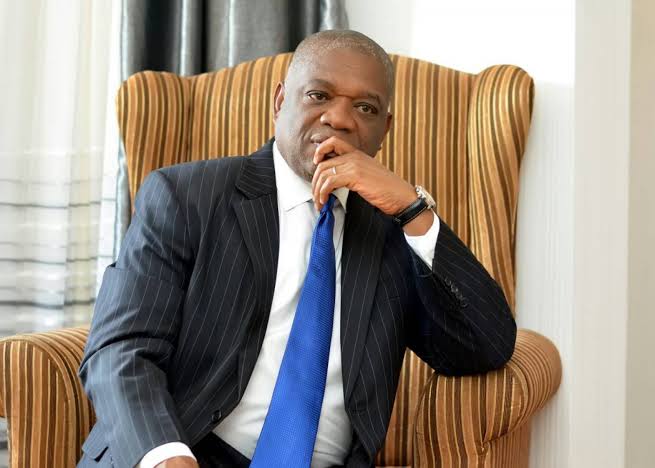
Yet, true statecraft does not merely lament past imbalances; it actively constructs pathways to remedy them. In the contemporary political landscape, no figure embodies this constructive pathway more resolutely than Senator Orji Uzor Kalu. As an unwavering nationalist, a high-ranking legislative captain, a seasoned corporate titan, and a consummate grassroots politician, Kalu represents the definitive bridge capable of anchoring the South-East firmly into the center stage of Nigerian governance. His trajectory suggests that the healing of old regional wounds requires placing tested nationalists at the helm of national leadership.
The Conundrum of Geopolitical Balance in the National Assembly
Nigeria’s constitutional democracy and long-term stability rely on the principles of equity, fairness, and mutual justice. These very ideals form the bedrock of President Bola Ahmed Tinubu’s administration. However, a dispassionate look at the current distribution of power within the National Assembly reveals a glaring geopolitical asymmetry that demands strategic recalibration.
The South-South geopolitical zone currently enjoys an exceptionally robust institutional representation at the apex of parliamentary power. In the upper chamber, the zone holds the prestigious gavel of the Senate Presidency in the person of Senator Godswill Akpabio. Concurrently, in the green chambers of the House of Representatives, the South-South commands the leadership of the legislative agenda, led by Professor Julius Ihonvbere serving as the House Majority Leader.
While these appointments reflect merit and party alignments, the concentration underscores a historical irony and a clear geopolitical gap. In the race for the leadership of the 10th National Assembly, Senator Orji Uzor Kalu stood as a natural, high-ranking, and institutional choice for the Senate Presidency.
Though intricate and unpredictable political crosscurrents ultimately diverted the gavel to other hands, leaving the South-East without a presiding seat in either chamber, the underlying systemic necessity remains unchanged. For the Nigerian project to achieve absolute social harmony, the South-East must not just be accommodated with secondary positions; it must be fully integrated at the highest echelons of legislative leadership.
Absolute Loyalty and the Tinubu Vision of Mutual Justice
What elevates Senator Kalu beyond the status of a regional champion is his absolute, unwavering loyalty to the administration of President Bola Ahmed Tinubu. In an era where political opportunism frequently undermines governance and partisan friction stalls progress, Kalu’s commitment to the “Renewed Hope Agenda” stands as a beacon of principled partnership.
This loyalty is not passive or transactional; it is a shared philosophical alignment. President Tinubu’s administration has consistently prioritized national healing, equity, and structural fairness as the only viable tools to unlock the nation’s collective potential. By standing as a loyal vanguard for the President’s legislative, fiscal, and developmental agendas within the Red Chamber, Kalu has demonstrated that regional integration is achieved not through confrontation or secessionist rhetoric, but through strategic collaboration, mutual trust, and national alignment.
Kalu’s political philosophy reinforces a vital, undeniable truth: a stable, prosperous, and politically satisfied South-East is indispensable to a stable, prosperous, and secure Nigeria. By defending administration policies and fostering inter-ethnic alliances, he proves that his ambition is inextricably tied to the success of the current presidency and the preservation of the corporate existence of Nigeria.
Two Decades of Unbroken Public Service: From Executive Mastery to Legislative Leadership
Senator Kalu’s credentials for the apex legislative seat in the 10th or the upcoming 11th Assembly are backed by a stellar, two-decade track record of public service that seamlessly bridges executive execution and legislative sophistication.
Executive Mastery as Governor of Abia State (1999–2007)
At the dawn of the Fourth Republic in 1999, Kalu was elected the Executive Governor of Abia State. Facing a state crippled by years of military neglect, his administration pioneered people-oriented development:
Infrastructure revitalization. He embarked on an aggressive urban renewal campaign, building durable road networks across Umuahia and Aba, the commercial nerve center of the East.
Social Safety Nets: He engineered free primary and secondary education mandates, alongside free aggressive grassroots primary healthcare networks, ensuring that the dividends of democracy reached the poorest echelons of society. Long before it became a national emergency, Kalu actively fostered local manufacturing, positioning local artisans and small-scale industries as key drivers of regional GDP.
Legislative Sophistication and Institutional Stability
Upon transitioning to the Nigerian Senate to represent the people of Abia North, Kalu instantly commanded institutional respect. Serving as the Senate Chief Whip, he demonstrated masterful legislative diplomacy. He functioned as a crucial stabilizer, managing party discipline and acting as a vital bridge between the executive and the legislature to prevent the toxic impasses that characterized previous assemblies.
Continuing his legislative tenure, Kalu has expanded his footprint. Following his stewardship of the Senate Committee on Privatization, he assumed the chairmanship of the Senate Committee on the South East Development Commission (SEDC). In this role, he oversees critical infrastructural rehabilitation, regional ecological mitigation, and federal development interventions, directly translating policy into regional recovery.
A Detribalized National Footprint
Beyond politics, Kalu is a world-class entrepreneur. Long before entering elective governance, he built SLOK Holding, a multi-billion-dollar West African conglomerate with portfolios spanning shipping, logistics, banking, manufacturing, and real estate. Crucially, his media infrastructure—including The Sun Publishing Limited and The New Telegraph—has consistently provided a platform for balanced national discourse. His business empire employs thousands of Nigerians irrespective of their ethnic or religious affiliations, proving that his vision for economic empowerment is truly detribalized and pan-Nigerian.
Sponsoring Progress: A Legacy of Impactful Legislation
Senator Kalu’s legislative output is heavily defined by structural reforms designed to modernize Nigeria’s economy, protect the vulnerable, and strengthen institutional governance. His legislative scorecard features a series of visionary bills and motions aimed at nationwide transformation. The National Food Bank Bill is a forward-thinking piece of legislation designed to create a structured national safety net, mitigating food insecurity and establishing strategic reserves to protect vulnerable populations from economic shocks.
The Coastal and Inland Shipping (Cabotage) Amendment Bill is leveraging his deep maritime background. Kalu sponsored this amendment to protect indigenous shipping lines, maximize local content, and plug multi-billion-dollar revenue leakages along Nigeria’s waterways.
The same is applicable with the Administration of Criminal Justice Act (Amendment) Bill. The Bill focused on judicial reform with the aims to streamline criminal trials, reduce prison congestion, and eliminate procedural loopholes that delay the administration of justice.
The Journalism and Media Professionals Protection Bill. This Bill aimed at safeguarding press freedom, this bill seeks to guarantee a safe working environment for journalists, reinforcing Kalu’s commitment to institutional transparency and the constitutional role of the fourth estate.
With his unhindered commitment to nation building, he came up with “The Electric Vehicles Transition and Green Mobility Bill, by so doing, demonstrating a keen eye on global economic shifts, Kalu introduced this bill to create a legislative framework for sustainable energy, green transport infrastructure, and a reduced carbon footprint for Nigeria.
The Federal University of Technical Studies Igbere Establishment Bill was particularly a unique one. Designed to bridge the technological skill gap, this bill aims to establish a world-class institution dedicated to producing specialized manpower in engineering, automation, and digital technology.
The strategic horizon of the 10th and 11th Assembly
The proposition for an Orji Uzor Kalu Senate Presidency—whether within the evolving architecture of the current 10th Assembly or the subsequent 11th Assembly—is far more than a matter of political promotion.
It stands as a profound national necessity, an act of intentional statecraft designed to finalize the long-deferred dream of national integration. True national unity is achieved not when a region is merely tolerated or given token appointments, but when its finest, most loyal minds are entrusted with the symbols of collective authority.
Unifying the Polity and Healing Post-Civil War Traumas
Placing Senator Kalu at the head of the National Assembly would instantly neutralize decades of marginalization narratives. It would provide the ultimate psychological and political healing that the Igbo extraction has sought since 1970. It signals to the South-East that they are equal stakeholders in the Nigerian project, effectively turning the page on a painful chapter of historical alienation.
As an accomplished international businessman, Kalu possesses an intimate understanding of global trade, capital flight, and industrialization. His leadership of the Senate would accelerate legislative frameworks designed to unlock the massive, underutilized economic potentials of the southern coastlines, inland dry ports, and regional markets. By fostering bills that encourage private sector-led infrastructure development, his leadership would transform regional commerce into a high-octane engine for national GDP growth.
Fulfilling the Vision of the Three Rs
By elevating a dedicated, grassroot nationalist to the third-highest office in the federation, the federal government would authentically fulfill the promise of total reintegration. Kalu’s presence at the apex of legislative power would ensure that the South-East is hardwired into federal budgetary planning, industrial zoning, and security architecture, replacing structural neglect with systemic development.
The Fit and Proper Leader for a United Nigeria
As Nigeria navigates a critical era of economic recalibration and constitutional amendment, the choice of its legislative leadership must transcend basic political convenience. The nation requires a leader who brings a rare blend of executive competence, deep legislative experience, industrial brilliance, and absolute, proven loyalty to the vision of the executive.
Senator Orji Uzor Kalu represents the perfect convergence of these attributes. He is an unwavering patriot who has consistently chosen national cohesion over regional isolation. He has stood shoulder-to-shoulder with the Tinubu administration, advocating for equity, fairness, and mutual justice for all Nigerians.
As the nation looks toward the strategic milestones of the 11th Assemblies, the call to elevate Senator Orji Uzor Kalu to the Senate Presidency is an idea whose time has come. It is a golden opportunity to heal historical fractures, balance the nation’s political equation, and unlock a new era of shared prosperity. For a stronger, more equitable, and indivisible Nigeria, Senator Uzor Kalu is indisputably the fit and proper leader for the job.
Erasmus Ikhide contributed this piece from Lagos, Nigeria via: ikhideluckyerasmus@gmail.com