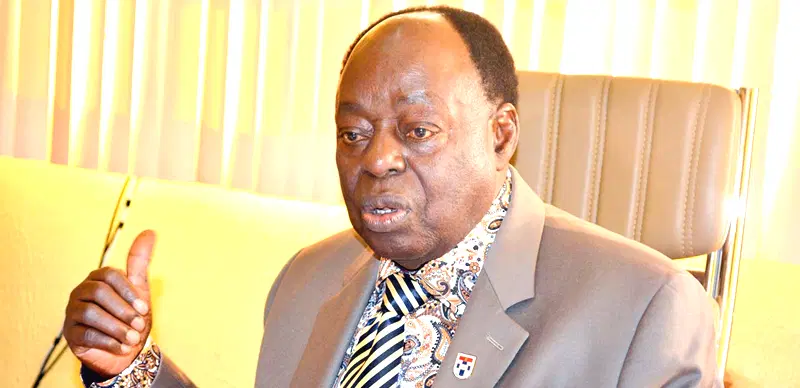

Founder of Afe Babalola University, Ado-Ekiti (ABUAD), and legal icon, Aare Afe Babalola, has sounded the alarm over Nigeria’s rising debt profile, cautioning that the trend is damaging the nation’s credibility and scaring away foreign investors.
Babalola gave the warning during the 2025 International Leadership Conference on Leadership, Governance, Sustainable Change, and Wealth Creation, jointly hosted by ABUAD, Trinity Western University (Canada), and the African Centre for Leadership, Strategy and Development (CentreLSD).
Speaking on the theme “Shaping Transformational Leaders for a Changing World: Tackling Insecurity, Governance, and Development,” he described Nigeria’s current financial condition as “deeply troubling.” According to him, the country’s public debt, estimated at ₦152.4 trillion ($99.7 billion), has placed Nigeria among the world’s top debtor nations.
The elder statesman revealed that many foreign businesses now hesitate to invest in Nigeria due to its worsening economic image. He also noted that local banks are complaining about the Central Bank of Nigeria’s failure to honour government promissory notes, citing debt constraints. “Our banks are complaining that the CBN is not honouring government promissory notes. This shows how much our economy is strained,” he said.
Babalola stressed that the government must prioritize the welfare and security of its citizens, quoting Section 14 of the Constitution, which declares these as the state’s primary responsibilities. He called for urgent fiscal reforms, responsible governance, and policies that restore economic credibility and stability.
In his lecture titled “Transformational Leadership in an Insecure and Disruptive Era,” Dr. Otive Igbuzor, Executive Director of CentreLSD, said transformational leadership is key to addressing corruption, inequality, and unemployment. He emphasized that Africa needs a new generation of ethical, innovative, and resilient leaders capable of challenging outdated systems and promoting progress.
Also speaking, Professor Smaranda Olarinde, Vice Chancellor of ABUAD, noted that the conference came at a crucial time. She highlighted the importance of international collaboration and public-private partnerships in tackling insecurity, poverty, hunger, and economic decline.
The event underscored a shared belief that Nigeria’s path to recovery lies in leadership reform, ethical governance, and strategic economic restructuring.