
AFRICAN agriculture remains severely underfunded despite its potential to advance up to 50 percent of the United Nations Sustainable Development Goals (SDGs), according to a new report by the Boston Consulting Group (BCG) in collaboration with the Paris Peace Forum. The briefing, released on October 23, 2025, warns that growing investment shortfalls could deepen food insecurity, slow climate adaptation, and constrain economic growth across the continent.
Investment shortfalls threaten development
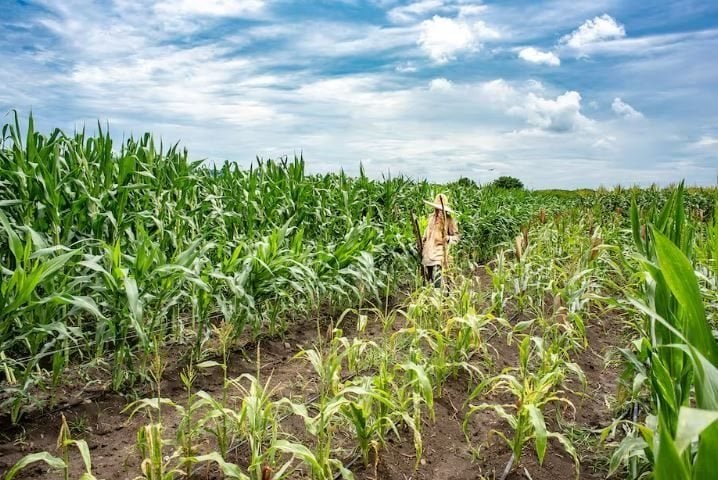
The report reveals that African farms attracted just $49 billion in investment in 2022—far below the estimated $200 billion required to unlock the sector’s full potential. Yet, agriculture already contributes roughly 30 percent of Africa’s GDP and supports 70 percent of its population, most of them women.
Funding gaps remain wide: African farmers receive about $140 per year on average, compared to around $1,300 globally. Limited access to irrigation, mechanisation, and productivity-enhancing technologies forces the continent to import over $27 billion in cereals annually—a figure that could rise to $110 billion by 2030 without urgent intervention.
“Investing in African agriculture is about more than feeding the continent. It is about transforming Africa into a driver of global food security, resilience, and economic growth,” said Younès Zrikem, Managing Director and Partner at BCG in Casablanca and coauthor of the study.
A triple win for social and climate goals
The report highlights that targeted agricultural investment could deliver a “triple win”—reducing poverty, improving food security, and advancing gender equality—while also supporting health and education outcomes.
Currently, 400 million Africans live in extreme poverty, and 60 percent of the world’s acutely food-insecure people reside on the continent. Chronic malnutrition affects 290 million Africans, including 45 million children under five.
With women making up 40 percent of the global agricultural workforce, investment in African agriculture could drive gender equality while climate-smart farming could help reduce displacement pressures for what may become 40 percent of global climate migrants by 2050.
“Strengthening Africa’s agricultural systems is not just a necessity for the continent—it is equally important for the rest of the world,” said Zoe Karl-Waithaka, Managing Director and Partner at BCG in Nairobi.
Public spending remains below targets
Public spending on agriculture across Africa averages only three percent of national budgets, far short of the African Union’s 10 percent target. Only Malawi and Ethiopia consistently meet that benchmark.
Private sector investment accounts for roughly three percent of total agricultural funding, well below the global average of 10 percent.
“Africa’s agricultural potential remains vastly underleveraged—not due to lack of opportunity, but due to underinvestment,” said Olayinka Majekodunmi, Partner at BCG in Lagos. “With the right incentives, blended finance, scalable innovations, and regional collaboration, we can unlock a new era of agricultural transformation.”
Initiatives attempt to close the gap
In June 2024, the Paris Peace Forum launched the Agricultural Transitions Lab for African Solutions (ATLAS) to promote transparency, accountability, and better investment coordination. Its “2×30 Challenge” seeks to double agricultural investment from $49 billion to $100 billion by 2030.
“Bridging the funding gap is not just a moral imperative; it is a strategic opportunity to unlock progress across poverty reduction, climate resilience, and food security,” Karl-Waithaka added. “The time for action is now.”