
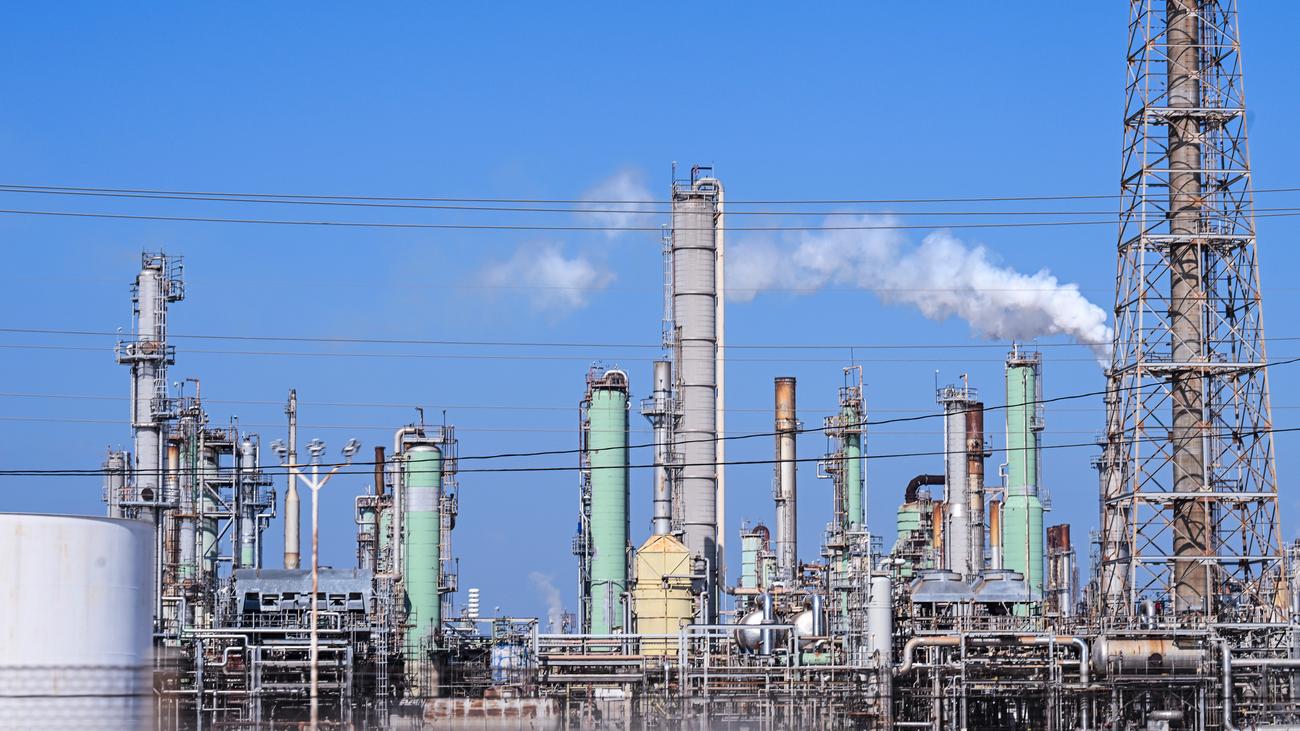
Oil and gas prices have fallen as a result military escalation in the Middle East increased significantly. On Monday night, the values for Brent oil and crude oil fell USA at the start of trading by more than ten percent compared to the previous trading day. The price for Brent oil was temporarily at $82.37 per barrel (159 liters), reaching its highest level since July 2024. US oil was priced at $75.33 at the start of trading, the highest level since June 2025.
As trading continued, prices leveled off slightly lower again, but were still almost eight percent higher than before.
Gas prices in Europe also rose noticeably. The Dutch TTF gas contract, which is considered a reference value, rose to 47.935 euros per megawatt hour by midday on Monday – an increase of almost 50 percent compared to the previous trading day. The news from major state exporter QatarEnergy that it would stop liquefied natural gas (LNG) production had driven the price increase. Qatar is the second largest LNG exporter in the world after the United States. Europe had significantly increased its LNG imports in recent years in order to replace Russian gas.
Consumers are generally not directly affected by price increases: due to long-term contracts, it usually takes a while for energy suppliers to pass wholesale price changes on to private customers.
Fuel and heating oil are noticeably more expensive in Germany
The consequences of the energy price shock are already being felt at German gas stations. According to the ADAC, prices for E10 and diesel had risen by seven to eight cents per liter since Friday by Monday afternoon. The spokesman for the gas station interest association, Herbert Rabl, spoke to the AFP news agency of a large rush and queues at the gas stations.
The increase is significantly greater for heating oil. The Internet portal Heizoel24 gave the price on Monday morning at more than 120 euros per 100 liters. It settled at around 119 euros by Monday afternoon. On Friday the prices were still well below 100 euros.
Bottleneck Strait of Hormuz
The significant price increases depend above all with Iran’s blockade of the important Strait of Hormuz. The Iran controls the bottleneck that is important for shipping. The strait connects the Persian Gulf with the Gulf of Oman, the Arabian Sea and the Indian Ocean. A fifth of the world’s oil production is transported via this trade route every day. A fifth of global trade in liquefied natural gas (LNG) also passes through Hormuz. The fuel comes mainly from Qatar.
The states of the OPEC+ oil network, which includes OPEC states as well as other important producing states such as Russia, decided at a scheduled meeting on Sunday to increase daily production in order to prevent bottlenecks and excessive price increases.
Iranian attacks on oil facilities and tankers
The situation is also affected by Iran attacks on oil facilities and tankers further intensified. In Saudi Arabia, a facility owned by the state oil company Aramco was attacked with suspected Iranian drones. The Saudi Defense Ministry said the drones were intercepted and destroyed. A fire broke out at the facility due to falling debris, but there were no casualties. The country’s energy ministry said some parts of the plant had been temporarily closed as a precautionary measure. But there is no impact on oil production. The Iranian Revolutionary Guard also announced that it had hit three tankers from the USA and Great Britain with missiles in the Gulf and the Strait of Hormuz.
Commerzbank’s chief economist, Jörg Krämer, assumes that the price of Brent oil from the North Sea could rise further towards the $100 mark in the event of a prolonged closure of the Strait of Hormuz. “If the oil price remained this high for several months, it would increase inflation in the euro area by more than one percentage point and reduce economic growth by a few tenths of a percentage point,” said Krämer.