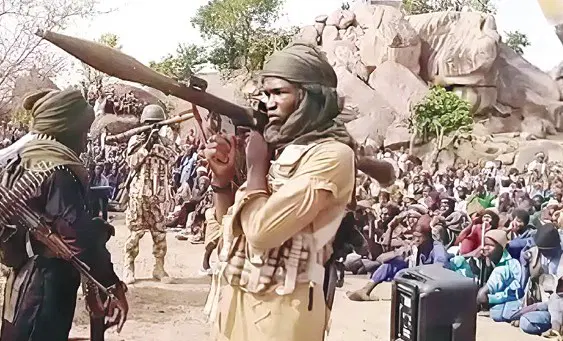
Recent developments in Oyo State have highlighted a troubling and evolving pattern of insecurity, one increasingly tied to forest-based routes, limited rural surveillance, and the gradual movement of armed groups from the North-Central region toward the south.
For communities in Oriire Local Government Area, this shift is no longer theoretical. It is reflected in deserted farmlands, heightened anxiety over rural roads, and disrupted daily routines as residents adjust to a growing sense of vulnerability.
The situation worsened following a coordinated attack along the Ahoro-Esiele/Yawota axis in Ogbomoso, where armed assailants invaded multiple schools and abducted pupils, teachers, and administrators in a daylight operation that left surrounding communities in panic. Schools were abruptly shut, parents rushed to locate their children, and movement across nearby villages slowed significantly.
The crisis deepened further with reports that a teacher, Michael Oyedokun, died in captivity, while distressing videos of abducted victims seeking help circulated widely, intensifying public concern and grief.
Beyond the immediate tragedy, residents say the attack carried a deeper symbolic weight, as schools—long regarded as safe spaces—were directly targeted, shaking confidence in rural security arrangements.
In the aftermath, attention has turned to earlier warning signs, including the January 2026 attack near Old Oyo National Park in Ikoyi-Ile, where forest guards were killed by suspected armed groups operating within the forest belt. Reports of handwritten warnings in nearby settlements, once dismissed as rumours, are now being reassessed in light of recent events.
The Oriire incident has since reinforced fears that insecurity in the region is becoming more coordinated, with forest corridors serving as operational routes for armed movements across boundaries. Rural communities, schools, and farmlands are increasingly exposed due to their isolation and limited security presence.
Security assessments suggest that attackers may have relied on local knowledge networks to navigate the terrain, raising concerns about possible collaboration within affected areas. Investigations into suspected informants and collaborators are ongoing.
Public reaction has been strong, with traditional leaders, civil society groups, and religious organisations condemning the attacks and calling for urgent protection of rural schools. Many have also renewed calls for improved security deployment in forest-adjacent communities.
At the policy level, the incident has further intensified national conversations around security restructuring and the effectiveness of centralised policing in addressing fast-changing rural threats.
Governor Seyi Makinde confirmed the scale of the attack, noting that multiple students and teachers were abducted across affected schools, with one fatality recorded. He assured residents that security agencies had been fully mobilised to coordinate rescue operations while stressing the sensitivity of ongoing efforts.
Authorities maintain that restoring safety in affected communities, rescuing abducted victims, and preventing further attacks remain the immediate priorities as Oyo State grapples with a growing and more complex security challenge.