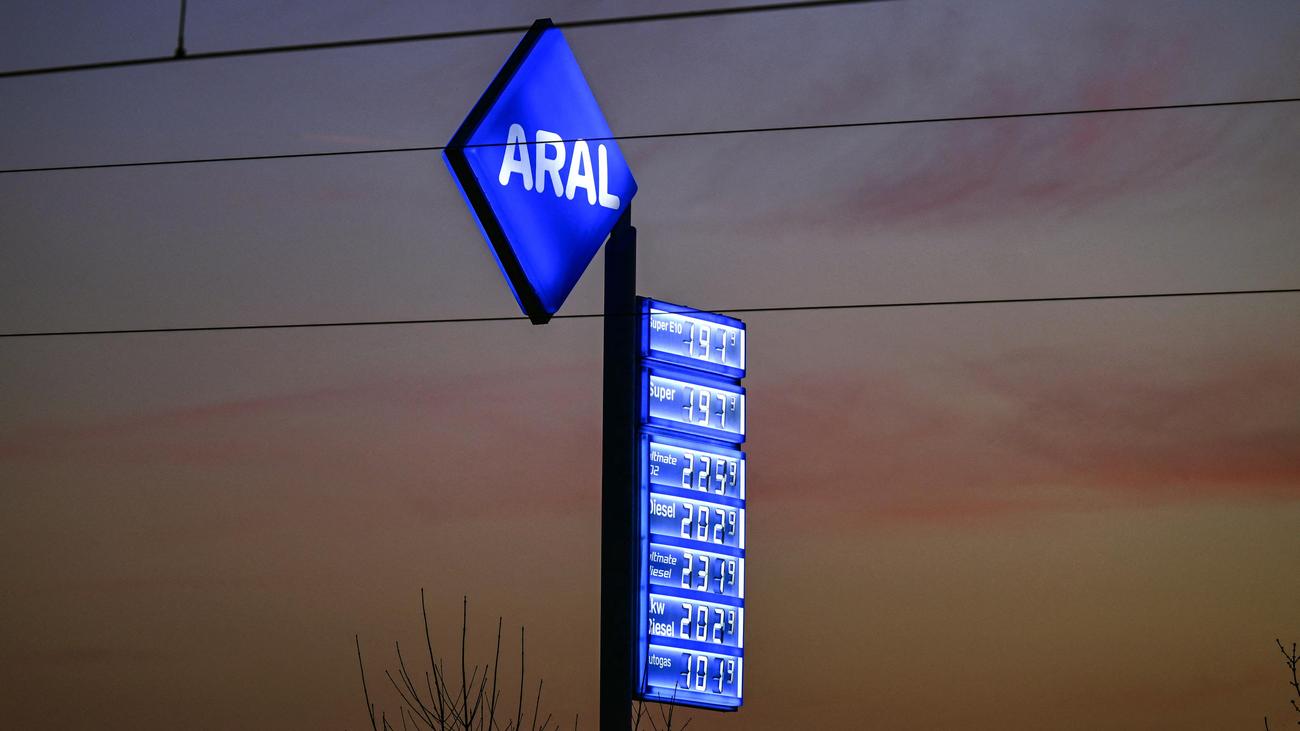
Gas station operators strongly criticize the oil companies because of this increased fuel prices as a result of the Iran War. “This is predatory capitalism like in the 19th century and has nothing to do with a social market economy,” said Herbert Rabl, spokesman for the petrol station interest group (TIV).
The Stuttgart newspaper He said that crude oil had been purchased and refined at a much cheaper price and had since then been stored in tanks under the gas stations. Now it is being sold at a much higher price – a price that the companies had not originally calculated. This is a “rip-off”.
On the Prices at the pump The tenants themselves have no influence, said Rabl. These would be made by the corporations. The frustration of the drivers would then be borne by the gas station tenants and their employees. The oil industry justifies the higher prices as a precautionary measure, said Rabl. The industry also points to significantly increased purchasing costs.
Gas station operators in East Germany had already made similar statements. “The colleagues at the checkouts are of course very clearly aware of people’s displeasure,” said Hans-Joachim Rühlemann, chairman of the North-East Garage and Gas Station Industry Association (VGT).
Petroleum companies are significantly expanding their profit margins
Again Mirror reported, according to an analysis by economist Johannes Schwanitz, the petroleum industry is making significant additional profits due to the sharp rise in gasoline and diesel prices at German gas stations. Accordingly, the recent price increases at German gas pumps are far greater than the higher purchasing costs for crude oil justify.
“The petroleum industry is using this situation to expand its profit margin,” said Schwanitz. This was already the case in the energy crisis of 2022. Even back then, after Russia’s attack on Ukraine, fuel prices in Germany rose significantly – sometimes more than the price of crude oil.
Federal Finance Minister Lars Klingbeil (SPD) said this Editorial Network Germany (RND) on the sharply increased prices: “Rip-offs must be prevented here.” That is why Federal Minister of Economics Katherina Reiche (CDU) will now quickly examine whether antitrust law can be used to take action against the oil companies. “It must not be the case that the oil companies take advantage of the crisis and make a profit from it.”
Association representative Rabl is skeptical about the involvement of the cartel office. The audit will not reveal anything because the prices so far have not been so high that it could be considered illegal usury. The cartel office was a “toothless tiger” in this case, he said. A fuel discount, as the federal government temporarily introduced in 2022 together with the 9-euro ticket on local transport, is also not an option for the association. It doesn’t make sense to subsidize price increases by corporations.
Gas station leaseholders also point out that the increased prices also have an impact on sales in gas station shops. Angry customers didn’t buy anything after filling up, Rabl said. Sales in the shop make up around 60 percent of total sales.
The petroleum industry points to increased purchasing prices
The Fuels and Energy trade association pointed out that it is not the crude oil prices that are decisive for gas station prices, but rather the product prices for fuels such as gasoline and diesel, which are also traded on stock exchanges and are decisive for the purchase prices of gas stations. The reason for the rapid increase after the start of the war is that fuel prices are calculated based on current daily purchase prices at the so-called replacement value. In this way, the fuels, which have become significantly more expensive, could be purchased again and supplies could be ensured, the association argues.
Farmers also complain about increased prices for fertilizer and diesel. Agricultural field work began in many places in March. “Especially now for spring orders, the sharp price increases for diesel are particularly painful, and fertilizer prices are also shooting up,” said Farmer President Joachim Rukwied. “Agriculture simply cannot bear these cost increases. We absolutely need higher prices for our products.”
Left leader Ines Schwerdtner is calling for a price cap to protect consumers and the economy from abrupt price shocks. In order to counter-finance the discount, a so-called excess profits tax should be levied, which will burden petroleum companies and energy suppliers: “Corporations’ crisis profits must become crisis relief for the population,” she said Augsburg General.