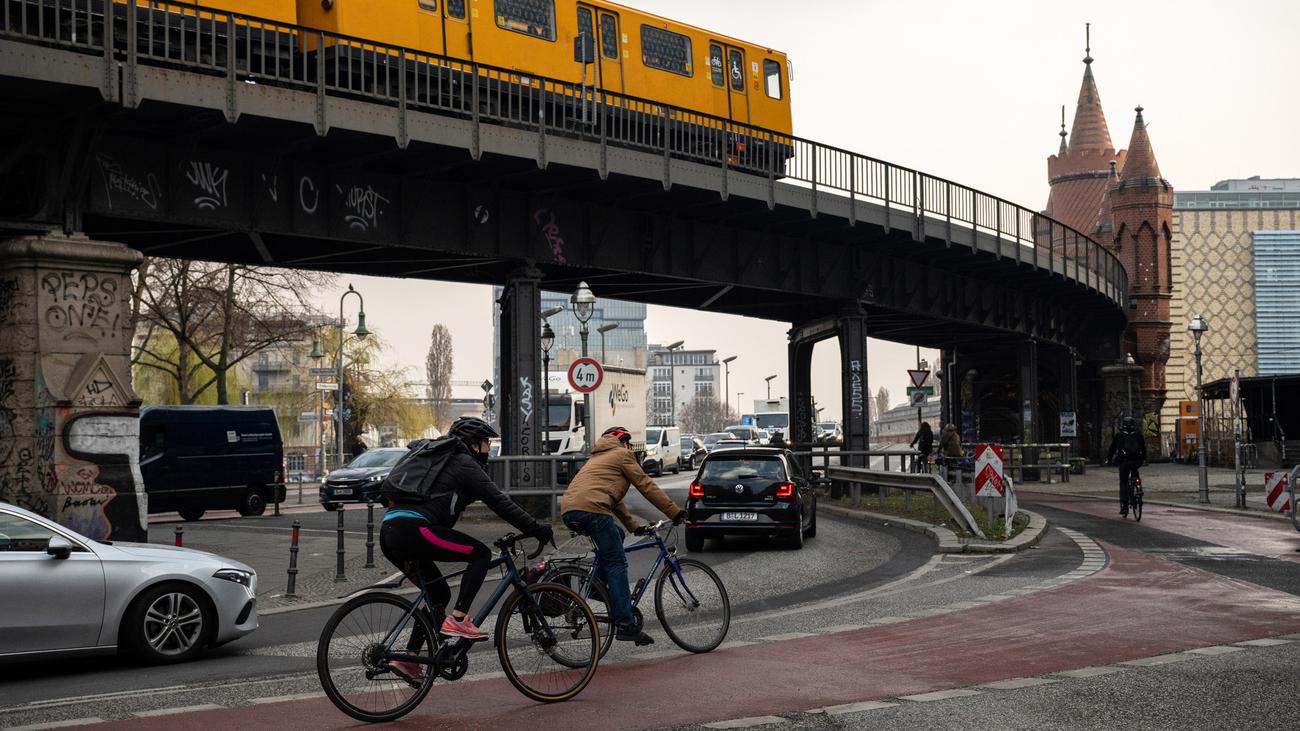
Last year, companies, the state and private individuals invested, on average, less in construction, machinery, equipment and infrastructure than ever since Germany reunion 1990. This emerges from figures from the Federal Ministry of Economics and the Federal Statistical Office. Accordingly, the so-called net fixed asset investment ratio, measured in relation to economic output, is said to have been minus 0.23 percent. are meant Investments in investments – be it private or public, less depreciation.
After reunification, the net fixed asset investment ratio from 1991 to 1999 was 7.31 percent, as the dpa news agency reported with reference to the figures. In the period from 2000 to 2009 it was only 2.88 percent. Between 2010 and 2019 the rate was 2.29 percent. In the years from 2020 to 2025 it was an average of 1.02 percent, the data shows. The figures show a decades-long downward trend in investment in relation to gross domestic product.
Criticism of a lack of government investment
The data was queried and evaluated by left-wing MP Cem Ince. He particularly criticized the state for a lack of investment: “Germany is running on wear and tear. Dilapidated schools, broken roads, an infrastructure in decline. The figures also prove what many people have long felt in everyday life. There has been too little investment in our country for years.” In addition to the criticism, he also once again called for a wealth tax and an investment offensive.
The employer-related Institute of the German Economy in Cologne (IW) is also concerned about the ongoing lack of investment. “We have been seeing a price-adjusted negative effect on gross fixed capital formation for years,” said IW managing director Hubertus Bardt. Especially when A reduction in investments was noticeable in construction last year. No money from the special fund was used to counteract this reduction.
The figures also show that more than 80 percent of the Investments from the private sector and there is also a lack of confidence there given the economic situation, said Bardt. “If public investments now increasingly flow from the special fund, it will certainly have a positive effect, but it is questionable whether this will trigger real dynamism in the private sector,” added Bardt. According to him, they are Company not optimistic. “Anyone who invests now is concerned with purely replacement investments.”