This content has been archived. It may no longer be relevant
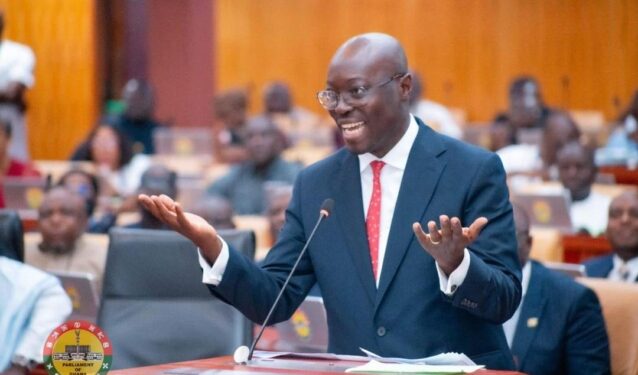
Ghana’s government says the nation has moved decisively beyond what it calls its most severe economic crisis in a generation, positioning the country for steady and sustainable growth. Finance Minister Cassiel Ato Forson delivered this assessment on Thursday while presenting the 2026 Budget Statement to Parliament, emphasizing that firm corrective actions have restored both stability and confidence across key sectors of the economy.
Forson explained that when the administration assumed office in January, it met an economy “in distress”—one burdened by mounting debt, weakened fiscal discipline, and a sharp decline in public trust. The government’s immediate task, he said, was to confront the crisis directly by instituting tighter controls, rolling out targeted reforms, and rebuilding the confidence of domestic and international investors.
“The storm is past; the foundation is firm,” he told lawmakers. “Ghana’s economy is breathing again—stronger, steadier, and full of promise.”
Growth strengthens as services drive momentum
According to new data cited by the minister, Ghana’s real GDP grew by 6.3 percent in the first half of 2025, up from 5.1 percent during the same period in 2024. Much of this rebound was fueled by the services sector, which Forson described as the “heartbeat” of the recovery, posting growth of 8.8 percent as finance, ICT, transport, and hospitality continued to regain momentum.
Agriculture also delivered solid growth at 6 percent, supported by improved yields and more vibrant market activity. Household consumption rose by 8.2 percent—a sign, Forson noted, of strengthening consumer confidence and more predictable price movement. At the same time, government spending increased by just 3.7 percent, reflecting efforts to tighten public expenditure and consolidate the gains.
Forson underscored one central message: “Fiscal discipline is the backbone of national progress, and there is no shortcut to responsible economic management.”
Export earnings rise as investor confidence returns
The minister also pointed to stronger export performance as evidence of the economy’s renewed health. Total exports increased by 11.5 percent in the first half of 2025, boosted by improved earnings from gold, cocoa, and nontraditional export products. This growth, he said, is already drawing increased investor interest and helping to stabilise the external sector.
“This is growth that creates jobs, lifts incomes, and builds lasting stability,” Forson remarked, adding that the government plans to deepen diversification and strengthen public financial management to secure long-term gains.
Call for vigilance as recovery firms up
Despite the encouraging indicators, Forson warned that Ghana’s recovery remains susceptible to global market fluctuations and domestic complacency. He urged lawmakers to continue supporting initiatives that reinforce fiscal discipline, expand the tax base, and promote private-sector-driven growth.
Describing the country’s resurgence as “a rebirth from the ashes of a daunting inheritance,” the minister emphasized that Ghana cannot afford a return to the policy lapses that contributed to the crisis.