What began as a demand for accountability inside a Lagos estate has now snowballed into a disturbing story of alleged police intimidation, abuse of power, and a whistleblower crackdown that is raising fresh questions about how justice works when powerful interests are involved.
At the centre of the controversy is Happyland Estate Landlords’ and Residents’ Association, where allegations of financial mismanagement reportedly first surfaced after concerned residents began asking hard questions about missing estate funds. But instead of the matter ending with those accused facing the law, the people who reportedly raised the alarm now claim they became the real targets.
Two of those residents, Emenike Nwankwo and Godfrey Omenal, are alleging that after pushing for accountability over suspicious withdrawals and missing estate money, they were hunted, arrested, and transported to Abuja under deeply troubling circumstances. According to accounts from sources familiar with the case, what should have been a fraud investigation allegedly transformed into a campaign of pressure against the very people demanding transparency.
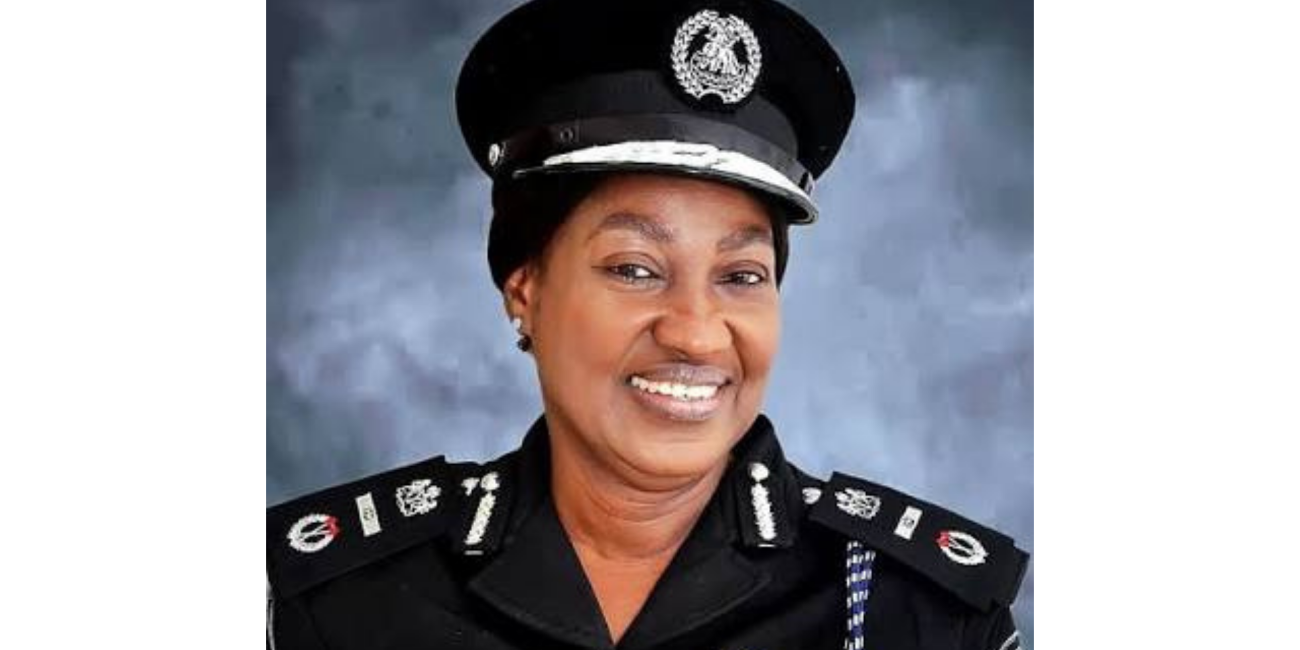
The name now repeatedly coming up in the matter is Deputy Inspector-General of Police Margaret Ochalla, who is being accused by multiple sources of allegedly intervening in a way that protected some of the estate executives under investigation while exposing the whistleblowers to intimidation and detention.
According to insiders, the issue first gained traction when a formal petition was submitted over alleged fraud and diversion of estate funds while Ochalla was still serving as Assistant Inspector-General at the Force Criminal Investigation Department (FCID), Alagbon Annex, Lagos. At that stage, police reportedly approved an investigation into the allegations, giving residents hope that the truth would come out.
But that hope, according to sources, did not last long.
After her promotion, they claim the tone of the matter changed dramatically. Instead of seeing the suspects face consequences, the petitioners allegedly found themselves on the receiving end of police pressure. One source described the shift as shocking, saying that despite earlier police findings allegedly implicating several estate executives, the same whistleblowers who submitted the complaint were later the ones allegedly arrested and detained.
That twist is what has made this case especially unsettling.
A Certified True Copy (CTC) of the police investigation reportedly listed multiple estate executives who allegedly received funds from the estate’s accounts. Among the names mentioned were individuals said to have received various sums ranging from tens of thousands to millions of naira. One of the most significant figures cited in the report was ₦28,515,700, which investigators reportedly identified as diverted from estate funds.
And that number matters.
Because while early suspicions among residents were said to involve a larger sum of about ₦80 million, the police investigation itself allegedly narrowed the confirmed questionable amount to ₦28.5 million. Even at that reduced figure, the amount remains serious enough to justify a strong and transparent criminal process.
A police investigation report dated November 10, 2025, and reportedly signed by DCP Ibrahim Jibrin at FCID Alagbon Annex, appears to support parts of the allegations. According to the report, the estate chairman, working alongside the estate manager and other executives, allegedly used the manager’s First Bank account to move money from estate accounts before redistributing it into personal accounts.
That finding alone should have triggered a major accountability process.
Instead, according to another source, some of the key suspects who were initially expected to be arrested and arraigned allegedly got protection at the last minute. The source claimed that DIG Ochalla personally intervened by contacting the Investigating Police Officer and the prosecutor, allegedly warning them to back off the case or risk consequences to their careers.
If true, that would not just be misconduct. It would represent a serious attack on the credibility of police investigations in Nigeria.
One of the whistleblowers, Godfrey Omenal, has now spoken publicly about what he says he endured. His account paints a picture not just of frustration, but fear. According to him, residents of the estate had long handled development on their own, from roads to construction, with little or no government presence. So when questions started arising over how estate money was being used, some residents simply wanted answers.
But asking questions, he suggests, came with a price.
Omenal said he has allegedly been detained multiple times and now lives under the fear of being picked up again. In his words, the police have been used not to protect the residents, but to oppress those calling for accountability. He also alleged that after a court-certified copy of the investigation report came into his possession, attempts were allegedly made to force it out of his hands.
And then came what he described as the most traumatic moment.
He said he was allegedly run off the road while driving with his children, arrested in a manner he described as more like abduction, and taken to Abuja without being clearly told what offence he had committed. According to him, before he knew what was happening, he was already being transported out of Lagos. He also alleged that he was forced to part with ₦200,000 before regaining his freedom, claiming he has a receipt to support that allegation.
That is not a small accusation.
His co-petitioner, Emenike Nwankwo, was also reportedly arrested in Lagos by officers identified as ASP Kingsley and Inspector Rindap Zingkur, before being taken to Abuja and detained at a facility described by sources as a former SARS-linked detention centre. That detail alone is likely to alarm many Nigerians, especially given the painful history attached to SARS-related detention practices.
What makes the matter even darker is the alleged confusion over the identities of the officers involved. Omenal claimed that different officials gave different explanations about which police unit they belonged to, with mentions ranging from TIU to FCT Command, FCID Abuja, and even the IGP Monitoring Unit. If true, that level of inconsistency only deepens suspicion around the legitimacy of the operation.
And yet, despite everything, Omenal says the core of the matter remains very simple: accountability.
He insists that all he and others wanted was for the law to take its course. Not media noise. Not personal war. Just a transparent process that would determine whether estate money was indeed stolen and who should be held responsible.
That is what makes this story so painful.
Because if people can raise alarm over missing funds, get police confirmation that suspicious diversions happened, and still end up becoming the ones allegedly hunted down, then the message it sends is a dangerous one: that exposing wrongdoing in Nigeria can sometimes be riskier than committing it.
So far, according to the report, petitions have allegedly been sent to higher police authorities, including the Inspector-General of Police, but no action or official response has yet come from that direction. And when reportedly reached out to DIG Margaret Ochalla, she neither answered her calls nor responded to messages.
That silence is only making the questions louder.
At a time when public trust in law enforcement is already fragile, this case is becoming more than just an estate dispute. It is now a test of whether police power in Nigeria can be used fairly — or whether influence still decides who gets investigated, who gets protected, and who gets punished for speaking up.