This content has been archived. It may no longer be relevant
In a country battling one of the most complex security crises in the world—terrorism, banditry, kidnappings, and insurgency—one would expect the position of Minister of Defence to be reserved for an individual with a towering résumé.
Experience in military strategy, defence intelligence, or crisis management would seem like the bare minimum for a nation of 220 million depending on that office for survival.
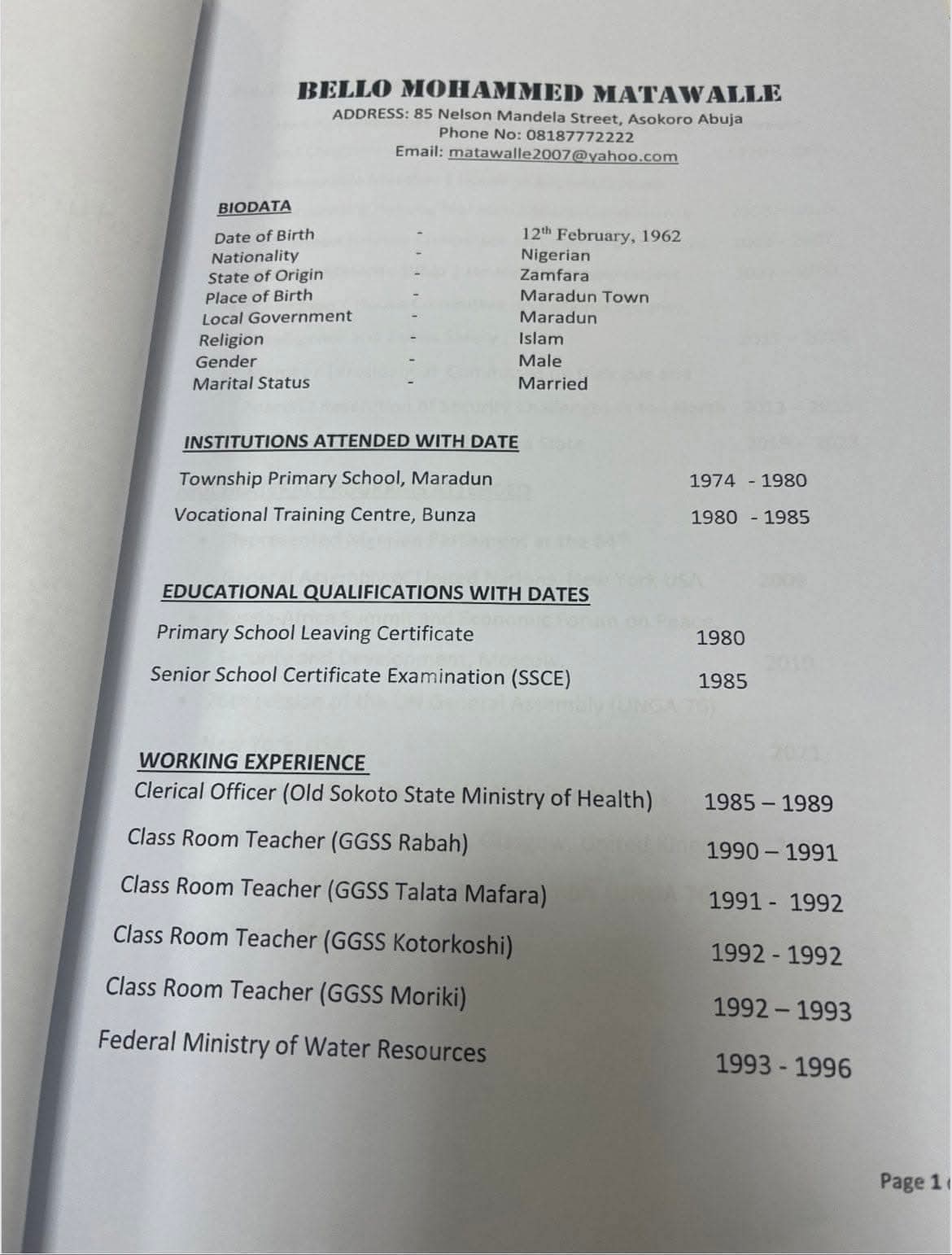
Yet, when the CV of the country’s Defense Minister, Bello Mohammed Matawalle surfaced, many citizens could not decide whether to be alarmed or amused. For a role that demands deep expertise, the document read more like an entry-level job application than the professional record of the individual tasked with safeguarding the nation.
From vague job descriptions to questionable accomplishments, the résumé instantly became a subject of national conversation—and national laughter.
For a country where armed groups overrun communities, military bases come under attack, and citizens live in fear of night raids, the discovery felt almost surreal. How did a nation fighting terrorism on multiple fronts end up with such an underwhelming profile leading its defence architecture?
Security analysts say the situation reflects a deeper structural flaw: appointments driven not by competence but by political loyalty. Citizens, on the other hand, describe the CV as a symbol of how lightly their leaders treat issues of life and death. As one commentator noted, “If this was a comedy skit, at least we’d know when to laugh.”
But beyond the humour lies a sobering reality. Every poor decision at the top cascades into the battlefield—where young soldiers confront threats that require the sharpest minds guiding military strategy. When leadership fails, the consequences are paid in lives.
As the document continues to circulate online, Nigerians are asking hard questions. How did this résumé pass screening? Who approved it? And, more importantly, who is really running the nation’s defence if this is the minister’s official credential?
In a time this critical, the country cannot afford leadership that inspires laughter instead of confidence.