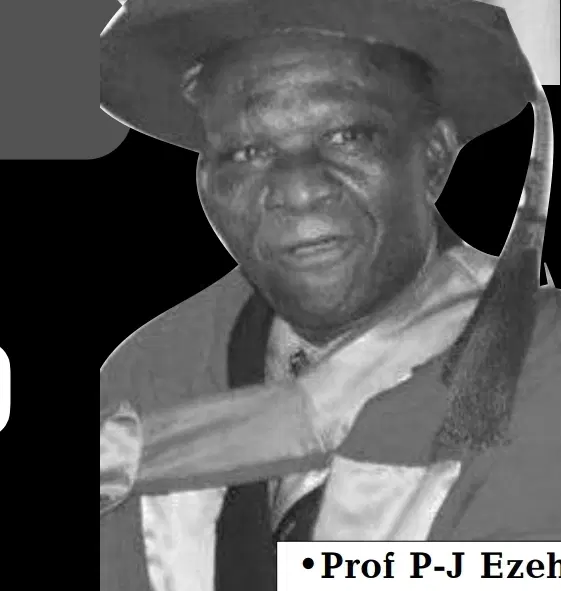
The usually calm atmosphere at the Elite Enugu Sports Club became charged with deep reflection and intellectual tension when its Chess Conclave section hosted its maiden annual lecture. The event took on a long-standing and sensitive belief: the claim that the Igbo people migrated from the Jewish community. What followed was a detailed, evidence-based conversation that challenged popular assumptions many have grown up hearing.
To unpack the issue, the organisers invited Professor Peter-Jazzy Ezeh, an emeritus professor of Anthropology at the University of Nigeria, Nsukka. Drawing from scholarly works spanning the 18th century to the present day, Prof. Ezeh firmly dismissed the idea that the Igbo originated from Israel or any non-African region. Instead, he urged Ndigbo to look inward—towards Africa, with Egypt and nearby regions offering more plausible historical links.
Professor Ezeh questioned the influence of Olaudah Equiano, one of the earliest educated Igbo figures, whose writings compared certain Igbo practices such as circumcision to those of the Jews. According to Ezeh, Equiano’s account lacked empirical depth, as he was taken into slavery at the age of 12 and did not have enough exposure to other African cultures for a fair comparison. Yet, many later scholars relied heavily on his conclusions.
Supporting this position, the chairman of the lecture and former Chief Judge of Anambra State, Justice Peter Umeadi (retd), shared a striking historical quote. He recalled Arab narratives suggesting that Jews left their lands as Black people but returned as White—an observation he said further complicates the migration story often told about the Igbo.
Speaking on the lecture theme, “Igbo Origin: Facts and Fiction,” Prof. Ezeh stressed that there is no linguistic or scientific evidence linking the Igbo to the Jewish people. He explained that extensive studies show no relationship between the Igbo language and Hebrew. While Hebrew belongs to the Afro-Asiatic language family, Igbo is part of the Niger-Congo group, one of the largest language families in Africa.
He noted that if linguistic connection to Hebrew were to exist in Nigeria, it would be closer to Hausa than Igbo. This, he emphasized, is not belief or sentiment but established scientific fact supported by credible research. According to him, language relationships are determined by shared vocabulary, sound systems, and origins—none of which link Igbo and Hebrew.
Professor Ezeh also referenced a 2017 DNA study conducted by Jewish scientists in the United States. Samples taken randomly from individuals in Igboland showed no genetic connection to Jewish populations in the laboratory’s database. The conclusion, he said, was clear and straightforward.
While acknowledging that early European explorers once used biblical explanations to understand unfamiliar peoples, Ezeh argued that such theories no longer hold weight in an age of advanced science. He warned that clinging to outdated narratives does more harm than good, especially when accurate tools for understanding human origins are now available.
Before concluding, he stated that serious, evidence-driven research into Igbo origins consistently points away from Israel and towards Africa. Egypt and other African regions, he said, remain more credible areas of inquiry.
Justice Peter Umeadi, in his remarks, reaffirmed the uniqueness of the Igbo people, describing them as resilient, industrious, and culturally distinct wherever they are found. He noted that their identity has remained strong across generations.
Delivering the keynote address, Prince Chukwuemeka Onyesoh, Leader of the Chess Conclave Section, explained that the lecture was designed to correct misconceptions and preserve cultural truth. He warned that people who lack knowledge of their history risk losing their identity, describing such individuals as “trees without roots.”
The Chairman of Enugu Sports Club, Chief Ifeanyi Nweke, praised the organisers and described the lecture as timely and necessary in reinforcing Igbo cultural consciousness. Several prominent Igbo leaders and public figures attended the event, lending further weight to a conversation that continues to shape how history, identity, and evidence intersect in modern Igbo discourse.