This content has been archived. It may no longer be relevant
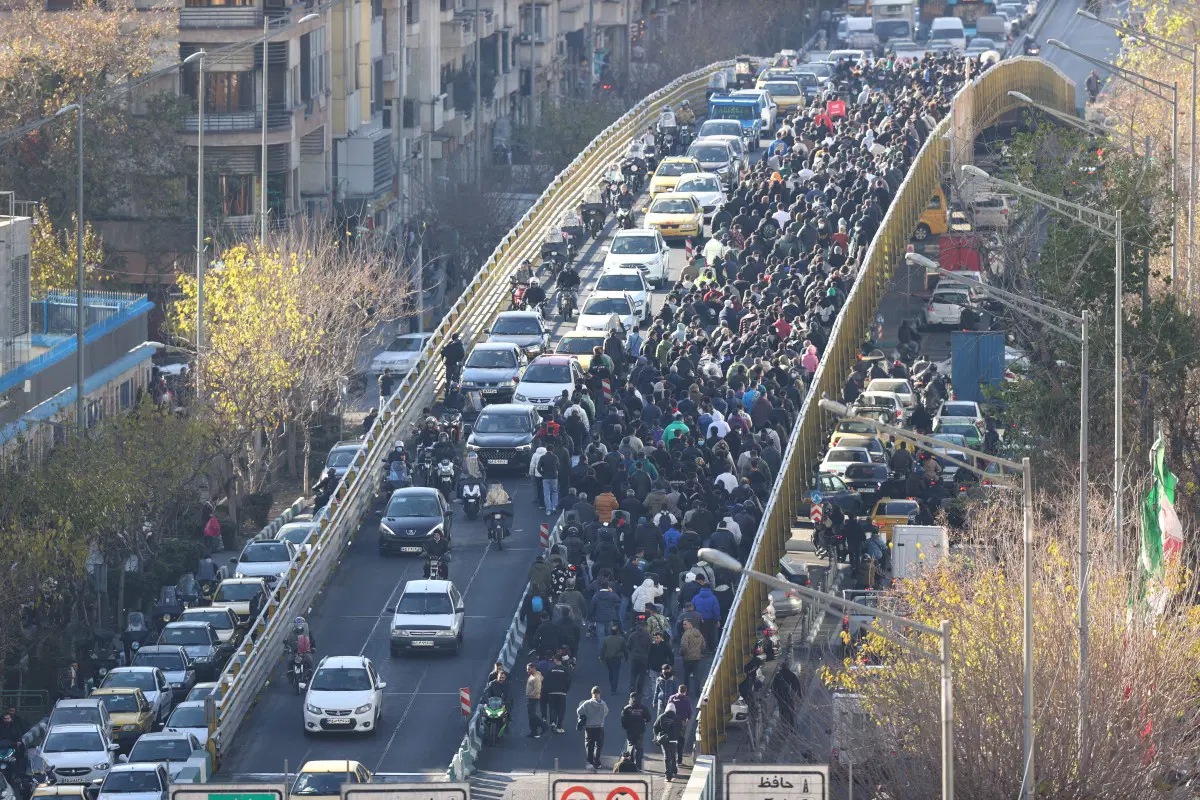
Iran’s top police official, Ahmad-Reza Radan, has issued a three-day ultimatum for protesters involved in what authorities are calling “riots” to surrender, warning that those who fail to comply will face the full force of the law. The government, however, also pledged to address the economic hardships that sparked the demonstrations, which rights groups say have already claimed thousands of lives.
Radan urged young participants who were “deceived” into joining the protests to turn themselves in, promising lighter punishment for those deemed unwitting participants. He told state television that such individuals “will be treated with leniency,” distinguishing them from organized opponents of the state.
Officials have claimed the demonstrations, initially peaceful, descended into violence fuelled by external actors, including the United States and Israel, in an attempt to destabilize Iran. Meanwhile, the heads of Iran’s executive, legislative, and judicial branches issued a joint statement pledging to work “around the clock” to resolve economic and livelihood issues, while vowing to “decisively punish” those responsible for acts labeled as terrorism.
Due to an ongoing internet blackout, the full scale of the unrest remains unclear, but the Iran Human Rights NGO reports that at least 3,428 protesters have been killed by security forces, with the actual toll likely much higher. Mahmood Amiry-Moghaddam, the NGO’s director, warned that evidence from eyewitnesses, families, and other sources suggests these deaths could exceed even the highest media estimates, calling it “one of the largest mass killings of protesters in our time.”
Concerns are growing that authorities may resort to capital punishment against protesters. The United Nations has condemned Iran for using executions as “a tool of state intimidation,” noting that the country, after China, is the world’s most prolific executioner, reportedly executing 1,500 people last year. Official sources report around 3,000 arrests linked to the protests, though human rights groups suggest the number could be as high as 20,000. Supreme Leader Ayatollah Ali Khamenei has demanded that authorities “break the back of the seditionists.”
Authorities have indicated that internet access will gradually return this week, following limited restoration in some areas. Meanwhile, damages from the protests are severe: images from Tehran show destroyed buildings and billboards, while Mashhad’s mayor reported over $15 million in damage to public infrastructure.
Internationally, Turkey’s President Recep Tayyip Erdogan described the unrest as a “new test” for Tehran, pledging support for dialogue and diplomacy to help Iran navigate the crisis without further regional destabilization.
This ongoing crackdown highlights the intersection of political unrest, economic grievances, and severe state repression in Iran, with the true scope of violence and its consequences still emerging.