‘It Still Feels Unreal’ — Artemis II Crew Reaches Halfway Mark to the Moon For the four astronauts aboard NASA’s Artemis II mission, the journey to the Moon is no longer just a dream or a countdown on Earth — it is now a living reality. On Saturday, the crew officially crossed the halfway point between Earth and the Moon, marking a major milestone in what is already being described as one of the most historic space missions in modern times. Inside the Orion spacecraft, the astronauts are not just travelling through deep space — they are also soaking in a view very few humans in history have ever witnessed. Astronaut Christina Koch described the moment with simple but powerful emotion, saying the crew shared a collective “expression of joy” when they were informed they had reached the halfway mark. At that point, they had been travelling for just over two days since launching from the Kennedy Space Center in Florida. And the view? Nothing short of breathtaking. “We can see the Moon out of the docking hatch right now, it is a beautiful sight,” Koch said during a live NASA broadcast. By early Saturday, NASA confirmed that the Orion spacecraft had travelled more than 229,000 kilometres from Earth, carrying astronauts Christina Koch, Victor Glover, Reid Wiseman, and Canadian astronaut Jeremy Hansen deeper into space than any crewed mission has gone in decades. NASA also released the first striking images from inside the spacecraft — including a full portrait of Earth, glowing blue against the darkness of space, with its oceans and swirling clouds standing out in dramatic contrast. It was one of those images that reminds people just how small, fragile, and beautiful our world really is. For Jeremy Hansen, who is on his first-ever trip to space, the whole experience still feels almost too incredible to process. “There has been a tremendous amount of disbelief for me,” he said. “It’s just so extraordinary.” And beyond the science, the pressure, and the history being made, there is also a childlike wonder in the mission. “I really like it up here,” Hansen said with a smile. “The views are extraordinary. It’s really fun to be floating around. It just makes me feel like a little kid.” That honesty captures what makes this mission so powerful. Yes, it is about exploration, engineering, and the future of humanity in space — but it is also about human emotion. Awe. Fear. Curiosity. Joy. After a dramatic launch and a series of critical engine burns that placed Orion on its path toward the Moon, the astronauts have now settled into the rhythm of life in space. Their schedule still remains packed with technical checks, medical drills, equipment testing, and preparations for scientific observations they will carry out once they move closer to the Moon. NASA officials say the crew is doing well, the spacecraft systems are performing as expected, and morale remains high. The astronauts have also reportedly been able to speak with their families back on Earth — a reminder that even while travelling through deep space, home is never far from the heart. The next major moment in the mission is expected between Sunday night and Monday, when the spacecraft enters what NASA calls the “lunar sphere of influence” — the point where the Moon’s gravity becomes stronger than Earth’s pull on Orion. That moment will be more than just a technical shift. It will signal that the crew is truly entering lunar territory. If all goes according to plan, Artemis II will swing around the Moon early next week, completing a feat not achieved by humans in over 50 years. Even more remarkable, the crew could set a new record by travelling farther from Earth than any human beings have ever gone before. Mission commander Reid Wiseman admitted the scale of the mission still hasn’t fully sunk in. “There is nothing normal about this,” he said. “Sending four humans 250,000 miles away is a Herculean effort, and we are now just realizing the gravity of that.” And he is right. Because beyond the cameras, headlines, and engineering milestones, Artemis II is about something bigger: humanity returning to the frontier. It is the beginning of a new chapter — one that could eventually lead to a permanent human presence on the Moon and lay the groundwork for future missions to Mars and beyond. For now, though, four astronauts are floating quietly through the dark, with Earth behind them and the Moon ahead. And somewhere in that silence, history is unfolding.

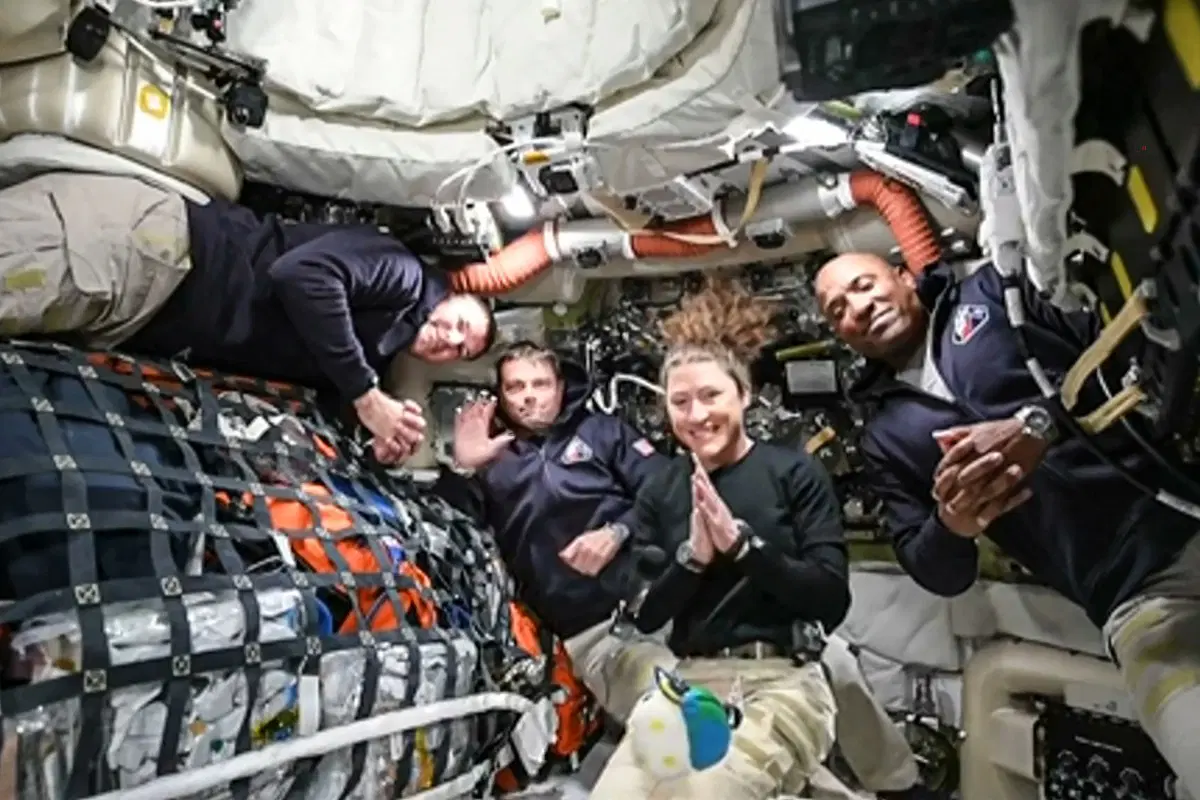
For the four astronauts aboard NASA’s Artemis II mission, the journey to the Moon is no longer just a dream or a countdown on Earth — it is now a living reality.

On Saturday, the crew officially crossed the halfway point between Earth and the Moon, marking a major milestone in what is already being described as one of the most historic space missions in modern times. Inside the Orion spacecraft, the astronauts are not just travelling through deep space — they are also soaking in a view very few humans in history have ever witnessed.

Astronaut Christina Koch described the moment with simple but powerful emotion, saying the crew shared a collective “expression of joy” when they were informed they had reached the halfway mark. At that point, they had been travelling for just over two days since launching from the Kennedy Space Center in Florida.

And the view? Nothing short of breathtaking.

“We can see the Moon out of the docking hatch right now, it is a beautiful sight,” Koch said during a live NASA broadcast.

By early Saturday, NASA confirmed that the Orion spacecraft had travelled more than 229,000 kilometres from Earth, carrying astronauts Christina Koch, Victor Glover, Reid Wiseman, and Canadian astronaut Jeremy Hansen deeper into space than any crewed mission has gone in decades.

NASA also released the first striking images from inside the spacecraft — including a full portrait of Earth, glowing blue against the darkness of space, with its oceans and swirling clouds standing out in dramatic contrast. It was one of those images that reminds people just how small, fragile, and beautiful our world really is.

For Jeremy Hansen, who is on his first-ever trip to space, the whole experience still feels almost too incredible to process.

“There has been a tremendous amount of disbelief for me,” he said. “It’s just so extraordinary.”

And beyond the science, the pressure, and the history being made, there is also a childlike wonder in the mission.

“I really like it up here,” Hansen said with a smile. “The views are extraordinary. It’s really fun to be floating around. It just makes me feel like a little kid.”

That honesty captures what makes this mission so powerful. Yes, it is about exploration, engineering, and the future of humanity in space — but it is also about human emotion. Awe. Fear. Curiosity. Joy.

After a dramatic launch and a series of critical engine burns that placed Orion on its path toward the Moon, the astronauts have now settled into the rhythm of life in space. Their schedule still remains packed with technical checks, medical drills, equipment testing, and preparations for scientific observations they will carry out once they move closer to the Moon.

NASA officials say the crew is doing well, the spacecraft systems are performing as expected, and morale remains high. The astronauts have also reportedly been able to speak with their families back on Earth — a reminder that even while travelling through deep space, home is never far from the heart.

The next major moment in the mission is expected between Sunday night and Monday, when the spacecraft enters what NASA calls the “lunar sphere of influence” — the point where the Moon’s gravity becomes stronger than Earth’s pull on Orion.

That moment will be more than just a technical shift. It will signal that the crew is truly entering lunar territory.

If all goes according to plan, Artemis II will swing around the Moon early next week, completing a feat not achieved by humans in over 50 years. Even more remarkable, the crew could set a new record by travelling farther from Earth than any human beings have ever gone before.

Mission commander Reid Wiseman admitted the scale of the mission still hasn’t fully sunk in.

“There is nothing normal about this,” he said. “Sending four humans 250,000 miles away is a Herculean effort, and we are now just realizing the gravity of that.”

And he is right.

Because beyond the cameras, headlines, and engineering milestones, Artemis II is about something bigger: humanity returning to the frontier. It is the beginning of a new chapter — one that could eventually lead to a permanent human presence on the Moon and lay the groundwork for future missions to Mars and beyond.

For now, though, four astronauts are floating quietly through the dark, with Earth behind them and the Moon ahead.

And somewhere in that silence, history is unfolding.

Leave a Reply

Your email address will not be published. Required fields are marked *