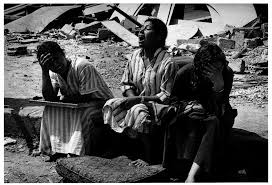


The reported abduction of 166 worshippers from three churches in Kurmin Wali, Kajuru LGA of Kaduna State, has once again pushed Nigeria’s banditry crisis into the spotlight. The incident, initially denied and later confirmed by authorities, reflects the scale and brazenness that attacks in the North-West have assumed in recent years.
Samuel Aruwan, former Kaduna State Commissioner for Internal Security and Home Affairs, argues that Nigeria’s response to banditry has long suffered from misdiagnosis. In his essay, he contends that what began as cattle rustling has evolved into a complex, profit-driven criminal economy sustained by ransom, arms trafficking, illegal mining, protection levies, and cross-border networks.
Drawing from his experience in conflict reporting and security management, Aruwan stresses that modern banditry is no longer rooted primarily in grievance but in organised criminal enterprise. He warns that treating bandits as a uniform group or framing the crisis through ethnic and emotional lenses weakens effective response and emboldens perpetrators.
According to his account, early victims of banditry included Fulani cattle owners whose herds were rustled by armed groups. As communities resorted to self-help and vigilante responses, cycles of retaliation deepened ethnic mistrust, creating a landscape where bandit networks expanded operations against all communities regardless of identity.
Aruwan highlights how media narratives and public discourse often blur the distinction between farmers–herders conflict and banditry, despite fundamental differences. He argues that while both crises intersect, banditry should be viewed as criminal violence and a national security threat rather than identity-based conflict.
He proposes a differentiated approach: low-risk armed actors driven by fear and self-defence may be engaged through dialogue and disarmament, while heavily armed, profit-driven bandit networks responsible for kidnappings, killings, and territorial control should face decisive, intelligence-led state action.
The essay also questions past peace accords and negotiations with bandit leaders, noting that many truces only provided time for groups to rearm and reorganise. Aruwan suggests that dialogue, where applicable, must be embedded within formal demobilisation and reintegration frameworks rather than ad hoc political arrangements.
Central to his argument is the need to cut off the financial lifelines of banditry. Payments for protection, access to farms, and ransom, he says, sustain the criminal economy and should be discouraged alongside stronger community protection and intelligence gathering.
Ultimately, Aruwan calls for what he describes as “strategic clarity” in Nigeria’s response — a shift away from emotionally charged narratives toward precise categorisation, lawful enforcement, narrative reset, and sustained state presence in affected communities.
The Kurmin Wali incident, in this context, serves as a reminder of how deeply entrenched the crisis has become and how urgently Nigeria must reassess how it understands and confronts banditry across the North-West and beyond.