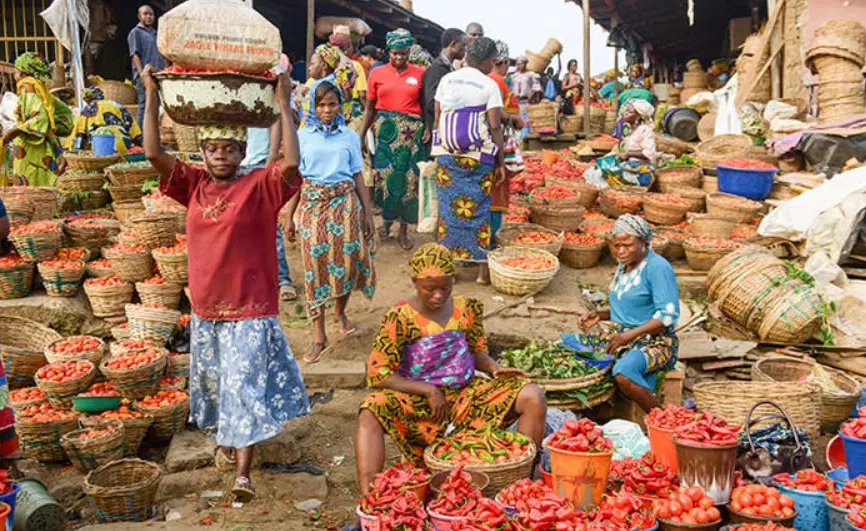
As the 2025 Yuletide season unfolds, many Nigerians are finding themselves caught between small wins and fresh pressures. Across major markets, prices of key food items like rice and honey beans have dropped sharply compared to last year, offering some breathing space for households battling tight incomes. For many families, this has brought cautious relief, even though the festive mood remains subdued.
Market surveys show that staples are far cheaper than they were in December 2024. Foreign rice that once sold for as high as ₦140,000 per 50kg bag now goes for between ₦56,000 and ₦65,000, while local rice has fallen to as low as ₦45,000 in some places. Traders attribute this decline to increased farming activity and better storage practices, which have led to surplus supplies in many regions.
However, not all food items have followed the same downward trend. Vegetables like tomatoes, peppers and onions have remained unstable, with prices swinging sharply due to festive demand and their perishable nature. While onions and peppers recorded notable drops earlier in the season, prices have begun to climb again as Christmas approaches, forcing shoppers to adjust their plans.
Cooking oils also brought temporary relief before festive pressure set in. Vegetable and palm oil prices dropped compared to last year, making them more accessible for many households. Yet, as demand increased, some of these gains were reversed. Many buyers now opt for refill sachets and smaller quantities rather than full-sized branded kegs.
Seasonings have emerged as one of the biggest pain points this Yuletide. Popular seasoning cubes recorded noticeable price increases, pushing families toward cheaper alternatives or reduced usage. For everyday cooks, these increases have quietly added to the cost of preparing festive meals.
Outside food, the cost of celebration itself has risen sharply. Festive hampers, decorations and gift items now sell at significantly higher prices than last year. Christmas trees, decorative items and even children’s caps have all gone up, making full-scale celebrations difficult for many households.
Livestock prices have been particularly hard on consumers. Poultry, turkey, fish and goat meat have all become more expensive, driven by seasonal demand, rising feed costs and foreign exchange pressures. As a result, many families are turning to cheaper alternatives like fish, especially panla, which now enjoys high demand across markets.
For farmers, the situation has been bittersweet. While consumers enjoy lower staple prices, surplus harvests have translated into losses for many producers, especially onion farmers who expanded production after last year’s price boom. Insecurity and transport challenges have further reduced profit margins in several farming communities.
Overall, December 2025 reflects a mixed Yuletide reality for Nigerians. Cheaper staples and cooking oils have eased some pressure, but high costs of meat, seasonings and festive items continue to stretch household budgets. Families are adapting by cutting back, substituting expensive items and spending more carefully, turning this festive season into a test of resilience and smart decision-making rather than excess.