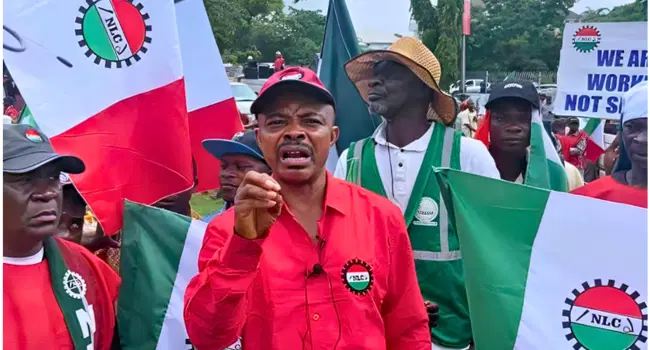

The Nigeria Labour Congress (NLC) has issued a strong warning that Nigerian workers and citizens are currently battling the most severe survival crisis the country has ever witnessed, driven by rising inflation, worsening insecurity, poor wages and the collapse of social protection systems.
According to the labour union, the hardship Nigerians face today is even more brutal than what was experienced during the civil war or past austerity periods. The NLC insists that financial insecurity has now become the everyday reality for millions of working Nigerians.
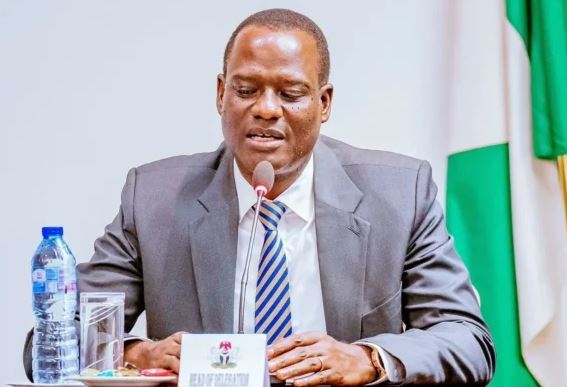
Speaking on the situation, NLC President, Joe Ajaero, said Nigerian workers have fallen to the bottom of the ladder when compared with workers in other African countries — including conflict-hit nations like Somalia and Sudan.
He explained that work no longer guarantees survival, as income earned by workers can no longer meet basic needs such as food, housing and transportation. With daily life turning into a constant struggle, workers are left stressed, insecure and unable to save, invest or plan for the future.
Ajaero pointed out that while physical insecurity from terrorism, banditry and kidnapping continues to threaten lives, financial insecurity is quietly destroying livelihoods. He described the two crises as mutually reinforcing, pushing workers deeper into poverty.
The NLC criticised Nigeria’s inflation levels, which exceeded 30 per cent in 2024, noting that rising prices have wiped out purchasing power despite official claims of easing inflation. According to the union, real wages have collapsed, and the current national minimum wage of ₦70,000 is grossly inadequate, especially when a bag of rice now costs more than a worker’s monthly pay.
Currency depreciation has further worsened the situation, driving up the cost of imported goods, fuel and services. Rising fuel prices, in turn, have increased transportation and production costs, making food and other essentials unaffordable. In many households, food alone now consumes up to 80 per cent of monthly income.
The union also highlighted unemployment and underemployment as major problems, saying the growing number of desperate job seekers is forcing wages down and expanding insecure, low-paying informal jobs.
Weak social safety nets were another concern. According to the NLC, unemployment benefits, health insurance and pensions remain inadequate for most workers, especially those outside the formal sector. Even where pensions exist, low contributions and economic instability have reduced their value.
High housing costs, expensive transportation, multiple taxes and deductions, rising electricity and telecom tariffs, and tolls on public roads were also listed as factors draining workers’ incomes. Many workers, the NLC said, now spend so much on transport that they stay at their workplaces during the week because they cannot afford daily travel home.
Poor public infrastructure has compounded the crisis, forcing workers to spend personal income on electricity, water, healthcare and security — services that should be publicly provided.
The NLC warned that insecurity across the country has displaced families, destroyed livelihoods and wiped out assets, leaving many workers impoverished and vulnerable.
Summing up the situation, the congress said Nigerian workers are trapped between macroeconomic instability and systemic failure. With inflation soaring, wages stagnant and essential costs rising, survival has overtaken long-term planning.
The NLC called on the Federal Government to take urgent and decisive action to stabilise the economy, raise real incomes and strengthen social protection systems, warning that failure to act will continue to undermine both workers’ well-being and Nigeria’s broader economic future.