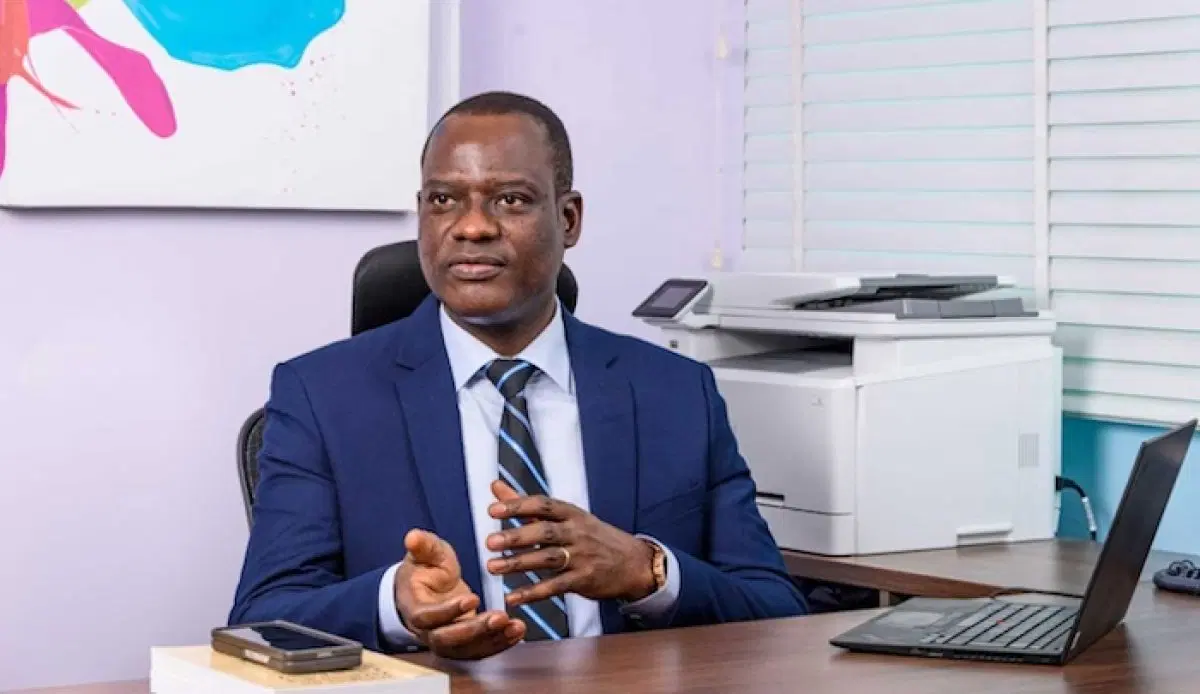
Amid growing public anxiety over the federal government’s ongoing tax reforms, the Chairman of the Presidential Fiscal Policy and Tax Reforms Committee, Mr. Taiwo Oyedele, has firmly dismissed claims that Nigerians’ bank accounts will be directly debited. He described the rumours as false, dangerous, and capable of triggering unnecessary economic panic.
Oyedele spoke during a media workshop on the new consolidated tax law, where he addressed viral messages circulating on social media. According to him, the claims are rooted in misinformation and a poor understanding of how the tax system works, rather than any actual provision in the law.
Making his position clear, Oyedele stressed that no government agency has the power to withdraw money directly from citizens’ bank accounts. He said neither the Federal Inland Revenue Service, the Central Bank of Nigeria, nor any other authority can debit accounts without following strict legal procedures. Whether an individual has ₦50,000 or ₦50 million in their account, he insisted, no money can be taken arbitrarily.
He explained that the confusion arose from the consolidation of existing tax laws into a single framework, which some people wrongly interpreted as the creation of new enforcement powers. In reality, he said, nothing new was introduced in that regard.
According to Oyedele, the only legal route for recovering unpaid taxes is through a court-ordered garnishee process. He described this as a lengthy and rigorous legal procedure that requires proper tax assessment, notification, opportunity for objection, and ultimately, a judge’s approval. Without a court order, he said, no account can be touched.
Drawing from nearly 30 years of experience in tax administration, Oyedele stated that he has never witnessed a situation where funds were removed from a bank account without due judicial process. He also recalled a past attempt under a former FIRS leadership to place post-no-debit orders on suspected accounts, noting that the move failed and only succeeded in creating panic.
Addressing concerns about banks reporting customer transactions, Oyedele clarified that such provisions are not new. He explained that since the 2020 Finance Act, business accounts have been required to be linked to a Tax Identification Number. He added that the current reform actually raises the reporting threshold from ₦10 million to ₦25 million, meaning transactions would have to reach nearly ₦100 million annually before any reporting is triggered.
He further pointed out that data from the Nigeria Inter-Bank Settlement System shows that about 98 percent of bank accounts in the country hold less than ₦500,000. According to him, such accounts are completely unaffected by the reporting rules.
Oyedele warned that the real danger lies in the fear-driven reactions the rumours could cause, particularly panic withdrawals from banks. He cautioned that such actions could hurt the economy far more than any tax policy, urging Nigerians to seek accurate information and help correct false narratives.
He maintained that the objective of the tax reform is not punishment but simplification. The goal, he said, is to reduce multiple taxation, widen the tax net fairly, ease compliance, and support economic recovery, especially for households and small businesses.
To further address public concerns, Oyedele disclosed that his committee is working with the National Orientation Agency to roll out digital explainers and translations of the new tax law in major Nigerian languages, ensuring clearer understanding across the country.