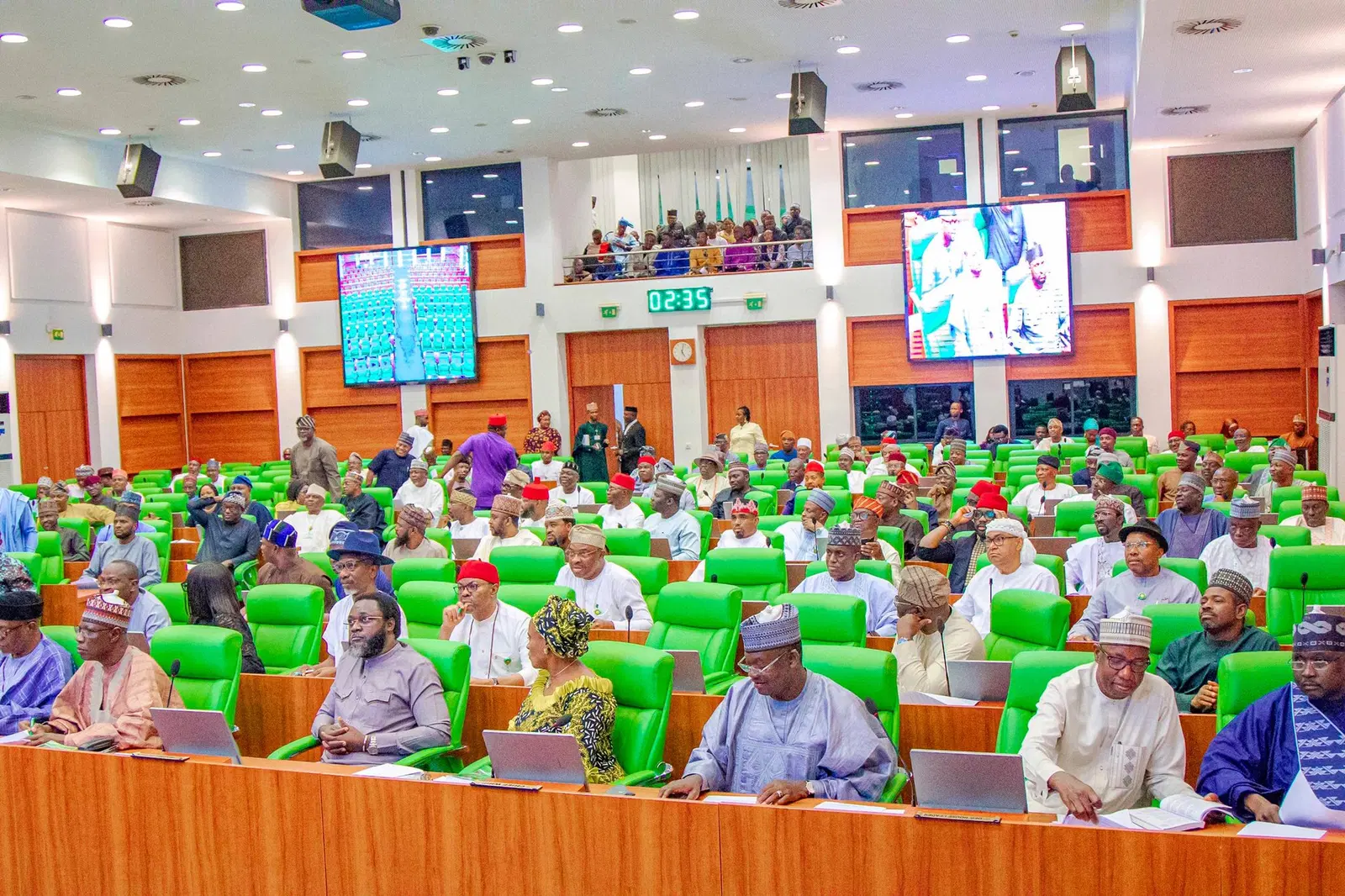
The House of Representatives has approved major amendments to the Electoral Act, introducing stricter punishments for vote buying and selling as part of efforts to improve the credibility of elections in Nigeria.
Under the new provisions, anyone caught buying or selling votes or voter cards now faces a minimum of two years’ imprisonment, a fine of up to ₦5 million, or both. In addition, offenders will be banned from contesting elections for 10 years. This is a significant increase from the previous penalty of a ₦500,000 fine or a maximum of two years in prison.
The decision was reached during a clause-by-clause consideration of the report by the House Committee on Electoral Matters at the Committee of the Whole, presided over by Deputy Speaker Benjamin Kalu.
To strengthen transparency, lawmakers also amended Section 60(3) of the Act, making it mandatory for the Independent National Electoral Commission (INEC) to electronically transmit election results from polling units to the INEC Result Viewing Portal (IREV) in real time. This electronic transmission must now happen alongside physical collation of results.
The House further approved stiffer sanctions for presiding officers who deliberately violate procedures on vote counting, announcement or result transmission. Under the new Section 60(6), such officers risk a fine of at least ₦500,000, six months’ imprisonment, or both.
Other key amendments include a requirement that election funds be released to INEC at least one year before a general election to allow for better planning. Penalties for multiple voter registration were also increased, with offenders now facing a minimum fine of ₦100,000 or at least one year in prison.
Lawmakers also extended the deadline for political parties to submit their list of candidates to INEC from 180 to 210 days before an election. In addition, the House approved the use of electronically generated voter identification, including downloadable voter cards with QR codes, or any other method approved by INEC.
Chairman of the House Committee on Electoral Matters, Adebayo Balogun, said plans to repeal the Electoral Act 2022 had been dropped due to lack of consensus. Instead, the House opted for targeted amendments to address key challenges in Nigeria’s electoral process.
Consideration of the remaining clauses of the amendment bill is still ongoing.