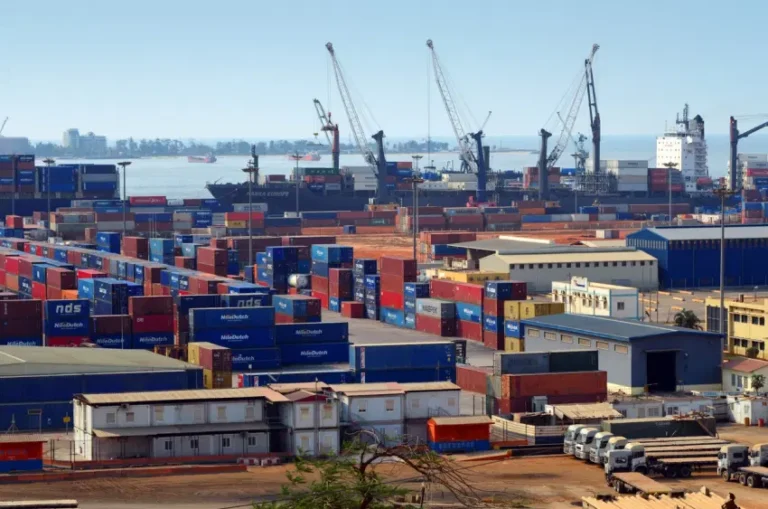


Senegal has announced a one-month suspension of rice import declarations in an effort to ease pressure on domestic producers struggling with unsold stock from the 2025 harvest. The decision, made on November 12, followed a meeting convened by the Market Regulation Agency (ARM) with farmers, traders, processors, government agencies, and development partners.
The Ministry of Industry and Commerce explained that the temporary halt on import declarations for rice (DIPA) aims to give local producers breathing space amid an influx of cheaper imported varieties dominating the market. Officials described the measure as a short-term corrective step to stabilise supply and reduce stock accumulation.
Farmers Warn of Unsold Harvest
The move comes in response to urgent warnings from rice producers in the Senegal River Valley, particularly in Dagana, one of the country’s main rice-growing regions. Grower associations reported that nearly 195,000 tonnes of paddy and milled rice risked remaining unsold as of late October.
“Imported rice is already in large quantities, making it very difficult to sell our produce. Senegal, which used to hold a three-month stock, now has a six-month stock due to imports,” said Baba Diallo, training officer for the Dagana rice producers’ sub-college, in remarks published by Senenet.
Producers highlight that consistently low-priced imports have hindered the entry of domestic rice into the market, despite improvements in local production. Storage facilities are reportedly stretched to capacity, leaving cooperatives facing cashflow pressures as stock continues to accumulate.
Government Sets Uniform Price to Boost Competitiveness
Alongside the suspension, the Ministry of Industry and Commerce has introduced a single ex-factory price of CFA350 ($0.62) per kilogram for locally produced broken and whole rice. Authorities say the uniform pricing is intended to enhance competitiveness and provide clarity for traders and processors navigating market distortions.
ARM officials also stated they would continue monitoring stock levels, engaging producers and commercial actors, and evaluating whether further interventions may be necessary during the suspension period. There has been no indication yet whether the measure might be extended beyond the initial month.
Market Impact Remains Uncertain
Analysts caution that the suspension may have limited impact on supply dynamics, given Senegal’s heavy reliance on rice imports to meet domestic demand. According to the US Department of Agriculture, Senegal is projected to import about 1.65 million tonnes of milled rice in the 2025/2026 marketing year, roughly 70 percent of its annual requirement of 2.2 million tonnes.
This structural dependency means that international market conditions will continue to influence local prices, even as the government provides short-term support to farmers. For communities in Dagana and across the valley, the coming weeks will be critical in determining whether the suspension can ease stock pressure and improve market access for the latest harvest.