Southern States Mount Coordinated Security Offensive as Bandit Threat Spreads
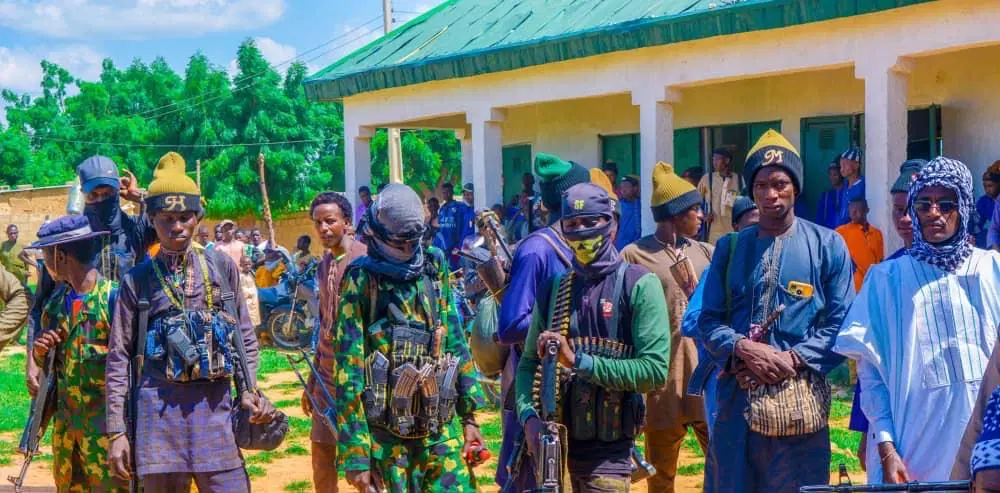
Security tensions are rising across Nigeria’s southern corridor as armed groups push steadily from the North toward key border and forest regions. Communities from Oke-Ogun in Oyo State to the creeks of the Niger Delta are increasingly on edge, with intelligence reports pointing to expanding movements across Kwara, Kogi, Benue, Niger and Edo boundaries. What once felt like a distant threat is now becoming an immediate concern for southern residents and state authorities.
In response, state governments have shifted from passive monitoring to active defence. From drone surveillance in Enugu to expanded marine patrols in Rivers, and from forest hunter deployments in Oyo to reinforced Amotekun operations in Ondo, the South is now treating the threat as real and present. The new posture combines technology, community intelligence, legislative backing and traditional security structures familiar with difficult terrains.
South-West governors recently held an emergency security meeting in Ibadan to harmonise their responses and prevent criminals from gaining control of forest corridors. The governors agreed on the need for stronger patrols, faster inter-agency communication and shared intelligence. They also stressed that non-state security actors such as Amotekun, local hunters and vigilante groups must be integrated, as formal security units alone cannot effectively cover vast border forests.
Traditional rulers across the region have stepped in as frontline partners, pledging to mobilise local intelligence networks and monitor suspicious movements. Many councils have introduced night patrols, farmland monitoring systems and stricter checks on new settlers. These measures are designed to create multiple layers of early warning that can disrupt criminal movements before they become entrenched.
Ondo State has adopted one of the most aggressive anti-bandit strategies in the region. After intelligence suggested that fleeing bandits were attempting to access its forest belts, the state activated heightened surveillance across all border communities. Joint patrols between police, hunters and forest guards have increased, while dormant security posts were reopened. The introduction of Operation “Le Won Jade” by Amotekun has turned the state into a constant surveillance zone, with 24-hour patrols and fortified protection around schools and vulnerable communities.
Ekiti State has also intensified its security readiness despite maintaining a reputation as one of the country’s safest states. Authorities dismissed online reports of attacks as false, while confirming that surveillance has been quietly expanded. Security agencies and community-based operatives are now actively coordinating across all local government areas, with new patrol vehicles and fresh recruitment helping to widen rural coverage.
Ogun State has taken a different route by focusing on strict identity regulation. The state now requires all foreign nationals within its borders to undergo documentation, while illegal mining zones and forest outposts are being cleared. Authorities have also warned landlords against harbouring unregistered individuals, insisting that every resident must be traceable. A new forward operating base is being prepared in a strategic border area to strengthen response times.
In Oyo State, traditional hunters have become the first line of defence against possible forest infiltration. These hunters, familiar with the deep bush paths, now work with drone surveillance, fortified checkpoints and reinforced patrol teams. Community leaders and farmers have voiced growing concern about unfamiliar faces in forest zones, reinforcing the urgency of pre-emptive action.
Across the South-East, Enugu has deployed surveillance drones to track suspected movement corridors, while strengthening its forest guard service. Anambra has increased marine patrols and secured critical river routes, especially around vulnerable boundary communities. Imo State has reinforced its forest buffer zones and expanded rapid-response teams to prevent any bandit settlement. Ebonyi has leaned heavily on rural intelligence networks, connecting town unions and traditional rulers directly with state security command centres for faster response.
Abia has restored layered checkpoints along major highways and activated mobile aerial surveillance to detect unusual forest activity. Rivers State has recalibrated its border security by integrating drone intelligence with anti-kidnapping units and marine patrols. Delta State has tightened forest reconnaissance and waterway patrols, while Cross River has expanded joint military-police operations in its dense forest zones.
Bayelsa has shifted focus to its creeks, shutting down illegal jetties and commissioning new gunboats to prevent exploitation of its waterways. Edo State has reorganised its vigilante structures and deployed combined task forces to historically vulnerable forest locations.
In Akwa Ibom, security authorities have focused on public reassurance and internal coordination, countering misinformation about alleged militant movements. While the state maintains that no credible intelligence supports online alarmism, it has strengthened surveillance and stakeholder engagement to prevent panic and maintain public confidence.
Across the southern region, one message now dominates security strategy: prevention over reaction. States are no longer waiting for attacks to occur before deploying resources. Instead, they are sealing forests, strengthening intelligence and building coordinated regional responses to deny armed groups any foothold in the South.




Post Comment