The Strait of the Persian Gulf is actually closed. Nevertheless, ships manage to pass through the Strait of Hormuz. But how high is the price?
This audio version was artificially created.
© Elke Scholiers/Getty Images
Iran has been blocking one of the world’s most important maritime trade routes for weeks. “Non-hostile” ships are allowed to pass through the narrow passage on the Strait of Hormuz – if they pay a toll worth millions. Questions and answers about the bottleneck in the Persian Gulf.
How many ships are currently in the Persian Gulf?
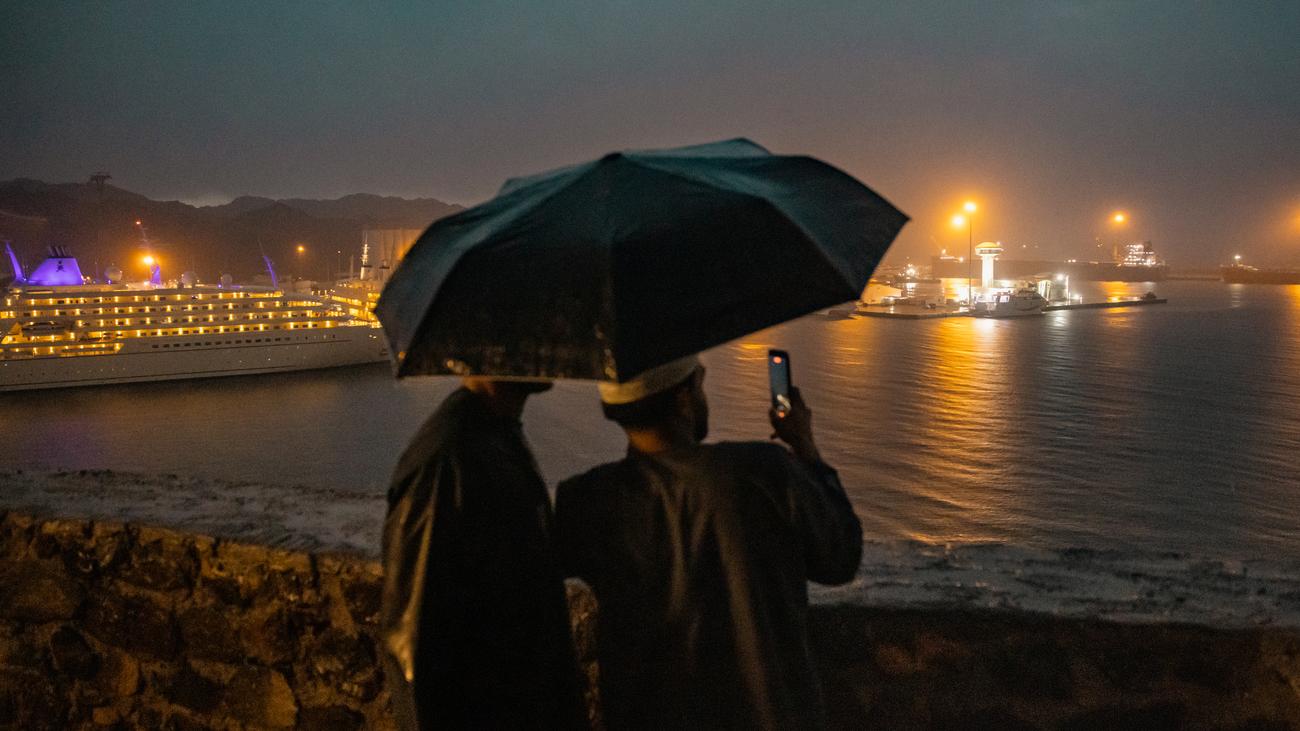
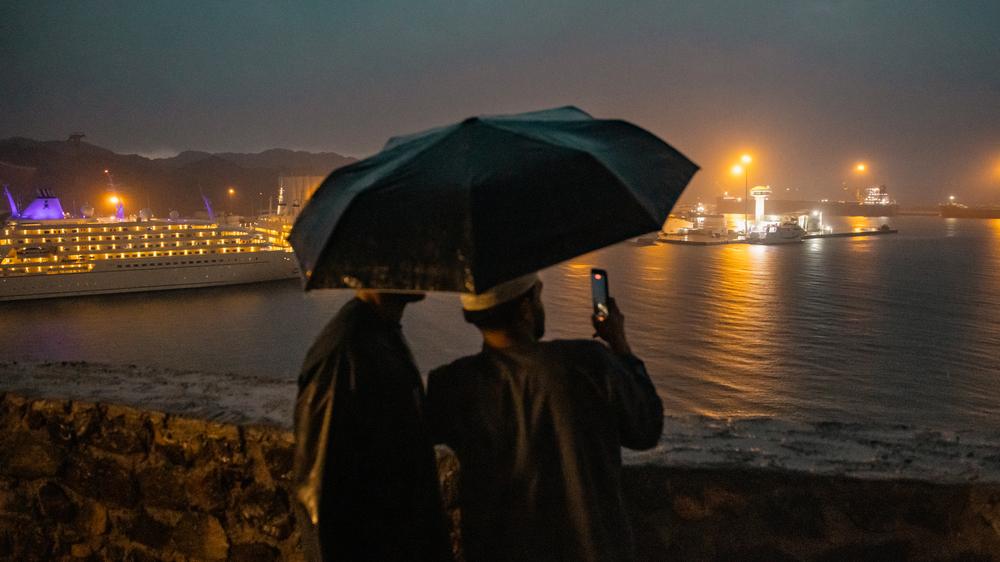
There are currently 2,000 ships with 20,000 sailors on board in the entire Persian Gulf. At least 50 of them are ships from German shipping companies (half of them container ships) with a total of around 1,000 seafarers. Also the two cruise ships My ship 4 and My ship 5 are still in the Persian Gulf. The passengers were flown out and a small crew ensured that the ships were supplied. Carsten Duif from the Association of German Shipowners (VDR) does not want to reveal the exact position of the ships for security reasons. In addition, about 500 ships that originally planned to enter the Gulf would be outside Strait of Hormuz wait.
Is the Strait of Hormuz closed?
“The Strait of Hormuz is closed, but not blocked,” says Duif. The Iran There are no warships blocking the strait there, nor is there any confirmed evidence of mines in the channel, but Iran has made an explicit threat, effectively blocking passage through the Strait of Hormuz. “For some time now there have been isolated passages by foreign ships that the Iranian side has classified as ‘non-hostile’,” says Duif. “However, the term ‘non-hostile ships’ is not clearly defined. It also remains unclear who carries out this classification. According to the assessment of the responsible security authorities, the risk of a passage currently remains extremely high.”
Are ships that dare to pass under fire?
The United Kingdom Maritime Trade Operations (UKMTO) – this is the Royal Navy’s official information and coordination point for merchant ships – received 26 reports of incidents involving ships in the Arabian Gulf, the Strait of Hormuz and the Gulf of Oman between February 28 and April 2. “A total of 16 attacks and ten suspicious activities were reported,” says the UKMTO homepage. The most recent incident occurred on April 1, 17 nautical miles north of Ras Laffan, Qatar: a tanker was “hit on the port side by an unknown projectile, causing damage to the hull above the waterline. The crew is safe and sound. There are no environmental impacts,” the UKMTO statement said.
Do ships still pass through the Strait of Hormuz?
According to data from Lloyd’s List Intelligence, a trade publication for the global shipping and logistics industry, no transits over the “normal” route have been recorded using Automatic Identification System (AIS) data since March 15. The industry service writes that the restricted shipping traffic through the Strait of Hormuz currently takes place exclusively via a corridor controlled by Iran’s Islamic Revolutionary Guards, which requires special release codes and an Iranian escort service. Since March 13, a total of 26 ships have passed through the strait on a route previously approved under a “toll gate” system run by the Revolutionary Guards, “which requires ship operators to undergo a vetting process.”
Lloyd’s List also reports, that “a Chinese-owned feeder container ship became the first ship with confirmed Chinese ownership to pay Iran for passage through the Strait of Hormuz” and passed through the so-called “safe” shipping corridor near Larak Island.
According to information from Manila, Iran has assured the Philippines of safe passage of their ships and oil imports through the Strait of Hormuz, the AP news agency reported.
Before the war, 100 to 140 ships passed through the strait every day.
Can Iran charge a toll for transit?
The Strait of Hormuz is not a national waterway, but an international strait route. According to the United Nations Convention on the Law of the Sea (UNCLOS), the principle of so-called transit passage applies to such straits. This guarantees all ships the right to free and unhindered passage. A coastal state is therefore not authorized to arbitrarily restrict or control passage or to make it dependent on the payment of fees. “Fees in international shipping are only charged for the use of artificial waterways such as the Panama Canal or the Suez Canal,” says Carsten Duif from VDR. According to reports, Iran is demanding up to two million US dollars for passage.
Is Germany committed to maritime security?
In a joint statement France, the United Kingdom, Italy, the Netherlands, Japan and Canada clearly condemned the attacks on merchant ships and the de facto blockade of the Strait of Hormuz. “At the same time, the question arises as to what importance Germany attaches to securing free and safe maritime trade routes,” says Duif. “Beyond the diplomatic efforts, no concrete decisions have been made about possible deployments. Action at the earliest possible point in time would be desirable.” At least two thirds of German foreign trade is carried out by sea.
According to the AP news agency, French President Emmanuel Macron considers a military operation to reopen the Strait of Hormuz unrealistic. “There are people who support the idea of reopening the Strait of Hormuz by force, by military action. A position that has sometimes been expressed by the United States,” Macron said during a visit to South Korea. “That was never the option we chose and we view it as unrealistic.”
A military operation “would take an infinite amount of time and expose anyone driving through the road to coastal threats from (Iran’s) Revolutionary Guard.” The straits could be reopened “only in consultation with Iran.” This would require negotiations that would take place after a ceasefire.