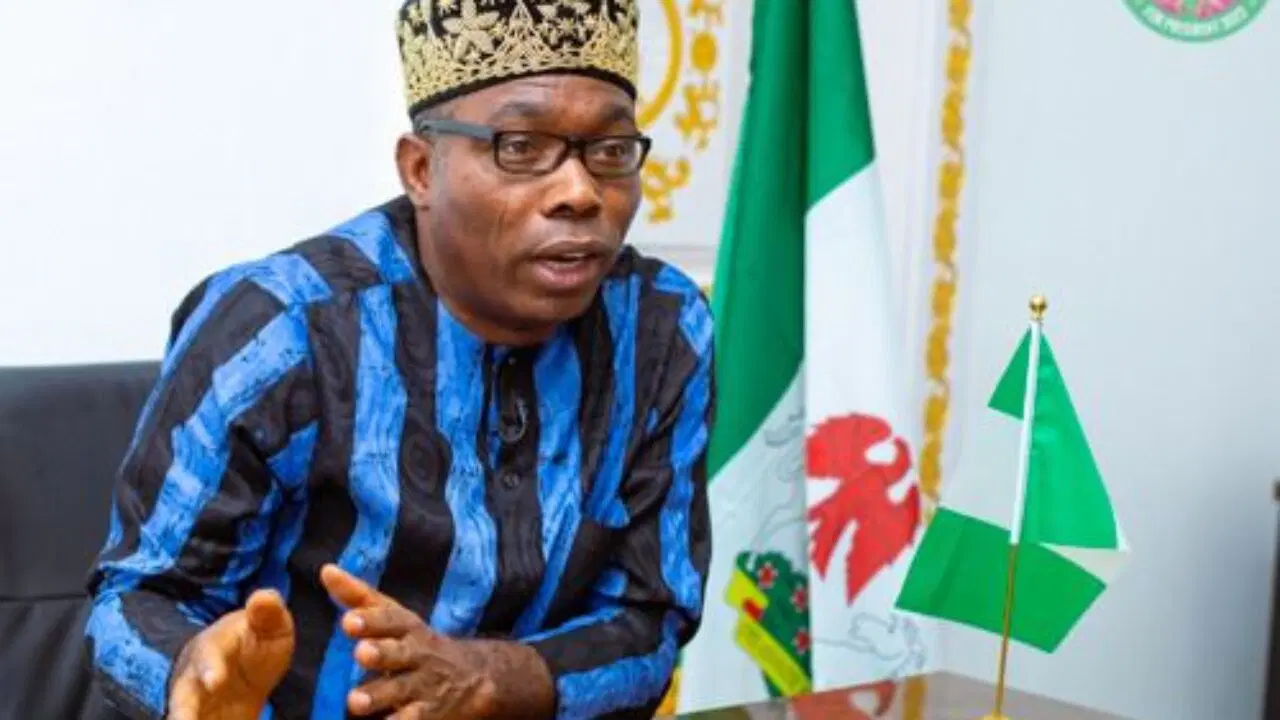
Freshly confirmed as the presidential candidate of the Social Democratic Party (SDP) ahead of the 2027 general elections, Prince Adewole Adebayo has set out a strongly ideological and welfare-driven political agenda, positioning himself as part of what he calls a disciplined alternative to Nigeria’s current political structure.
In an extensive interview, Adebayo described his emergence as “a new opportunity for the country,” insisting that his focus would remain on policies that directly affect citizens’ daily survival, including food security, transport costs, healthcare access, jobs, and education. He framed this approach as “kitchen table politics,” arguing that governance should prioritise everyday economic realities rather than electoral calculations or elite bargaining.
Adebayo dismissed concerns about internal divisions within the SDP, stating that ongoing disputes involving party officials should be resolved strictly through legal and constitutional procedures. He stressed that neither he nor any political actor should interfere in matters already before the courts, adding that respect for due process remains essential for strengthening democratic institutions.
Addressing allegations of political infiltration and attempts to destabilise opposition parties, the SDP candidate acknowledged that such challenges exist but said they should be handled through strong leadership and adherence to party ideology. He warned against what he described as transactional politics, arguing that it weakens institutions and undermines national development.
A major point of his criticism was directed at the ruling All Progressives Congress (APC), which he accused of weakening governance structures and prioritising political survival over policy outcomes. He particularly faulted recent education-related policies, including reduced academic standards and reforms he described as “deformations” rather than improvements.
According to Adebayo, lowering educational standards produces long-term consequences for national development, arguing that a poorly educated population struggles with productivity, innovation, and critical thinking. He maintained that education should remain accessible, structured, and capable of preparing young Nigerians for meaningful employment.
He also took a firm stance on student loans, describing them as “a crime,” arguing that education should be free, compulsory, and adequately funded by the state. In his view, requiring students to borrow for education places an unfair burden on young people and undermines national progress. He further argued that past generations benefited from free education policies and that similar investments are necessary to prevent what he called a decline in human capital development.
On youth unemployment, Adebayo said the solution lies in structured engagement from an early age through consistent schooling, extracurricular activities, and skills development, rather than short-term policy interventions. He warned that failure to properly educate and engage young people contributes directly to social instability and economic stagnation.
While maintaining a critical tone toward the APC, Adebayo also emphasised that the SDP’s approach is rooted in ideology rather than regional or identity politics. He argued that economic hardship cuts across all regions and that voters are more concerned with survival issues than political affiliations.
As the 2027 elections approach, Adebayo positioned the SDP as a party focused on governance reform, institutional accountability, and social welfare, contrasting it with what he described as a system overly focused on elections rather than outcomes.