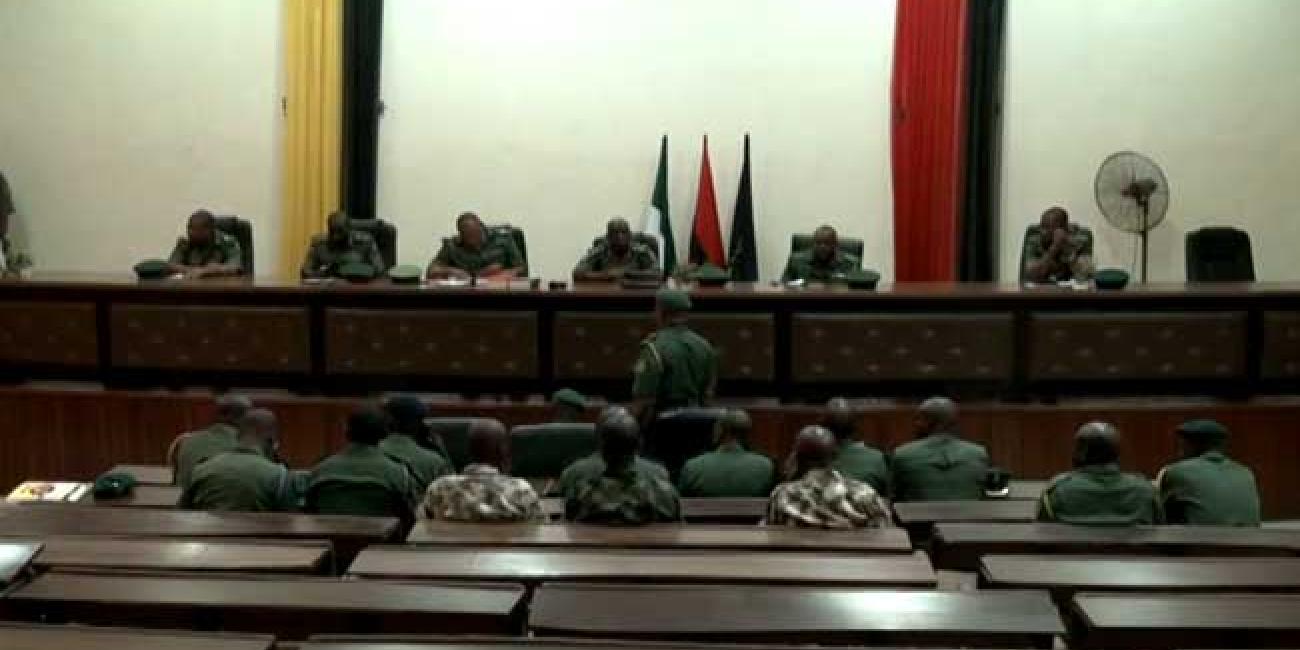
Tension and confusion have reportedly surrounded the ongoing secret court martial of military officers accused of plotting a coup against the government of President Bola Tinubu, following strong objections from defence lawyers over what they described as inconsistent and repeatedly altered charges.
Sources familiar with the proceedings alleged that the military prosecution presented and withdrew multiple versions of its case during the sessions, raising questions about the stability and credibility of the allegations.
According to insiders, defence counsel argued that the prosecution appeared unable to establish a clear and consistent legal foundation for the charges, which include allegations of treason and attempted overthrow of government.
The lawyers further maintained that such allegations fall strictly within the jurisdiction of civilian courts and not military tribunals operating in secret.
They also accused military authorities of attempting to reframe the case as mutiny in order to retain jurisdiction under court martial proceedings, a move they described as an unlawful substitution of constitutional offences.
Observers reportedly at the proceedings also raised concerns about the secrecy of the trial, insisting that justice must not only be done but must be seen to be done.
The defence team called for access to journalists, diplomats, civil society organisations, and independent observers to ensure transparency and public confidence in the process.
Human rights advocates and constitutional lawyers have similarly questioned the legality of the arrangement, arguing that the military cannot act as investigator, prosecutor, and judge in the same matter involving serious constitutional allegations.
Prominent human rights lawyer Femi Falana has previously urged authorities to suspend the military proceedings, insisting that offences such as treason and terrorism fall under the exclusive jurisdiction of the Federal High Court.
He also argued that subjecting different suspects accused of similar offences to different legal processes violates the constitutional principle of equality before the law.
Falana further maintained that previous similar cases were handled within the civilian judicial system, and not through court martial proceedings, warning that the current approach risks undermining due process.
The controversy continues to fuel wider debate over transparency, constitutional safeguards, and the appropriate legal framework for handling sensitive national security-related allegations in Nigeria.