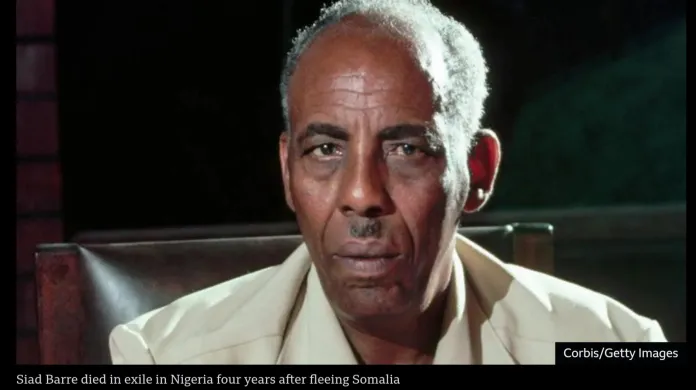

Exactly 31 years ago, two Kenyan pilots received an unusual request that would place them at the center of a quiet, delicate mission stretching thousands of kilometres across Africa. Hussein Mohamed Anshuur and Mohamed Adan, founders of Bluebird Aviation at Wilson Airport in Nairobi, were approached by a Nigerian diplomat with a sensitive proposal: secretly transport the body of Somalia’s former ruler, Siad Barre, from Lagos back to his hometown of Garbaharey for burial.
The request stunned them. Barre, who had fled Somalia in 1991 after being overthrown, remained a deeply divisive figure. Returning his body home involved political risk, fragile regional relations, and the possibility of diplomatic fallout if Kenyan authorities discovered the plan. The pilots knew immediately this was no routine charter.
After a day of deliberation, and with assurances from Nigeria that it would assume responsibility if anything went wrong, they agreed. Two Nigerian embassy officials would accompany the flight. Secrecy became the core of their plan, from falsified flight manifests to carefully chosen stopovers that masked their true route.
In the early hours of 11 January 1995, their Beechcraft King Air B200 departed Nairobi under the guise of a domestic trip. Near Kisumu, they diverted and slipped toward Entebbe, exploiting limited radar coverage at the time. From there, they declared Yaoundé as their next stop before proceeding to Lagos, using a Nigerian Air Force call sign to avoid suspicion as instructed by authorities.
In Lagos, Barre’s family awaited them. The following day, his wooden casket was loaded onto the aircraft alongside six family members and the Nigerian officials. The pilots retraced their covert route, again concealing their true destination from airport authorities at each stop.
As they neared Kisumu on the return leg, they diverted once more, this time flying directly into Garbaharey. After the burial, they faced what they described as the most stressful moment of the entire mission: returning to Kenya without raising alarm. They reported to Wilson Airport as though arriving from a routine local flight. No questions were asked.
Only later did the weight of what they had accomplished sink in. Reflecting decades later, Anshuur said such a mission would be nearly impossible today due to modern radar coverage and tighter aviation oversight. What succeeded in 1995 relied on gaps in systems that no longer exist.
For the two pilots, it remains a remarkable chapter in aviation history — a secret flight shaped by politics, urgency, and quiet precision.