By Oto’ Drama, PhD.
AS Nigeria navigates the heat of March 2026, the contrast between the government’s infrastructure priorities and the lived reality of its 250 million citizens has never been more jarring.
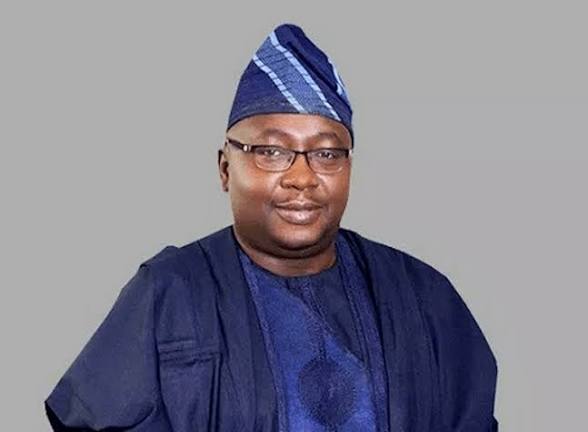
While the Minister of Power, Adebayo Adelabu, offers a hollow 14-day apology for a nationwide blackout, the presidency is fast-tracking trillion-naira coastal projects for a select brotherhood of business partners.
The question agitating the national psyche is simple: Is this a blueprint for development, or a transactional self-fortification at the expense of the people?
The “Prodigal” Procurement: $12 Billion vs. The National Grid
The administration’s recent focus on the Lagos-Calabar Coastal Highway and the Snake Island Port Concession—projects exceeding $12 billion (over ₦15 trillion)—highlights a staggering misalignment of priorities.
Energy experts suggest that the ₦15 trillion earmarked for these coastal elephant projects could have fundamentally stabilized Nigeria’s electricity value chain. Instead, the nation is being told it needs another $100 billion and 20 years to achieve what should have been a 2023 campaign priority.
Here is the jinxed megawatts. While Nigeria struggles to break the less than 4,000 MW jinx, a look at our peers reveals the depth of our stagnation. South Africa, with less than 60 million people, generates nearly 40,000 MW. Egypt, with half our population, generates over 35,000 MW. Even Brazil generates over 180,000 MW. For a Nigerian Minister to promise a swift resolution in 14 days while managing less than 4,000 MW for 250 million people is not just unrealistic; it is an insult to the collective intelligence of the nation.
A Brotherhood of Bounties: The Chagoury Connection
The awarding of these humongous contracts to subsidiaries of the Chagoury Group (Hitech and ITB Nigeria) without open competitive bidding has raised the specter of “State Capture.”
Public skepticism is fueled by the history of the players involved. Gilbert Chagoury has previously faced legal consequences in the U.S., including a $1.8 million fine for illegal campaign contributions and past convictions related to money laundering for the Abacha regime.
This mirrors the persistent questions surrounding President Bola Ahmed Tinubu’s own legal history, specifically the $460,000 forfeiture to the U.S. government in 1993 following a drug-related investigation in Chicago.
When the leadership and its primary contractors share a history of fines over felonies, the public is right to ask: Is this administration more patriotic toward its business partners than its citizens?
The 48 Laws of Subversion
As I have noted in previous analyses of our military’s romanticizing of terrorists, the current governance model seems to follow the law of “Rupturing from Within.” By bypassing the Public Procurement Act to award multibillion-dollar contracts to confidantes, the system of transparency is ruptured.
By prioritizing asphalt over electricity, the administration is truncating the industrial growth of the nation to favor a coastal enclave of elite commerce. Without mixing words, President Tinubu’s mandate is on life support.
In 2023, President Tinubu vowed that Nigerians should not vote for him for a second term if he failed to fix the electricity problem. As we approach 2027, the scorecard is a dark house and a dry tap. The Minister’s 14-day promise appears to be a political band-aid on a severed artery.
Patriotic Intention or Pecuniary Gain?
The Nigerian citizen is no longer asking for miracles; they are asking for the Rule of Law. Why were the seaport and coastal road projects not subjected to the transparency of a public tender? Why is a shadow grid of private generators—costing Nigerians billions daily—allowed to persist while the national grid is treated as a secondary concern?
If the current administration continues to prioritize its criminal brotherhood over the existential need for light and industry, it will find that 250 million people cannot be silenced by apologies. The “Prodigal Son” analogy may apply to the terrorists the military is currently rehabilitating, but for the Nigerian taxpayer, the fatted calf has already been slaughtered and served to the Chagourys.
_Dr. Drama, PhD Counterterrorism contributed this piece via: Nigeriandrama@gmail.com_