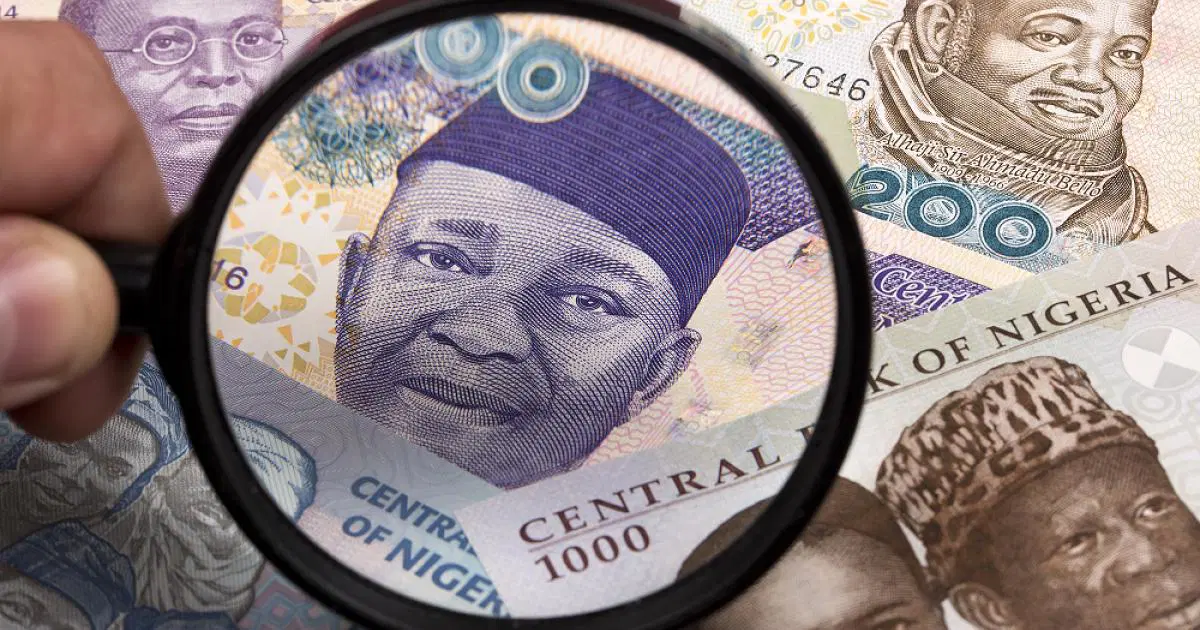
President Bola Tinubu’s latest $6 billion loan request has sparked fresh concern across Nigeria, especially because of how quickly the Senate approved it. In less than four hours, lawmakers read the request, debated it, and gave it the green light. For many Nigerians, that speed alone raises serious questions about transparency, scrutiny, and whether enough thought was given to the long-term consequences.
With this new borrowing, Nigeria’s total debt is expected to climb sharply. The country’s debt stock, which was already standing at about N146.69 trillion by the end of 2025, could now rise to roughly N155.1 trillion. At a time when inflation is biting hard, the naira remains under pressure, and many citizens are struggling with the cost of living, the decision has naturally triggered anxiety.
According to the presidency, the borrowing is split into two major parts. The first is a proposed $5 billion structured financing arrangement with First Abu Dhabi Bank in the United Arab Emirates. The second is a $1 billion UK export finance facility meant for the reconstruction and rehabilitation of the Lagos Port Complex and Tin Can Island Port.
The Federal Government says the funds will be used for budget implementation, development of priority infrastructure, refinancing expensive debts, and meeting urgent financial obligations. On paper, that may sound reasonable. But the real issue is not just why Nigeria is borrowing — it is how much the country keeps borrowing and what Nigerians are actually seeing from it.
One of the most debated aspects of the new loan is the $5 billion facility, which is structured as a Total Return Swap (TRS). This is not the regular kind of loan many people are familiar with. In simple terms, Nigeria will receive dollars but will use naira-denominated government securities as collateral. If the naira weakens further, the country may have to pay more in dollar terms to cover the difference.
That is where the real danger lies. Nigeria is already dealing with exchange rate instability. So, taking on a facility that exposes the country to even more foreign exchange pressure is not something to brush aside. Experts have warned that if the naira depreciates more, the cost of servicing this loan could become much heavier than what is currently being projected.
Financial analyst Tunde Abidoye explained that beyond the interest payments, Nigeria may also face regular dollar margin calls if the collateral loses value due to exchange rate movement. That means this loan is not just about repayment in the future — it could start putting pressure on government finances much sooner than expected.
And that is the bigger fear: Nigeria may be borrowing today to survive today, while quietly making tomorrow harder.
Another major concern is debt servicing. Even before this latest approval, Nigeria’s debt service-to-revenue ratio was already estimated at around 60 per cent by the end of 2025. That means a huge portion of government revenue is already going into paying back debt rather than improving roads, schools, healthcare, security, electricity, or jobs.
So when more loans are added, many Nigerians naturally ask: how much more can this country keep borrowing before it becomes dangerous?
Supporters of the loan argue that the port rehabilitation aspect makes economic sense. Lagos Port and Tin Can Island Port are key to Nigeria’s trade system, and anyone who understands business in this country knows how badly those ports need fixing. Delays, congestion, inefficiency, and outdated infrastructure have cost the country billions over the years.
If properly executed, investment in the ports could improve trade efficiency, reduce cargo delays, increase customs revenue, and support broader economic growth. In that sense, the project itself is not the problem. The real issue is trust.
Nigerians have seen too many loans, too many “strategic projects,” and too many big announcements with very little accountability after the headlines fade. That is why many people are not just asking what the loan is for, but also who will monitor it, how it will be spent, and whether the results will match the promises.
Former Vice President Atiku Abubakar was among the loudest critics of the approval process. He described the Senate’s same-day approval as reckless and accused the National Assembly of acting more like a rubber stamp than an institution meant to provide oversight. His criticism reflects a growing public frustration that major financial decisions affecting over 200 million Nigerians are being handled with very little resistance or detailed public debate.
Even beyond politics, many economists and private sector voices are saying the same thing in different words: Nigeria needs to be more careful.
David Adonri of HighCap Securities warned that depending too much on foreign loans is risky for any economy, especially one like Nigeria’s, where foreign exchange earnings are often unstable. His argument is simple — borrowing in dollars when your earnings are uncertain can mortgage the future of the country.
That warning is hard to ignore.
The truth is, borrowing itself is not automatically bad. Every serious country borrows. The problem starts when borrowing becomes a habit rather than a strategy. If loans are being taken just to fill budget gaps, service old debts, and survive one fiscal year after another, then the country may be entering a dangerous cycle.
And that is exactly what many Nigerians are afraid of.
At a time when ordinary citizens are already being asked to endure fuel subsidy removal, high transport costs, rising food prices, electricity hikes, and more taxes, it is only fair for people to demand clear answers. If the government says this debt is necessary, then it must also clearly show Nigerians what they will gain from it — not in theory, but in reality.
Because at the end of the day, it is not the politicians who will carry the burden of this debt the most. It is the average Nigerian — today, tomorrow, and even years from now.
If the money is used wisely, transparently, and productively, maybe the country can justify it. But if this turns into another round of borrowing without visible impact, then Nigeria may simply be digging itself deeper into a hole it is already struggling to climb out of.
And honestly, that is what worries many people the most.