
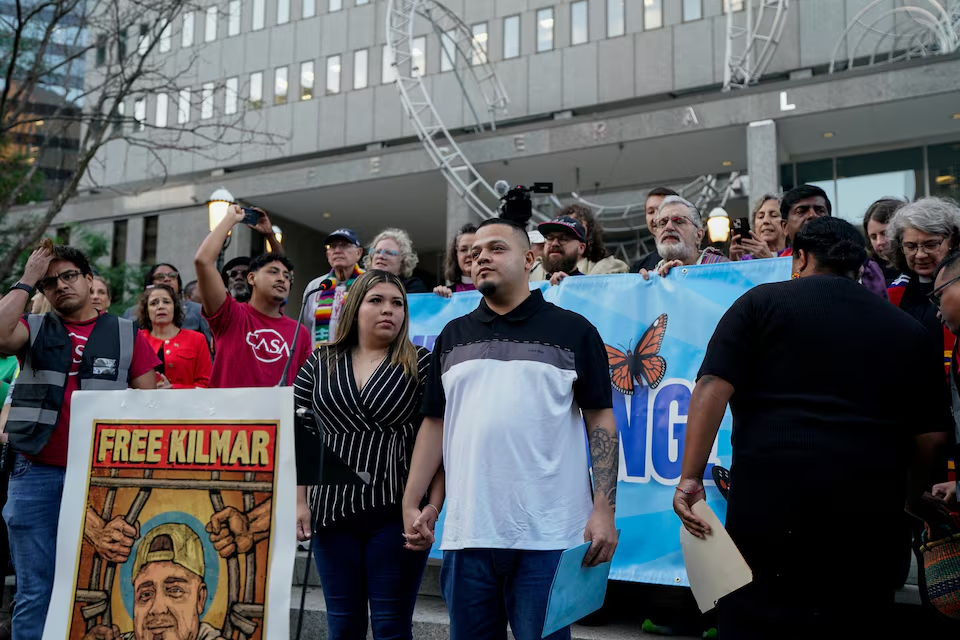

KILMAR Abrego’s immigration battle has taken a shocking twist. The 30-year-old migrant, once wrongfully deported to El Salvador, has again been detained by US immigration officials. This time, authorities are threatening to deport him to Uganda—a country he has never visited and has no ties to.
Abrego’s troubles began earlier this year when he was mistakenly deported to El Salvador in March, despite a 2019 ruling protecting him from removal due to credible fears of gang violence. That blunder, later admitted by officials as an “administrative error,” sparked outrage. He was eventually returned to the US in June to face charges of transporting undocumented migrants.
After pleading not guilty in a Tennessee court, Abrego was released on bond. But during a routine check-in with Immigration and Customs Enforcement (ICE) in Baltimore, he was suddenly taken back into custody. To the shock of his lawyers, ICE hinted at Uganda as his possible deportation destination.
His legal team has slammed the move, calling it a coercive tactic to force him into a plea deal. They claim the government even floated Costa Rica as another option if he agreed to plead guilty. Lawyers argue such manoeuvres not only violate due process but also endanger Abrego’s life, since he has no cultural, personal, or legal ties to Uganda.
A lawsuit has already been filed to block his removal and dismiss the charges. A Maryland judge has also stepped in, ruling that any deportation to a third country must follow constitutional safeguards and come with at least 72 hours’ notice.
Abrego’s case has now become a flashpoint in America’s heated immigration debate. Rights advocates say it exposes deep flaws in the deportation system, where migrants can be wrongfully exiled and even threatened with removal to countries they don’t belong to. For supporters of strict enforcement, however, the government’s actions prove its determination to crack down on migration-related crimes.
The outcome of this case could set a powerful precedent—whether the US can use third-country deportations as leverage in immigration prosecutions. For now, all eyes remain on Abrego’s fight, as rights groups, lawmakers, and immigration experts closely watch how justice will unfold.