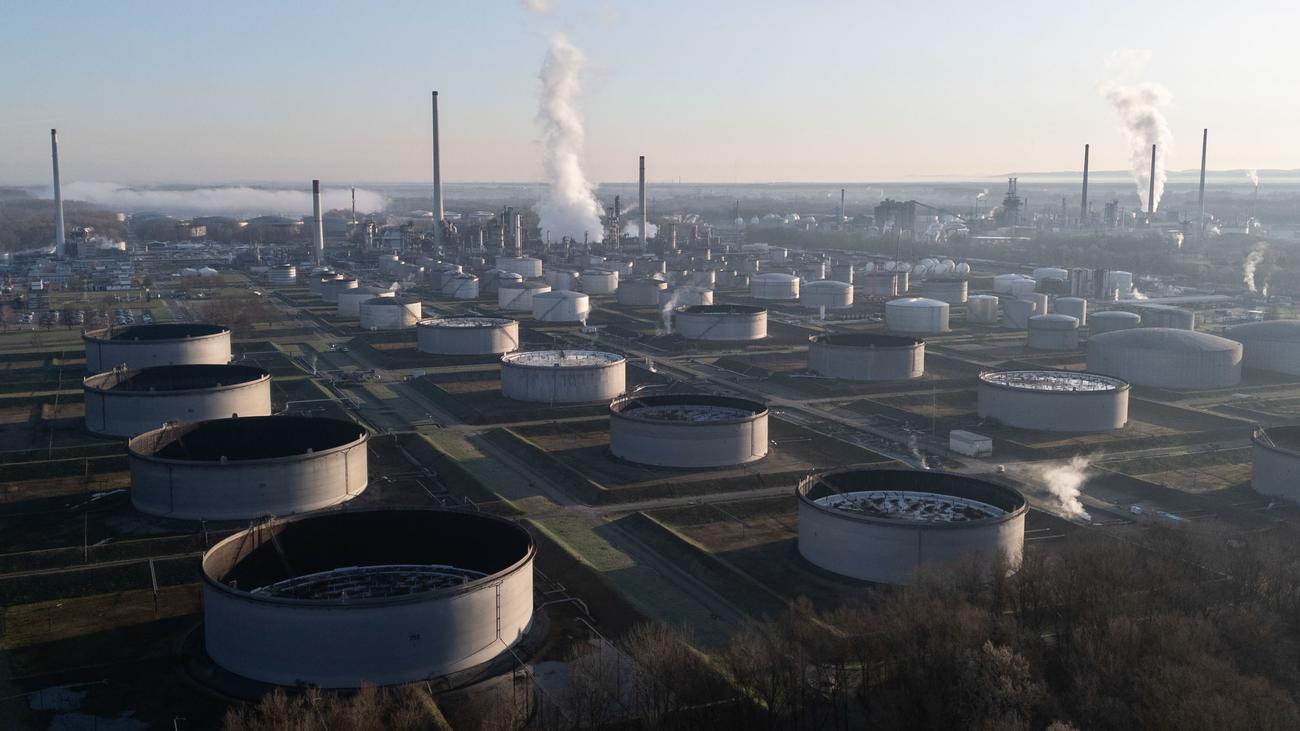
The federal government is reacting to the increased Oil and fuel prices As a result of the Iran war: Germany is releasing part of its oil reserves and price increases are also expected
Gas stations be more strictly regulated. This was announced by Federal Economics Minister Katherina Reiche (CDU). The energy ministers of the G7 countries had previously said that they, together with the International Energy Agency (IEA), were ready to release the emergency stocks. The reserves ensure that in the event of war or disaster there is enough oil available for refueling, heating and for industry. A release should also mitigate the price increase.
In order to reduce the burden on commuters and companies, the frequency of price changes at the gas pumps should be limited, Reiche said. Following the example of the “Austrian model”, gas stations would then only be allowed to increase their prices once a day. Price reductions, however, remained permissible at any time. Reiche also wants to tighten price and abuse supervision by changing antitrust law.
The aim of limiting the increase increments at gas stations is to break the “rocket and spring effect” described by the Federal Cartel Office, said Reiche. “Fuel prices rise extremely quickly when crude oil costs are higher, the rocket, and then fall only slowly when costs fall, the springs. And we want to break this mechanism.”
IEA to release record amount of oil
According to Reiche, the IEA had asked its members to release oil reserves totaling 400 million barrels. This is the largest release in the history of the agency, said the CDU politician. This is a visible signal to the market to curb high risk premiums and speculative profits. “If the market is relieved of concerns about scarcity, prices relax and we definitely expect a dampening effect.”
The IEA is coordinating the release of large quantities from the reserves so that no country is surprised by the impact on prices. 32 countries worldwide are members of the IEA. It obliges its members to maintain constant oil stocks that correspond to at least 90 days of their net imports.
34.42 million tons of oil in stock
According to IEA figures, Germany had 34.42 million tons of oil in stock as of November last year. A large part of this is crude oil, which, according to the Federal Ministry of Economics, is stored primarily in northern Germany. Diesel, gasoline, heating oil and kerosene stocks, on the other hand, are distributed across Germany.
400 million barrels would significantly exceed the previous high of 182 million barrels at the start of the Ukraine war. It would roughly correspond to the amount that was transported through the Strait of Hormuz in 20 days before the war. It was also said that 19.5 million of these would come from the German reserve. That would be around a fifth of the supplies in this country.
The energy markets have been severely affected by the war in the Middle East. The transport of energy raw materials from the producing regions in the Persian Gulf through the important Strait of Hormuz has practically come to a standstill. Most recently, there have been reports of supposedly… Iran Sea mines laid in the Strait of Hormuz have fueled concerns about the security of international energy supplies.
Fuel prices have risen significantly
Are in Germany Fuel prices have risen significantly since then. There is a debate in politics about possible countermeasures and relief for consumers. In the evening the coalition leaders come from CDU, CSU and SPD together to talk about relief. Germany does not get most of its crude oil from the Middle East.
Since the IEA’s founding in 1974, there have been five coordinated releases from the reserves: before the Second Gulf War in 1991, after Hurricanes Katrina and Rita in 2005, during the Libyan civil war in 2011, and twice after Russia’s attack on Ukraine in 2022.