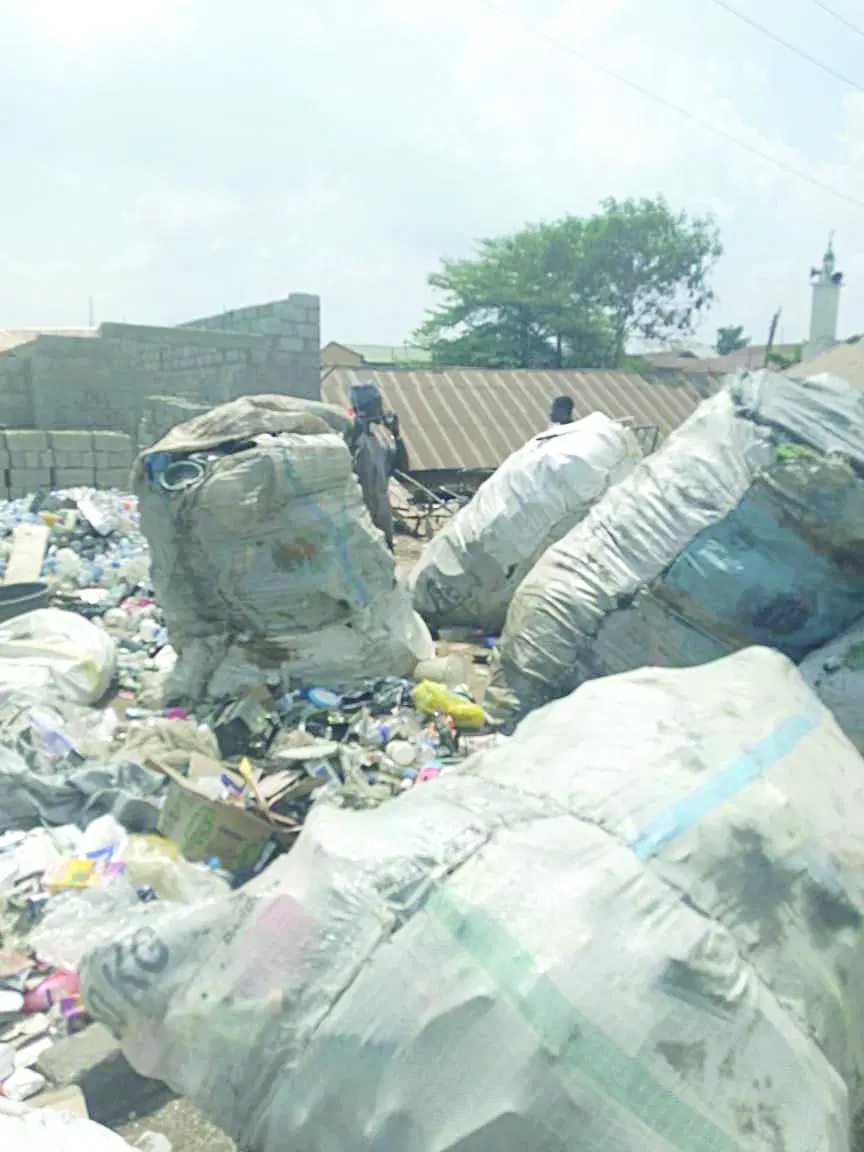
For many residents of Karu and other satellite communities around Abuja, daily life no longer begins with hope. It begins with a smell — thick, heavy, and impossible to ignore. From early morning till late at night, the stench of rotting refuse hangs in the air like a punishment nobody deserves.
In places like Karu, Nyanya, Kurudu, Kpegyi and nearby Mararaba, heaps of waste have become part of the environment. What should have been a temporary sanitation failure has now turned into a harsh way of life for thousands of low-income residents who simply cannot afford to live inside Abuja city centre.
These are traders, artisans, civil servants, mechanics, food sellers and families trying to survive. But instead of decent living conditions, many of them are waking up every day to overflowing dumpsites, swarming flies, polluted air and serious health risks.
Along major roads and inside narrow streets, refuse is scattered in disturbing volumes. Torn black nylon bags expose rotten food, plastic waste, broken household items and even medical debris. Stray animals and scavengers move through the filth, while children grow up playing dangerously close to it.
For many residents, the pain goes beyond discomfort. It is now affecting their health, their businesses, their children and even their mental well-being.
Mrs. Comfort Eze, a 35-year-old trader living in Nyanya, said life beside a dumpsite has become exhausting. Her one-room apartment is only a short distance away from a growing pile of waste, and according to her, the smell becomes unbearable once the sun comes out.
She said the odour gets even worse at night, making it difficult for her family to sleep. Beyond the smell, she is also worried about her children, who she says are constantly falling sick with malaria, cough and skin infections. The medical bills, she explained, are becoming too much for the family to handle.
Another resident, Esther Nwosu, said the dumpsite near her home has taken away her peace of mind. According to her, even eating has become stressful because flies constantly gather around food, no matter how carefully it is covered.
She added that visitors rarely stay long whenever they come around, simply because of the smell and the general condition of the environment. For her, it is not just an environmental issue — it is now an embarrassment.
The economic impact is also becoming impossible to ignore.
For mechanics, roadside food sellers, fruit traders and welders, business is suffering. Customers often complain about the smell and in many cases, they simply walk away.
A mechanic in Karu, Sunday Audu, said his workshop is directly opposite a dumpsite, and many of his customers are uncomfortable staying there long enough to patronise him. He said the situation is affecting the income he uses to support his family.
A welder in Kurudu, Kabiru Lawal, described the added danger of smoke from burning refuse. He said whenever the waste is set on fire, the smoke spreads everywhere, causing eye irritation, coughing and discomfort for people trying to work in the area.
Perhaps the most heartbreaking part of this crisis is what it means for children.
In Karu, some children now use spaces beside dumpsites as football fields and play areas because there are no proper recreational spaces. A 10-year-old boy said they have no playground, so they simply play where they can.
But what looks like innocent childhood fun hides serious danger. Broken bottles, sharp objects, contaminated surfaces and disease-carrying insects surround these children daily. Some parents say they try to stop them, but the truth is simple — there is nowhere else for them to go.
One mother explained that you cannot keep children locked inside all day, yet allowing them outside means exposing them to unsafe and unhealthy surroundings.
The health dangers are becoming more obvious by the day.
Residents say stagnant water often gathers around the waste heaps, especially during the rainy season, creating perfect breeding grounds for mosquitoes. Floodwater also spreads the refuse into nearby compounds and homes, increasing the risk of contamination.
Some families say almost every week, someone in the house is battling malaria, cough, typhoid or another infection. For many of them, this has become their new normal.
Health experts say the situation is far more dangerous than many people realise.
A public health doctor, Dr. Amina Sule, described living near dumpsites as a silent emergency. According to her, prolonged exposure to harmful gases from decomposing waste can lead to respiratory illnesses such as asthma, bronchitis and lung infections.
She warned that children, elderly people and those with pre-existing health conditions are especially vulnerable because their immune systems are more easily affected by poor environmental conditions.
Another doctor, Dr. Chinedu Okafor, explained that unmanaged refuse attracts flies, rodents and mosquitoes — all of which contribute to the spread of diseases such as malaria, cholera, diarrhoea and typhoid fever.
He also warned that during the rainy season, runoff from dumpsites can contaminate nearby water sources, which is especially dangerous in communities where many people still rely on untreated water.
Beyond physical illness, doctors say the emotional and mental impact should not be ignored.
Psychiatrist Dr. Zainab Bello noted that constant exposure to foul smells, visible waste and unhealthy surroundings can create long-term stress, anxiety and even depression. She said many people begin to feel abandoned and hopeless when they see no effort from authorities to improve their conditions.
And for many residents, that feeling of neglect is exactly what hurts the most.
A retiree in Kpegyi said the situation shows how forgotten satellite communities have become. According to him, once you leave Abuja city centre, it feels like nobody in government cares what happens next.
Others say they have complained repeatedly, written letters and raised concerns, yet nothing meaningful has changed.
Residents blame the crisis on poor waste collection, weak enforcement and illegal dumping by some private waste handlers. Many say trucks often arrive at night to offload waste in these communities under the cover of darkness, only for residents to wake up to larger heaps by morning.
When contacted, the Abuja Environmental Protection Board said the affected communities fall outside its direct responsibility, explaining that its focus is on the city centre while a separate satellite town agency handles those areas.
While that may explain the bureaucratic structure, residents argue that such administrative boundaries should never become an excuse for public suffering.
At the end of the day, what is happening in Karu, Nyanya, Kurudu, Kpegyi and similar communities is more than just a sanitation problem. It is a public health crisis, a development failure and a painful reflection of how easily poorer communities can be ignored.
People are not asking for luxury. They are asking for clean surroundings, regular waste evacuation, proper disposal systems and the basic dignity of living in an environment that does not threaten their health every single day.
Because no one should have to breathe in decay just to survive in the nation’s capital.