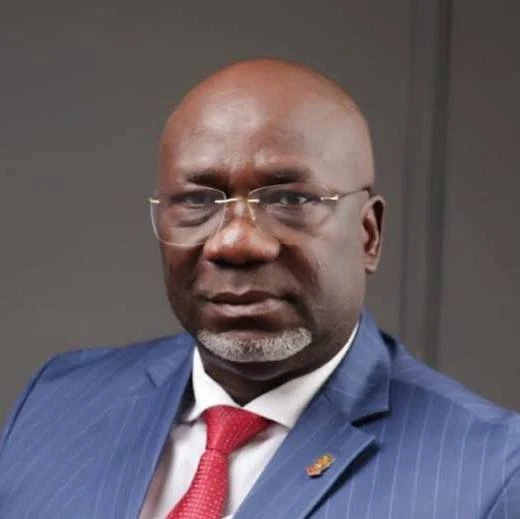
Every now and then, a constituency finds itself at a political crossroads. Not the usual season of noise, slogans, and oversized promises, but a quieter moment where people begin to ask a more serious question: who actually has the experience, understanding, and practical capacity to move the community forward?
That appears to be the point where the people of Owan Federal Constituency in Edo State now find themselves. And in the middle of that conversation, one name is beginning to stand out — Dr Ernest Afolabi Umakhihe.
Let’s be honest, Nigerian politics has made many people cautious, and rightly so. We have seen too many candidates arrive with polished speeches, dramatic posters, and emotional campaign language, only to disappear into silence once power is secured. That is why when anyone steps forward to seek public office, the real question should never be how loud the campaign is. The real question should be much simpler and much harder: what exactly has this person done before now?
In Umakhihe’s case, the answer is not hidden behind propaganda or built on political imagination. It is visible in his public record. This is someone who has served at some of the highest levels of Nigeria’s public service, particularly in key ministries such as Foreign Affairs, Defence, Budget and National Planning, Works, Agriculture, and Food Security. Not as a spectator. Not as a media analyst. But as a Permanent Secretary — one of the few roles where government policy stops being theory on paper and starts becoming something that must actually work in real life.
And that matters.
For a place like Owan, where agriculture is not just an economic discussion but part of everyday life, that kind of experience is not cosmetic — it is deeply relevant. The people do not just need speeches about development. They need someone who understands how development actually happens. They need someone who knows how access is created: access to agricultural programmes, to funding opportunities, to rural infrastructure, to the policy systems that often feel too far away from the ordinary farmer.
That is where Umakhihe begins to make practical sense as a political option.
A man who has operated from the centre of those systems is not likely to approach them like a stranger. He understands where government programmes succeed, where they get stuck, and where they fail ordinary people. He knows the difference between policy announcements and measurable outcomes. More importantly, he understands how to connect a local constituency to national opportunities in a way that can actually produce results.
And that connection is often where the real problem lies in Nigeria.
The country does not always suffer from a shortage of ideas. What it often suffers from is a shortage of people who can bridge the gap between government systems and grassroots realities. Somewhere between federal plans and local communities, things tend to get lost — opportunities disappear, support never arrives, and development becomes something people hear about rather than experience.
This is why representation should not be treated like a popularity contest.
Imagine what effective, informed representation could mean for a constituency like Owan. It could mean structured support for farmers rather than seasonal political sympathy. It could mean better storage systems to reduce post-harvest losses. It could mean stronger rural roads that help people get their produce to market without waste. It could mean irrigation support that reduces dependence on unpredictable rainfall. These are not abstract dreams. They are the kind of practical outcomes that become more possible when representation is backed by actual policy experience.
There is also the issue of inclusion, which politicians love to mention but rarely take seriously once power is involved. One of the details that stands out in Umakhihe’s profile is his recognition as a gender-friendly Permanent Secretary. That may sound like a small line in a long résumé, but in reality, it matters. In many farming communities, women are carrying a huge share of the labour and responsibility that sustains food production. If they are not properly considered in programme design, support systems, and access structures, then development is already incomplete before it even begins.
That kind of orientation matters in a place like Owan.
Of course, competence on paper is not enough by itself. Nigeria has also seen many capable people enter politics and suddenly become inaccessible once elected. They start off close to the people and end up hidden behind protocol, gatekeepers, and political distance. So the next thing people naturally look for is not just competence, but connection.
And from the reputation that seems to follow Umakhihe, there are signs that he has maintained a style of leadership that is not built on distance. Accounts of his responsiveness, community engagement, and willingness to support ordinary people suggest someone whose idea of leadership may be rooted more in service than in status. That matters because a representative who listens is more likely to understand, and a representative who understands is more likely to act.
At the end of the day, this conversation is bigger than one candidate. It is really about what voters should be prioritising. Elections are too often reduced to emotion, loyalty, or visibility, when in truth they should be about capacity. They should be about who is most prepared to convert opportunity into something tangible for the people they represent.
For Owan Federal Constituency, the decision ahead is not about choosing a perfect person — politics rarely offers perfection. It is about choosing between rhetoric and record, between familiar noise and practical function, between promise and preparation.
From what is publicly visible, Dr Ernest Afolabi Umakhihe presents himself as someone whose preparation appears to align closely with the actual needs of the constituency. His background in agriculture and rural development is relevant. His experience in policy implementation is substantial. His record suggests awareness of inclusion. And his reputation points to accessibility rather than distance.
None of these things automatically guarantee success. Politics has never worked that way. But they are meaningful indicators. And in a system where voters are often forced to decide with limited trust and imperfect information, strong indicators matter.
What Owan needs now is not spectacle. It needs direction. It needs someone who not only understands the terrain, but also understands the machinery required to move through it effectively.
And that is why this moment may be more important than it first appears.
Because constituencies do not develop simply because people clap loudly during campaigns. They develop because voters make serious, deliberate choices about who should carry their mandate. And once in a while, a candidate appears whose profile feels less like political hype and more like a practical fit.
For many observers, Dr Ernest Afolabi Umakhihe is beginning to look like that kind of candidate — not just a name in the race, but a possible compass pointing Owan toward something more meaningful: progress with direction.