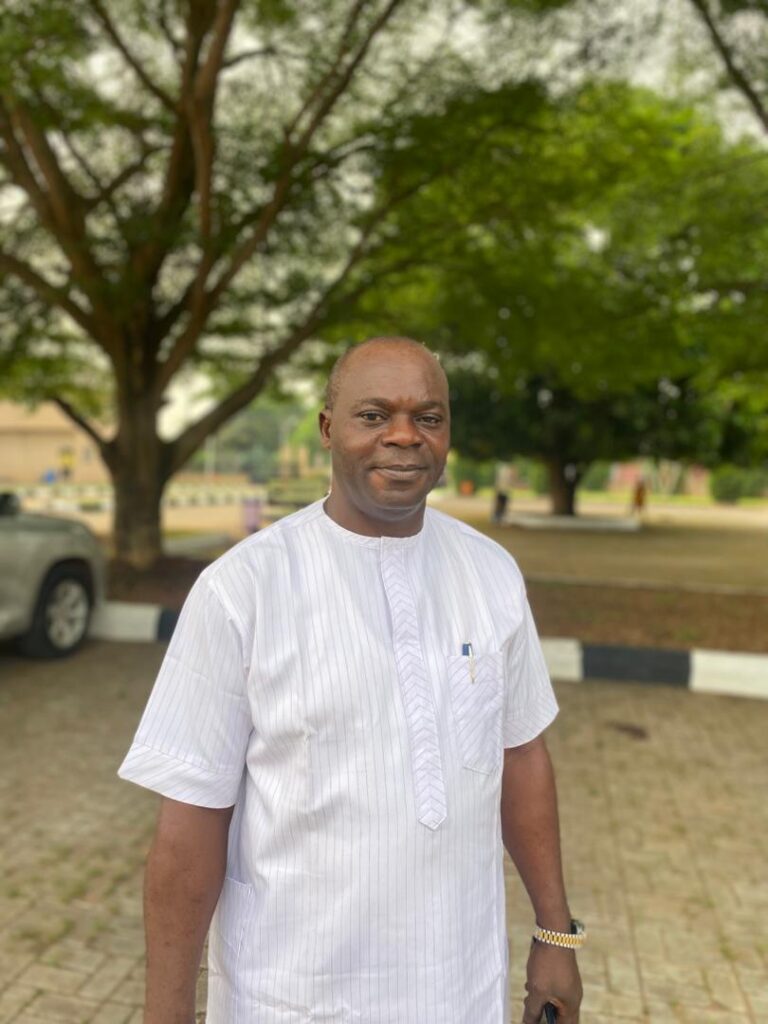

By: Lawson Ojieabu Aigbokharbholo
Politics Should Be Tested, Not Inherited
Political allegiance, when taken seriously, should never be casual. It should be tested by experience, challenged by evidence, and corrected by reality when necessary. That principle has guided my public life for decades. It is also the proper context for understanding my recent political decision. I have spent much of my adult life in politics, but never comfortably inside blind partisanship. I was once described as a pragmatic idealist. My interest has always been grounded in people-centred physical and social infrastructure that delivers measurable outcomes. Roads that open markets. Schools that educate. Health systems that function under pressure. These are not ideological preferences. They are the practical foundations of development.
A Political Journey Shaped by Delivery
My political roots are well established. I had been an active member of the Peoples Democratic Party since November 1998 and served as an aide to the former Minister of Education during the early years of Nigeria’s Fourth Republic. Later, my political engagement extended beyond the shores of Nigeria, where I became a regional secretary of a political party in Scotland, United Kingdom.
That exposure mattered. It offered a view of political systems where credibility is earned more by delivery and loyalty becomes sacrosanct. Where performance, not rhetoric, ultimately determines public trust.
This background is important because it frames what follows. This is not a story of political restlessness or convenience. It is the account of someone whose political thinking has always been anchored in outcomes, arriving at a conclusion shaped by observation and evidence.
A Conversation in Glasgow
The turning point came far from Nigeria. On 20 September 2025, after a long day at the Edo State Global Investment Summit in Glasgow, Scotland, I met Governor Monday Okpebholo for the second time that day, this time more informally.
The summit itself was ambitious and forward-looking. Later that evening, in a quiet and informal setting with HE Governor Monday Okpebholo and other leaders of the Edo Community in the United Kingdom, I raised a concern that had weighed on me and on many Edo citizens for years: the state of our road infrastructure, particularly in Edo Central, but also across the state more broadly. Years of neglect had left visible scars. Roads that once connected communities had become liabilities. Mobility slowed. Economic activity suffered.
I spoke candidly about what I regarded as nearly eight years of infrastructural decline under the previous administration of former Governor Godwin Obaseki. This was not an emotional assessment. It was a reflection of lived reality. Whatever the intentions of that period, decay had become normalised.
I asked Governor Okpebholo what he intended to do differently.
From Promises to Plans
The response was measured. There were no sweeping promises or dramatic assurances. Instead, he spoke about targeted and realistic interventions, particularly focused on the dry season when road construction could be executed properly. It was a language of planning measured with anticipated performance.
Before we parted, I made my own position clear. If those plans translated into visible improvements, I would commit myself fully to working with him and for the people of Edo State, in whatever capacity was useful.
At that point, the matter rested there. A conversation. An expectation.
Evidence on the Ground
Months later, during my recent return to Edo State, my expectations were met with evidence.
What I encountered was not abstract progress. It was physical and observable. Roads that had long been impassable were undergoing rehabilitation. Federal roads within the state, abandoned for years, were receiving attention. New routes were opening. Movement was returning to areas that had grown accustomed to stagnation.
In Edo Central, the changes are particularly notable. The work are not cosmetic. It is functional. Travel intra state has become easier. Transport costs are reduced. Communities felt less isolated. Economic activities have begun to recover, slowly but visibly.
This was the point at which my thinking shifted decisively.
Governance by Presence
Against the norms of the immediate past administration, what stood out was not only that multiple projects are underway but the governing approach behind them. There are visible insistence on delivery, timelines, inspection, and follow-through. This obviously is not governance driven by press releases and MoUs but by presence and results.
Having worked within government, I recognise the distinction. This momentum was not accidental. It reflects intentional pressure applied to ministries, contractors, and systems that had grown comfortable with delay.
At this stage, maintaining political distance would have been intellectually inconsistent with my own long-held beliefs.
Why I Joined the APC
I joined the All Progressives Congress APC because I saw a pattern of governance that aligned with principles I have consistently upheld. That legitimacy must be earned through performance. That infrastructure is a responsibility, not a favour. And that citizens respond more to what works than to what is promised.
This context also explains why Governor Okpebholo’s confidence regarding future political outcomes, including his assertion of strong electoral support for President Bola Ahmed Tinubu in 2027, does not strike me as empty bravado. It reflects a practical calculation. When leadership delivers, trust follows. When trust follows, political support consolidates.
This is not an idealised view of politics. It is a practical one.
A Broader Political Mood
Across Nigeria, citizens are increasingly weary. Not of politics itself, but of repetition without results. Many have learned to discount speeches and examine outcomes. Any political movement that understands this shift and responds with seriousness is likely to find resonance.
Edo State, at this moment, offers a lesson. Not a completed success story, but a discernible direction. Infrastructure decay accumulated over decades will not be reversed overnight. Maintenance remains essential. Transparency must deepen. These realities are not in dispute.
But direction matters. And for the first time in several years, that direction appears deliberate under the leadership of His Excellency Governor Monday Okpebholo.
A Decision Shaped by Results
My decision was not only about abandoning a past. It is about affirming a principle I have always held. That politics must serve people. That leadership must be judged by impact. And that loyalty without evidence is sentiment, not conviction.
This was not just a defection. It was a decision based on principles. One shaped by results.