Standard Daily Press Editorial
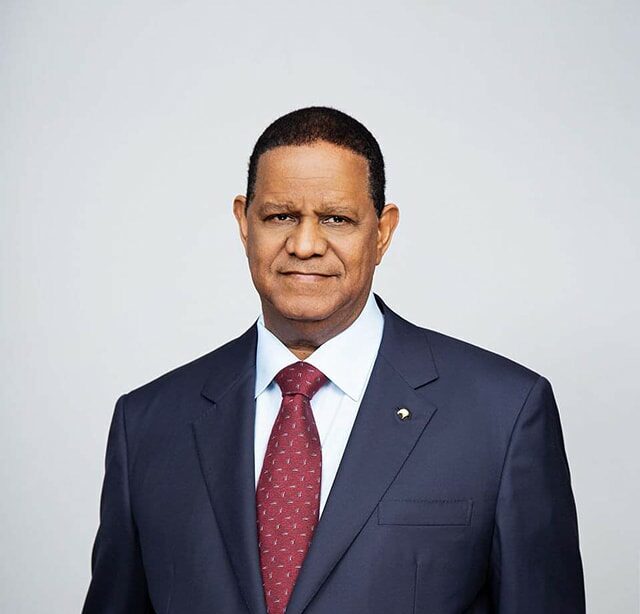
As Nigeria stands at the edge of precipice, it takes a giant like Mohammed Hayatu-Deen to prise it off from the cliff. As the 2027 electoral cycle approaches, the national discourse has shifted from the superficiality of regional zoning to a desperate, existential cry for competence.
The Nigerian state, once the pride of the continent, currently resembles a distressed corporation—straining under the weight of a naira in freefall, a power grid that collapses with rhythmic regularity, and a security architecture that has left 105 million citizens in the shadows of poverty and fear.
In this climate, the politician as usual is an obsolete model. Nigeria does not need a orator; it needs an architect. Within the African Democratic Congress (ADC), one figure has emerged whose entire career has been a rehearsal for this moment of national rescue: Alhaji Mohammed Hayatu-Deen (MHD).
Known as the “Turnaround Artist,” Hayatu-Deen represents the rare fusion of boardroom discipline, academic depth, and a deeply personal stake in the peace of the nation.
The Turnaround Pedigree: Institutional Reform as a Science
The hallmark of Mohammed Hayatu-Deen’s career is his ability to walk into a vacuum of failure and emerge with a blueprint for success. His reputation is not built on promises, but on the cold, hard metrics of institutional recovery.
The FSB Miracle
In 1990, the Federal Savings Bank was a moribund government entity, a relic of inefficiency. When Hayatu-Deen took the helm as the Pioneer MD/CEO of FSB International Bank, he didn’t just manage the institution; he reinvented it. He understood that a turnaround is not merely about financial balance sheets—it is about a cultural revolution.
He recruited the crème de la crème of innovative talent, implemented world-class governance, and transformed a distressed savings institution into a leading commercial powerhouse. This remains arguably the most successful case of privatization and management turnaround in Nigerian history.
Managing Complexity: The NNDC and Alpine Group
His leadership of the New Nigeria Development Company (NNDC) at the age of 30 saw him overseeing a portfolio of 140 companies. This experience gave him a unique view of the Nigerian economy’s diverse sectors—from textiles to construction.
Later, through the Alpine Group, he delivered the Ado Bayero Mall in Kano, proving that his vision results in tangible, infrastructure-driven growth. For the ADC in 2027, MHD offers a candidate who understands that the presidency is the ultimate management challenge.
Solving the Grid and the Economy
Nigeria’s 2026 economic landscape is defined by implementation gaps. While policies are drafted in Abuja, the physical reality is one of darkness and high costs. Hayatu-Deen’s current role as Chairman of Inlaks—a titan in information technology systems integration—gives him a technological edge that no other candidate possesses.
Fixing the Power Crisis
MHD has been a vocal critic of the toxic mix of incompetence and deep-seated corruption that plagues the power sector. In a nation where available generation capacity frequently dips below 4,500 MW despite an installed capacity of 13,000 MW, Hayatu-Deen’s approach is one of rigorous engineering.
He been advocating for the full implementation of the Electricity Act 2023 that empowered states to move beyond policy-making and into strategic, decentralized generation. Leveraging his tech background, he proposes the use of advanced cybernetics and smart-metering to eliminate the “financial bottlenecks” and revenue leakages that cripple the national grid.
Recognizing the 2026 shift toward renewable energy, he views the sun-drenched North not as a poverty belt, but as a potential solar powerhouse that can drive industrialization.
Economic Realism over Populism
MHD’s critique of the current administration’s reforms is grounded in empathy. He famously noted that the current reforms were pumped in too soon—in a quantity impossible for this society to breathe. His 2027 platform focuses on Production over Consumption, moving Nigeria away from an import-dependent economy toward one fueled by innovation and skilled human capital.
Security: A Scholar’s Strategy and a Brother’s Grief
Perhaps what sets Mohammed Hayatu-Deen apart is that his counterterrorism expertise is not merely academic—it is forged in personal tragedy.
The Specialization of Peace
Holding a PhD in Peace and Conflict Studies with a focus on counterterrorism, MHD understands the structural roots of insurgency. He argues that security cannot be achieved through kinetic force alone.
His vision includes terrorism courts that will speed up the judicial process to ensure that justice is a deterrent, and would include moving from manpower-heavy policing to data-driven intelligence, utilizing the high-tech systems he oversees in the private sector.
The Heart of a Statesman
MHD’s commitment to security is fueled by the memory of his own family’s suffering. He has shared the harrowing story of his sister, whose son was slaughtered before her eyes by Boko Haram before she was abducted into the Sambisa Forest.
When MHD speaks of regional stability, he is not discussing a political issue; he is discussing the restoration of his home. His work with the Renaissance Development Forum in Borno is a testament to his dedication to rebuilding the social fabric of the North.
Why the ADC? The Search for a Principled Platform
His entry into the ADC in April 2026 was a strategic masterstroke. By leaving the PDP, he signaled a rejection of the transactional politics that has historically defined Nigeria’s major parties.
As the first major aspirant to declare for the ADC, MHD has become a focal point for the Mega Coalition. He acts as a bridge between the youth-led movements and the established technocratic elite.
His message to the party is one of principled unity. He is not seeking a coronation; he is seeking a merit-based mandate. He represents a “Third Force” that is intellectually robust and electorally viable.
The Mirror of a Nation
Mohammed Hayatu-Deen often says, “Every morning I look in the mirror and I see 105 million Nigerians living below the poverty line.” This is the statement of a man who has achieved ultimate professional success but refuses to be insulated from the national struggle.
For the ADC in 2027, the choice is clear. The party can either be a footnote in history or the vehicle for Nigeria’s greatest “turnaround.”
With his unmatched pedigree, technological foresight, and profound personal integrity, Mohammed Hayatu-Deen is not just a candidate; he is the architect Nigeria has been waiting for.
2027 is not a time for politicians; it is the hour of the Turnaround Artist.