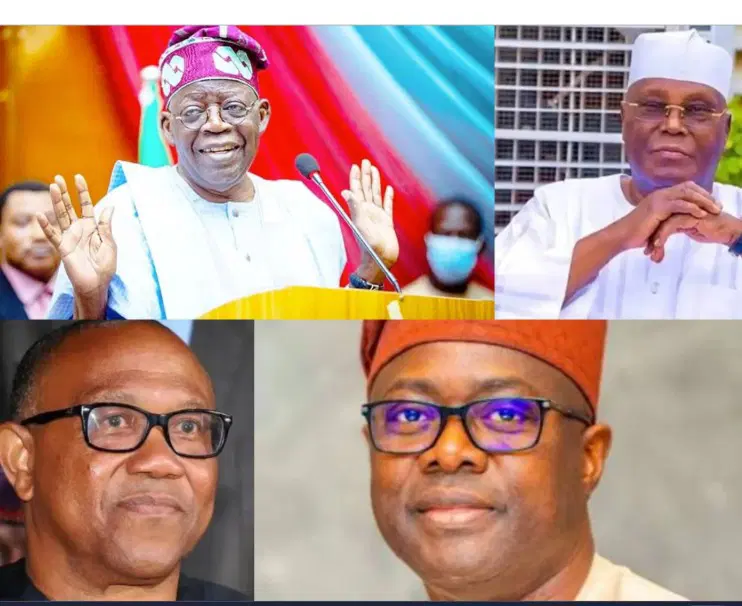
With barely eight months to Nigeria’s next general elections, the race for the presidency is increasingly shaping into a contest defined less by individual candidates and more by the political structures and alliances backing them.
Across the country, political actors are quietly repositioning. Governors are holding strategic meetings, former ministers are rebuilding alliances, political financiers are reactivating dormant networks, and regional blocs are reassessing their influence ahead of what is expected to be a highly competitive election.
At the centre of the unfolding contest is President Bola Ahmed Tinubu, who enters the race with what analysts describe as the strongest political machinery in the country.
Tinubu’s Strong Political Structure
Tinubu’s strength lies in a wide network of political control that includes support from numerous state governors, federal appointees, lawmakers, and long-established party structures within the All Progressives Congress.
Observers note that governors remain a decisive force in Nigerian elections due to their control of grassroots mobilisation, state resources, and local political structures.
In addition, the advantages of incumbency — including access to national institutions and elite alliances — are seen as key factors strengthening the president’s position ahead of 2027.
Atiku Abubakar: The Experienced Political Networker
Former Vice President Atiku Abubakar remains a central figure in opposition politics, backed by long-standing connections across northern political and business networks.
His camp includes experienced politicians, former governors, and political operatives who have participated in coalition-building efforts over the years.
However, analysts say his strength within elite circles is counterbalanced by growing concerns over generational appeal, as younger voters increasingly seek new political alternatives.
Peter Obi: The Force of Public Emotion
Former presidential candidate Peter Obi continues to command strong emotional support, particularly among younger Nigerians, urban professionals, and diaspora communities.
His support base, often referred to as the “Obidient movement,” remains highly active and digitally driven, fueled by frustration over economic hardship and governance concerns.
However, political analysts note that Obi’s challenge lies in translating widespread enthusiasm into strong electoral structures capable of competing with entrenched political machinery at the grassroots level.
Rabiu Kwankwaso and the Northern Mobilisation Factor
Former Kano governor Rabiu Musa Kwankwaso remains a key figure in northern political mobilisation through his influential Kwankwasiyya movement.
His grassroots network in the North-West is widely seen as a strategic asset in any opposition coalition, especially given the region’s electoral significance.
Other Emerging Political Forces
Other political actors such as Oyo State Governor Seyi Makinde and former minister Rotimi Amaechi continue to be discussed as potential alternatives within broader opposition calculations, though both face challenges in building nationwide structures comparable to the ruling party.
Similarly, smaller parties and coalition platforms continue to struggle with internal disagreements over leadership and zoning arrangements, limiting their ability to form a unified front.
Opposition Fragmentation vs Ruling Party Structure
Political analysts say one of the biggest challenges facing the opposition is fragmentation, as multiple aspirants and competing blocs risk splitting votes across regions.
Meanwhile, the ruling party maintains a more coordinated structure, which many observers believe could play a decisive role in shaping electoral outcomes.
The Defining Question of 2027
As the election approaches, analysts argue that the central question is no longer just about who is popular, but which political machinery can effectively convert support into votes across Nigeria’s complex electoral landscape.
While opposition candidates continue to draw significant public sympathy and momentum, the ruling party’s structural advantage remains a defining factor in the emerging political equation.
Ultimately, the 2027 presidential election may be decided not only by popularity or dissatisfaction, but by the strength of organisation, alliances, and political discipline across competing camps.