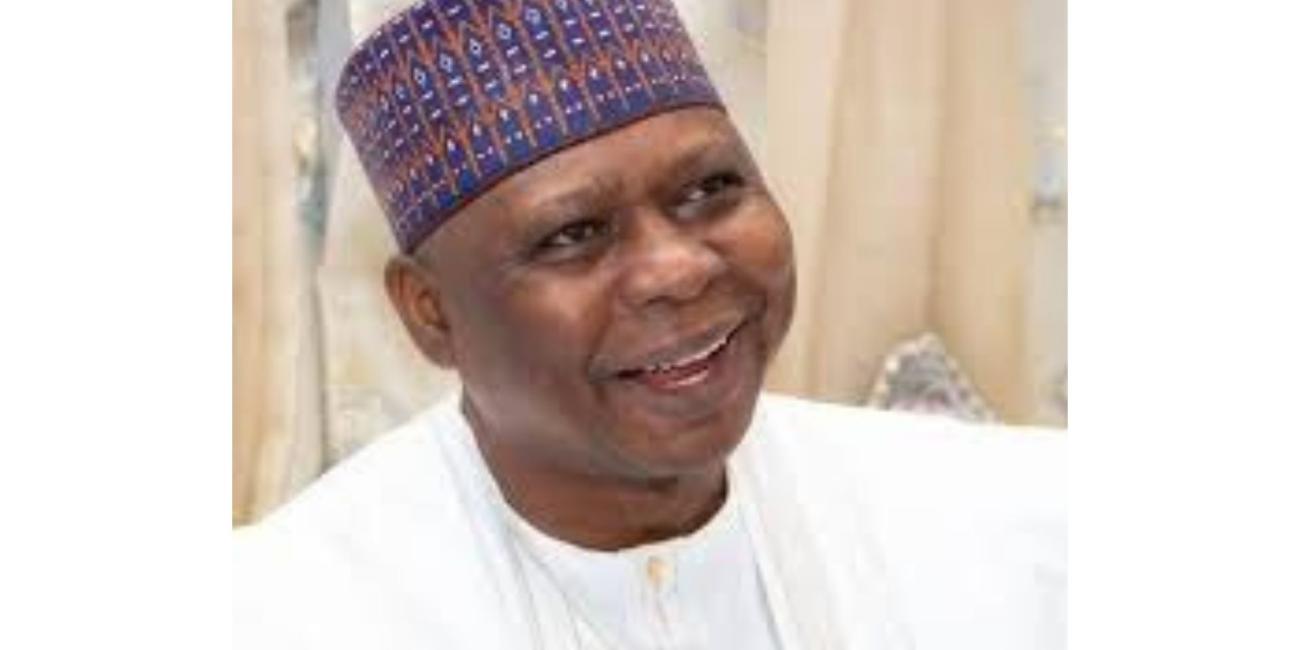
A fresh legal storm has hit Kabiru Tanimu Turaki after an FCT High Court ordered his arrest for failing to appear in court over a criminal case brought against him by the police.
The order was issued after Turaki, a Senior Advocate of Nigeria and factional national chairman of the Peoples Democratic Party, failed to show up for his scheduled arraignment in a case linked to allegedly giving false information to the office of the Inspector-General of Police. The court made it clear that his absence was not justified and that the matter could not continue to be delayed on that basis.
At the heart of the case is a one-count criminal charge filed by the police, accusing Turaki of submitting a petition said to contain false information. According to court documents, the alleged offence is tied to a petition dated October 5, 2022, which prosecutors say was sent to the Inspector-General of Police and breached Section 140 of the Penal Code Law.
The matter has already seen repeated delays. Turaki had earlier failed to appear in court on a previous date fixed for his arraignment, despite the court specifically ordering him to be present. His legal team later argued that he stayed away because he had submitted a petition to the Chief Judge of the FCT High Court, asking that the case be transferred to another court over concerns about confidence in the handling of the matter.
But the prosecution pushed back strongly, insisting that a petition against a judge does not automatically stop a criminal trial. Their argument was simple: if every defendant could avoid appearing in court simply by filing a complaint, the justice system would become easy to frustrate and manipulate.
The court agreed with that position. In its ruling, the judge held that the mere filing of a petition does not suspend proceedings unless there is a written directive from the Chief Judge. In other words, unless the court is officially told to stop, the case must go on — and any defendant ordered to appear is expected to obey that order.
What also stood out in the court’s remarks was the judge’s frustration over the fact that Turaki clearly knew about the case. His lawyers had been appearing in court on his behalf, which made it difficult to argue that he was unaware of the proceedings or the seriousness of the charge before him.
The court had earlier shown some restraint by declining to issue a bench warrant immediately, even though it had the power to do so. But with continued absence and no legal basis strong enough to halt the case, that patience appears to have run out. The latest arrest order now marks a more serious turn in the legal battle.
Beyond the courtroom, the development is also politically sensitive. Turaki is not just a lawyer or former minister — he is a known political figure with deep ties to the PDP and had served under former President Goodluck Jonathan as Minister of Special Duties and Intergovernmental Affairs, as well as Supervising Minister of Labour and Productivity.
For now, the case is no longer just about the original allegation. It is also becoming a test of whether high-profile political figures will submit themselves to the same court process ordinary citizens are expected to face. And that is exactly why this case is likely to keep drawing attention.